Daily and weekly
Light tasks for on-site staff or a designated volunteer. Ten minutes on a dry morning is usually enough, and the habit matters more than the time.
- Blow or sweep leaves, sand, seed pods and debris off the court and the surround. Organic matter stains the color and holds moisture.
- After rain, look for standing water. Squeegee it off and note where it sat.
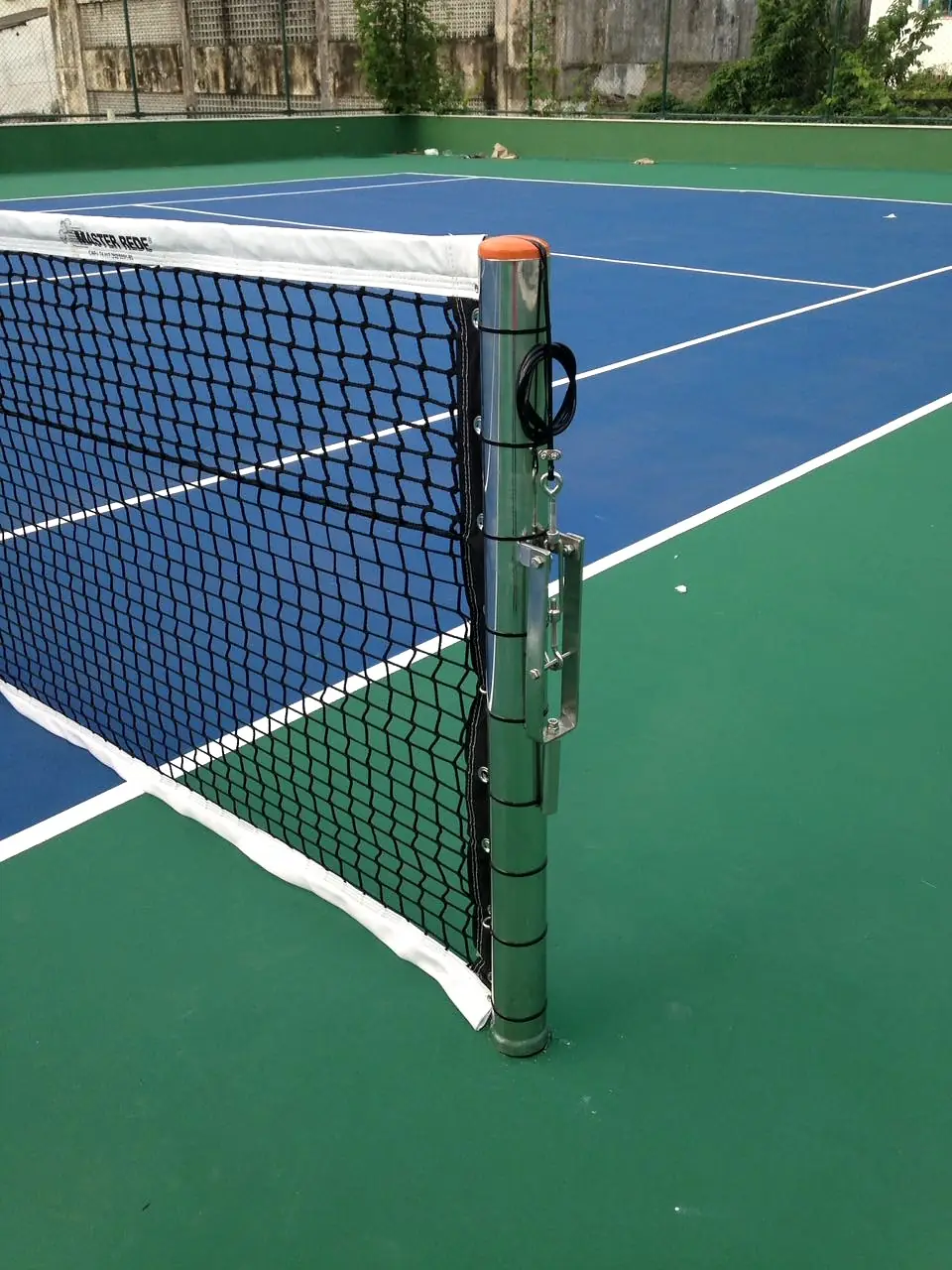
- Check that the net is up, not torn, and at height (3 ft at the center strap for tennis), with the strap fastened.
- Close and latch gates. Check that self-closers work and gates do not drag.
- Remove what does not belong on the court: chairs, bikes, skateboards, glass, chewing gum.
- Report anything new, such as a crack, a stain or a loose windscreen, to the manager the same day.
Monthly
A short walk-through with a notebook or phone camera, done by the community manager or the maintenance lead.
- Clean the court with a soft broom and a hose rinse to lift the dirt film, especially in shaded corners.
- Walk every line of the court looking for new cracks. Note location and approximate length.
- Check windscreens for tears and fading, and replace broken or missing ties.
- Check fence fabric, ties, top rail and gate hinges for rust, gaps and sagging.
- Check net posts for lean, loose caps and a working winder.
- Check drains, swales and the court edge for blockage, washouts or soil built up above the pavement.
- Look for mildew or algae starting along fences, windscreens and under trees.
Quarterly and seasonal
Heavier tasks, usually done by a contractor under a maintenance plan. In Florida, plan one round right after storm season, in late fall, before the winter play season.
- Pressure wash the court every two to three months, more often in shade, at a pressure and nozzle distance that cleans without stripping the acrylic texture.
- Treat mildew and algae with a cleaner made for acrylic courts, then rinse well.
- Check lines for wear, peeling or blurring, and touch them up where play concentrates.
- Flood test, or inspect after a heavy rain, and mark every area still holding water after about an hour.
- After storm season: check drainage, court edges, washouts, fallen limbs, windscreens and fence fabric.
- Before a named storm: take windscreens down so they do not load the fence, and store portable nets. Rehang after.
- Trim branches over the court to cut leaf fall and shade.
Checklist at a glance
- Daily and weekly
- Debris, standing water, net, gates, report new problems
- Monthly
- Clean, crack walk, windscreens, fence ties, drains
- Quarterly
- Pressure wash, mildew treatment, lines, flood check
- After storm season
- Drainage, edges, fence fabric, windscreens
- Annual
- Documented inspection, hardware, reserve study inputs
- Every 4 to 8 years
- Resurfacing, timed by measured condition
Typical intervals for Florida acrylic courts. Adjust to use, shade and condition.
Annual
Once a year, a documented inspection the board and the reserve study can rely on. It should be written, dated and photographed, and it should use the same format every year so the results compare.
- Written report with photos of each finding and of the court as a whole.
- Crack map: location, length and width of each crack, and whether it changed since last year.
- Ponding map from a flood test: location, size and depth of each area.
- Coating condition: fade, chalking, texture lost at the baselines, bare spots.
- Net, center strap, posts and post footings: height, corrosion and lean. Replace nets that are frayed or sagging.
- Fence, gates and windscreens: condition and expected replacement year.
- Update the reserve study inputs: remaining life and scope for each court component.
Every 4 to 8 years: resurfacing
Acrylic hard courts commonly need resurfacing every four to eight years. Full sun, heavy use and poor drainage push toward four; shade, light use and good routine care push toward eight. The annual inspection shows where your court sits in that range, so the board can schedule resurfacing two or three years ahead instead of voting on it after complaints.
The year before resurfacing is due, ask for a written scope with crack and ponding quantities, so the reserve contribution and the bid rest on the same measurements. Combine the resurfacing with any net, post, windscreen or pickleball line changes, because they cost less while the court is already closed.
Who does what
Clear ownership is what keeps a checklist from being forgotten. Write names, not job titles, on the printed copy. A common split:
- On-site staff or a volunteer: debris, standing water, nets and gates, and reporting new problems.
- Community manager: monthly walk-through, keeping the log, scheduling contractors, forwarding reports to the board.
- Contractor under a maintenance plan: pressure washing, mildew treatment, line touch-ups, sealing small cracks, the annual documented inspection.
- Contractor by approved scope: crack repair across the court, ponding correction, equipment replacement, resurfacing.
- Board: approves scopes and budgets, reviews the annual report and keeps the reserve study current.
What to record
Records turn a checklist into a budget. Keep one log per court, on paper or digital, and keep it with the property files so it survives a change of manager.
- Date, who did the task and what was found.
- Photos of each new crack, stain or puddle, taken from the same spot each time, with a tape measure or coin for scale.
- Crack length and width, and ponding size and depth, as numbers.
- Contractor visits, scopes, invoices and warranty terms.
- Date of the last resurfacing and the coating system used.
- Storm events and what each one damaged.
Red flags: call a contractor now
These signs need a professional look before the next scheduled visit. Some are safety issues, so close the court or the affected area until it is checked.
- A crack you can fit a coin into, a crack with a raised or stepped edge, or one that catches a ball.
- A crack that reopened within a season of repair.
- Water still standing hours after rain, or a new birdbath where there was none.
- Coating peeling, blistering or flaking in sheets.
- Soft, spongy or sunken pavement.
- A net post leaning or loose in its footing.
- Fence fabric torn, a gate that will not latch, or a windscreen hanging by a few ties in wind.
- Green or black slick areas that return within weeks of cleaning.