
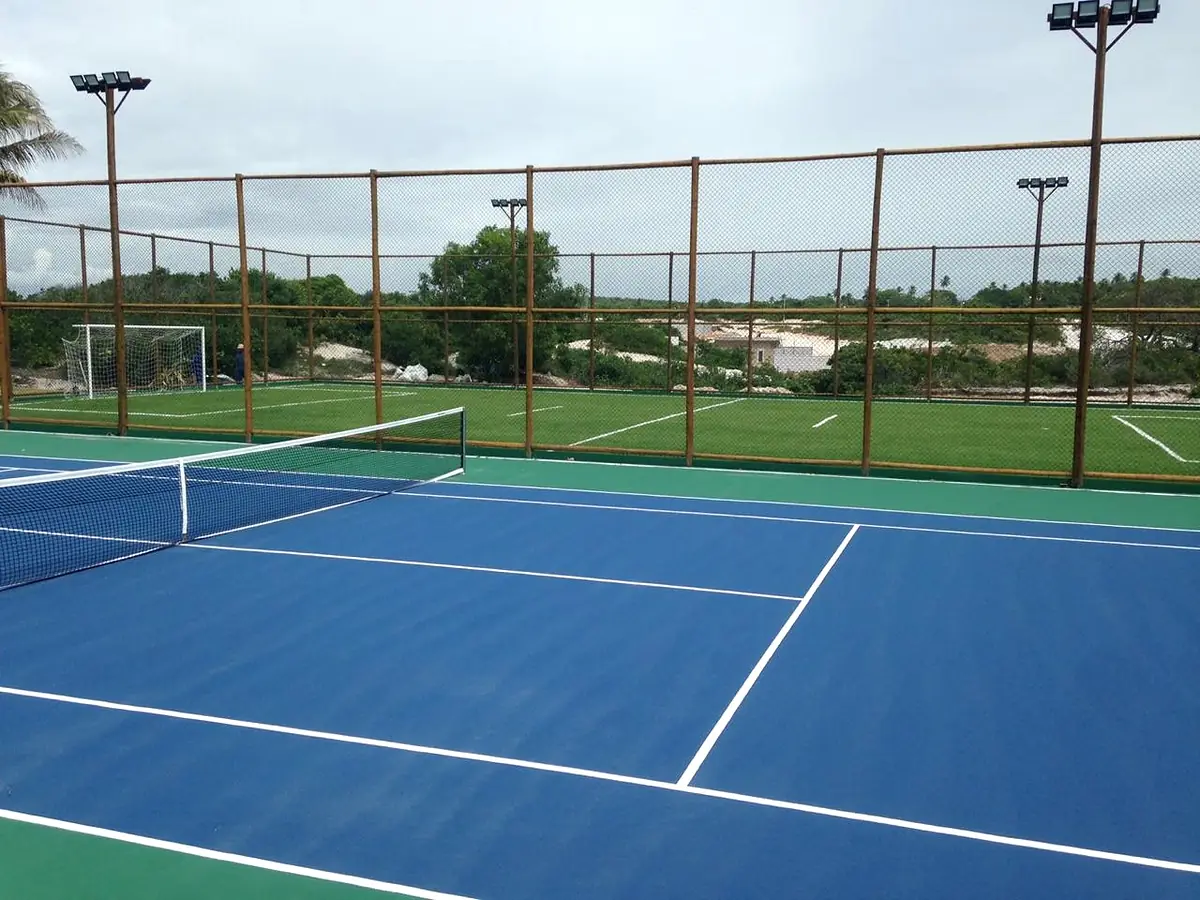
Sports · Tennis
Tennis court restoration and maintenance in Florida
Most Florida tennis courts are acrylic hard courts or Har-Tru green clay. The two age in opposite ways: hard courts wear slowly and need a resurfacing every few years, clay wears every day and needs care every day. We restore and maintain both on existing courts.
- Court
- 78 × 36 ft doubles, 27 ft singles width
- Hard court cycle
- Resurfacing every 4 to 8 years, typically
- Clay care
- Daily brushing and water, spring renovation
- Net
- 3 ft at center, 3 ft 6 in at the posts
Hard courts: the acrylic cycle
An acrylic hard court is a thin coating system over asphalt or concrete. In Florida, UV breaks down the acrylic binder, heat opens cracks in asphalt, and afternoon storms show every low spot. The color fades first, then the texture polishes smooth at the baselines and service lines, where players start and stop. When the texture is gone, the court gets slick when damp and the ball skids.
A resurfacing restores that layer: clean, repair cracks, patch the birdbaths, apply resurfacer and color, then paint new lines. The full sequence is on our resurfacing service page. On this page we focus on what is specific to tennis: the line layout, the wear zones and the net equipment.
Cracks and ponding on a tennis court
A tennis court drains on a single plane, commonly with a slope of about 1% side to side or end to end. Any low spot inside the lines breaks that plane. The common field test is to flood the court, wait about an hour in sun, and mark any water deep enough to cover a nickel. Those areas are filled with patch binder and leveled before the color goes down.
Cracks tell you about the base. Hairline cracks are aging acrylic and asphalt. Long straight cracks often follow a paving joint. Cracks that step up on one side, or that came back within a season of the last repair, usually mean the base is moving, and we say so in the scope before any coating is priced.
Har-Tru and green clay: daily and weekly care
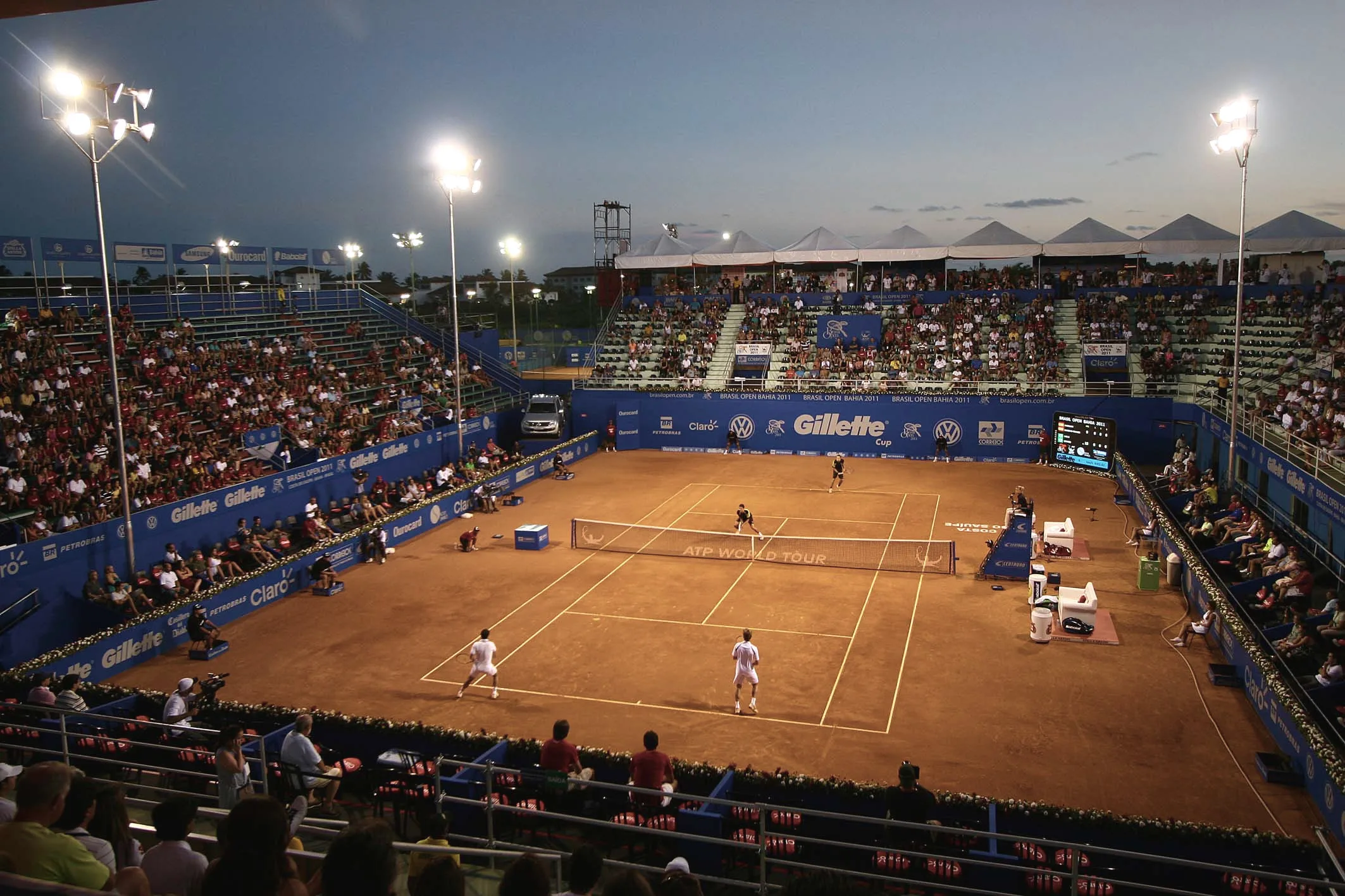
Green clay plays well only when it is damp, firm and level. That takes a routine done by staff on site, every day the court is open. We set up the routine, train the crew and handle the periodic work.
- Daily: drag or brush the full court after play, sweep the line tapes, and water to keep the surface damp.
- Daily or as needed: hand-fill and tamp low spots at the baselines and in the service boxes.
- Weekly: roll the court when it is damp to firm the surface, and check that the line tapes are tight and nailed down.
- Irrigation: test sprinkler heads or the subsurface water level, so the whole court dries evenly between waterings.
- After storms: let the court drain, clear washed material from the edges, then brush and roll before reopening.
Spring renovation of a clay court
Once a year, usually before the high season, a clay court needs a renovation. The surface is scarified to loosen compacted and contaminated material, worn areas are leveled, and new material is spread as a top dressing, commonly one to two tons per court depending on loss over the year. The court is then watered and rolled in passes until it is firm, and the line tapes are reset or replaced.
Skipping the renovation shows within a season: the surface gets hard and slippery in some areas and soft in others, and the ball bounces unevenly.
Lines, nets and windscreens
Tennis lines are 2 in wide, and the baselines may be up to 4 in. They are measured from fixed references on the court, never traced over old paint, because old lines drift with every repaint. Doubles is 78 × 36 ft; the singles sidelines are 4.5 ft inside the doubles lines.
Net posts sit 3 ft outside the doubles sidelines. The net is 3 ft 6 in high at the posts and 3 ft at the center, held by a center strap anchored in the court. In coastal Florida, salt air corrodes post bases, ratchets and strap anchors, so we check them on every visit. Windscreens cut wind and visual distraction; torn or faded ones load the fence in storms and should be replaced before hurricane season.
How we restore a tennis court
Hard court sequence first; clay renovation follows its own order on the same principle: fix the base layer, then the surface, then the lines.
Assess
Flood test, crack map, slope check, line accuracy, net and post condition, with photos.
Clean
Pressure-wash the court and treat mildew and algae, or scarify and clean a clay surface.
Repair
Fill or bridge cracks and level birdbaths; on clay, level worn areas and top-dress.
Surface
Acrylic resurfacer and textured color coats, each cured before the next; on clay, water and roll.
Lines
Lay out from fixed references, mask and paint, or reset clay line tapes.
Equipment
Set net height, replace center strap or posts where needed, rehang windscreens.
Specifications
Tennis court dimensions
- Doubles court
- 78 × 36 ft (23.77 × 10.97 m)
- Singles width
- 27 ft (8.23 m)
- Service line
- 21 ft from the net
- Recommended playing area
- About 120 × 60 ft
- Lines
- 2 in wide, baselines up to 4 in
- Net height
- 3 ft at center, 3 ft 6 in at the posts
- Net posts
- 3 ft outside the doubles sidelines
ITF and USTA dimensions. Slope and coating system are set by the written scope for each court.
Questions
How long is a tennis court closed for resurfacing?
One court usually takes one to two weeks of site work, depending on repairs and weather. Each acrylic coat must cure dry before the next, so Florida afternoon storms add days. A clay renovation commonly closes a court for a few days.
Can the club stay open while you work?
Yes, when there is more than one court. We phase the work court by court, fence off the work area and keep material and equipment away from courts in play.
What does it cost to put off a resurfacing?
Open cracks let water into the base. A court that would have needed a typical resurfacing, roughly $5,000 to $12,000 in the US, can turn into a patching and leveling job that costs more, or a base rebuild.
Can you take over maintenance of our clay courts?
We train your staff on the daily routine and handle the periodic work: spring renovation, leveling, top dressing and line tapes. Daily brushing and watering are best done by people on site.
Are you licensed in Florida?
Our Florida contractor license is pending. Ask us for the current status before you sign.
Ranges are typical industry figures for planning, not a quote. Your court's scope and price come from the on-site assessment.
Related
 01
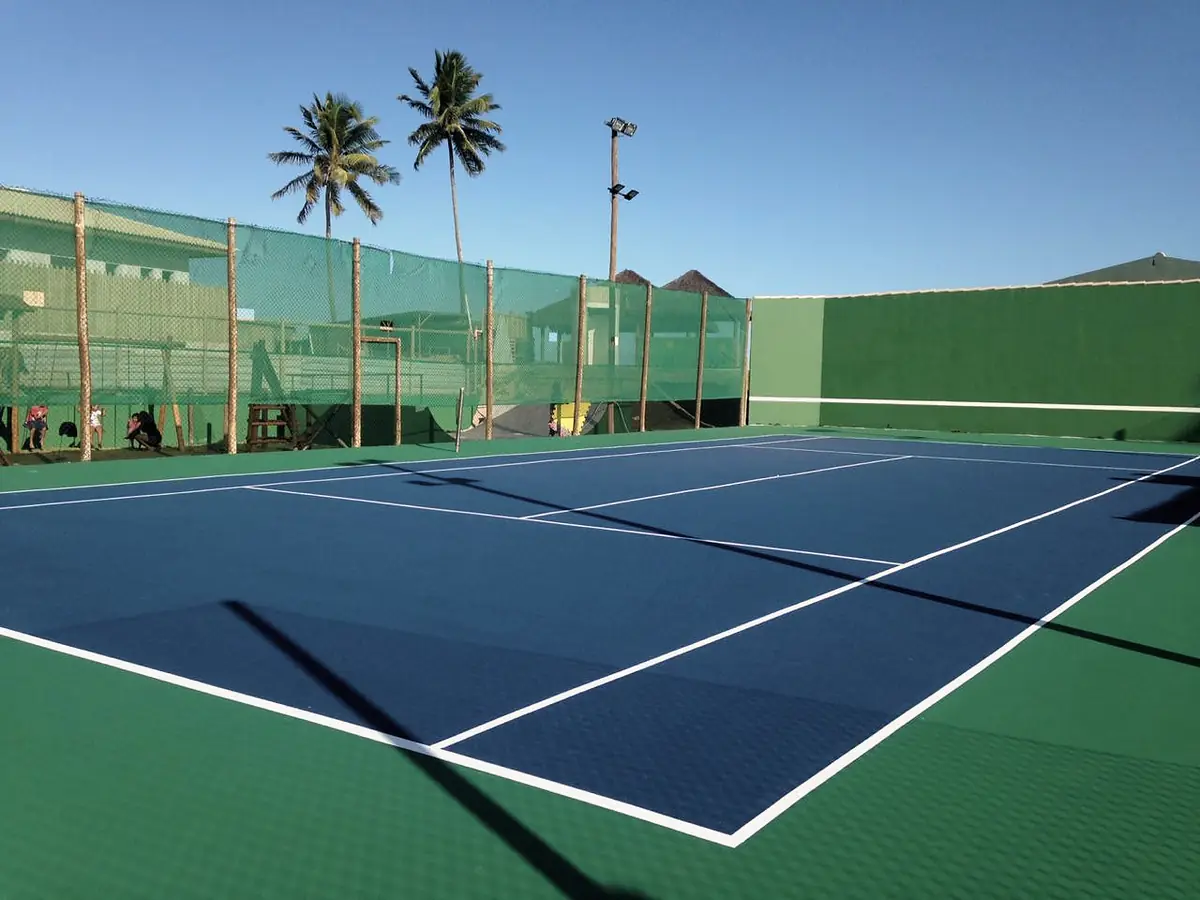
Court resurfacing
Clean, repair, recoat and reline a worn hard court so it plays true and drains again.
Learn more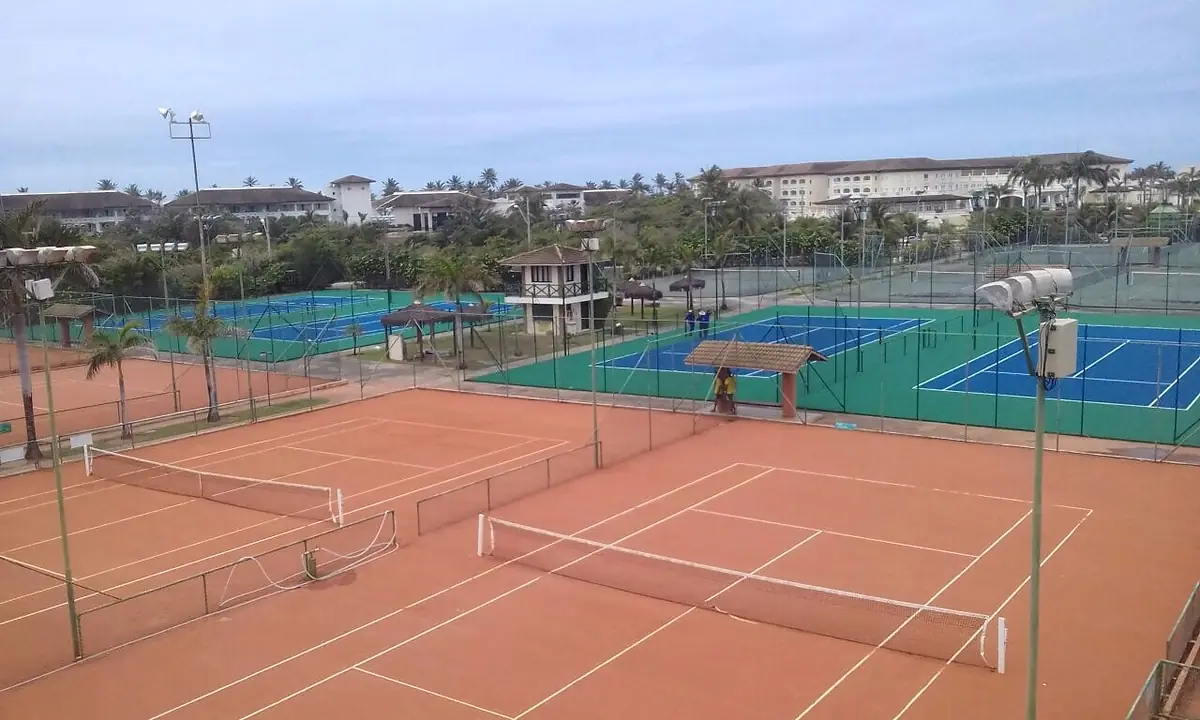 02
Clay court
The soft court. Easier on the body, and the surface that asks most of your attention.
Learn more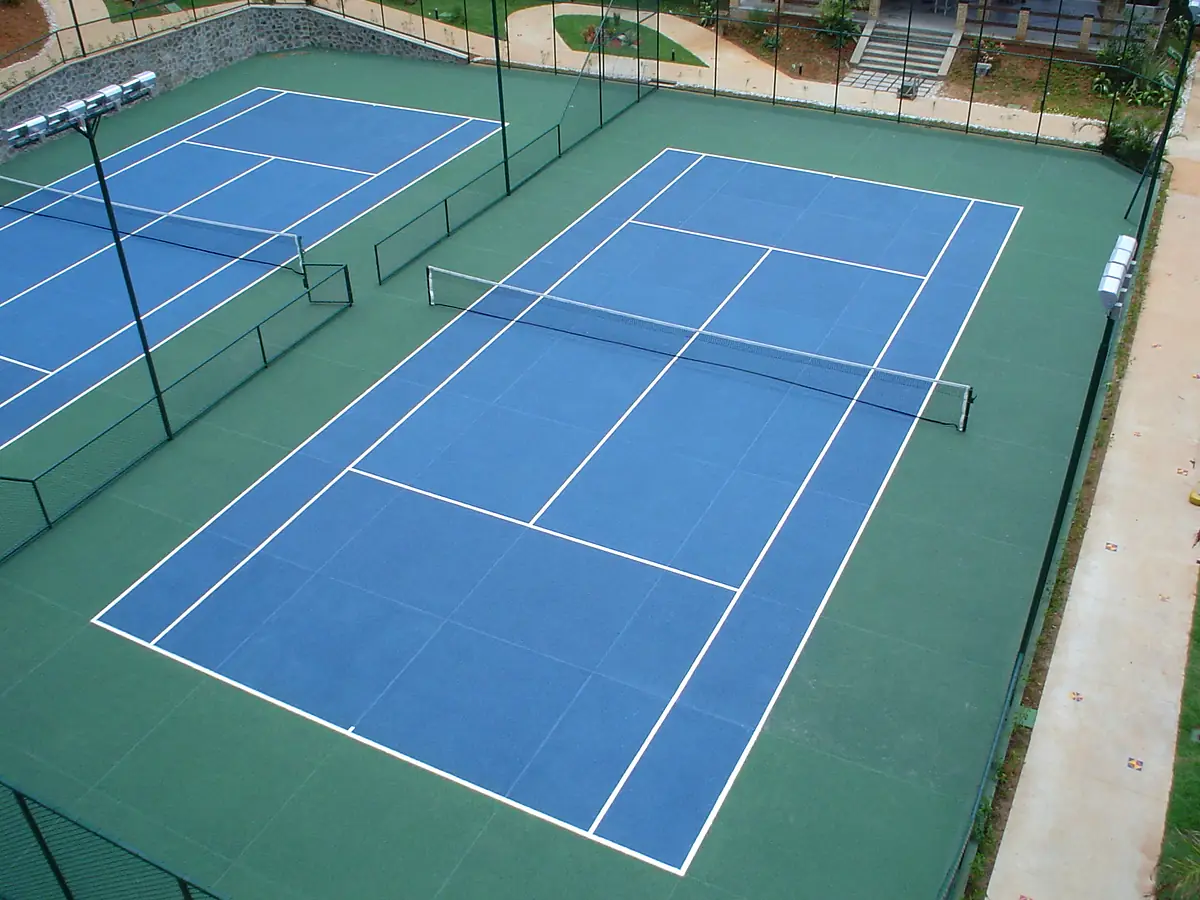 03
How often to resurface
Typical resurfacing cycles, the warning signs, and what shortens the cycle in Florida.
Learn more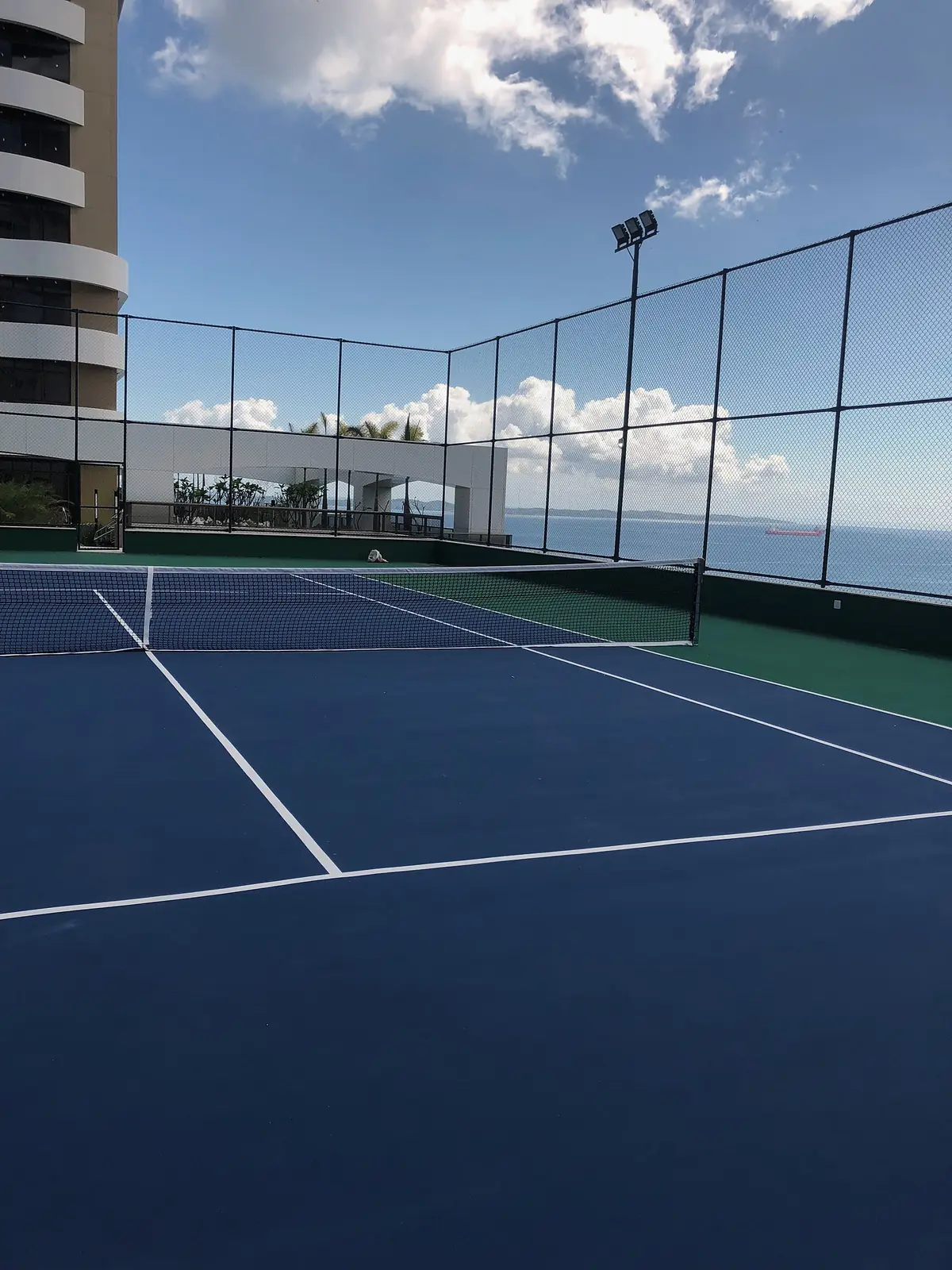 04
Acrylic vs cushioned surface
Comfort, pace, heat, durability and cost of a standard acrylic court against a cushioned system.
Learn more
Your court, back in play.
Tell us about the court and what is wrong with it. We assess it on site, free of charge, and send a written scope and estimate.