
Who we serve
Courts for hotels and resorts
At a hotel, a court is a guest amenity run by an operations team. It has to look right every morning, stay bookable through high season, and fit a capital plan that also covers rooms, pools and roofs. We resurface, repair and maintain resort courts in Florida with that in mind: work phased so part of the amenity stays open, appearance treated as a standard, and repairs timed around occupancy.
Phased work, scheduled around occupancy
A resort with four courts rarely needs all four closed at once. We split the work into phases, usually one or two courts at a time, and keep the open courts separated from the work zone with temporary fencing and signs. Mixing, staging and material storage go to a back-of-house area agreed with engineering, away from the pool deck and guest paths.
Hotel calendars are set months ahead: high season, group blocks, weddings, clinics run by the tennis pro. We ask for the occupancy forecast and the events calendar at the assessment and place the work in the lowest weeks. In much of Florida those fall in late summer and early fall, which is also storm season, so the schedule for those months carries more weather days.
Pressure cleaning and surface preparation are the noisy tasks. We run them after the breakfast rush and outside quiet hours, and keep the coating days, which are quiet, for busier periods. Each acrylic coat has to dry before the next goes on, so every court in the phase plan has its own reopening date that the front desk and the activities team can give guests. If an event lands on the calendar after the work is booked, a phased plan can usually shift by court instead of cancelling the whole job.
- Phases by court, in an order agreed with the activities team
- Work zone fenced and signed, with a separate crew entrance
- Staging in a back-of-house area, never on guest paths
- A reopening date per court, confirmed after the final coat cures
Appearance is part of the standard
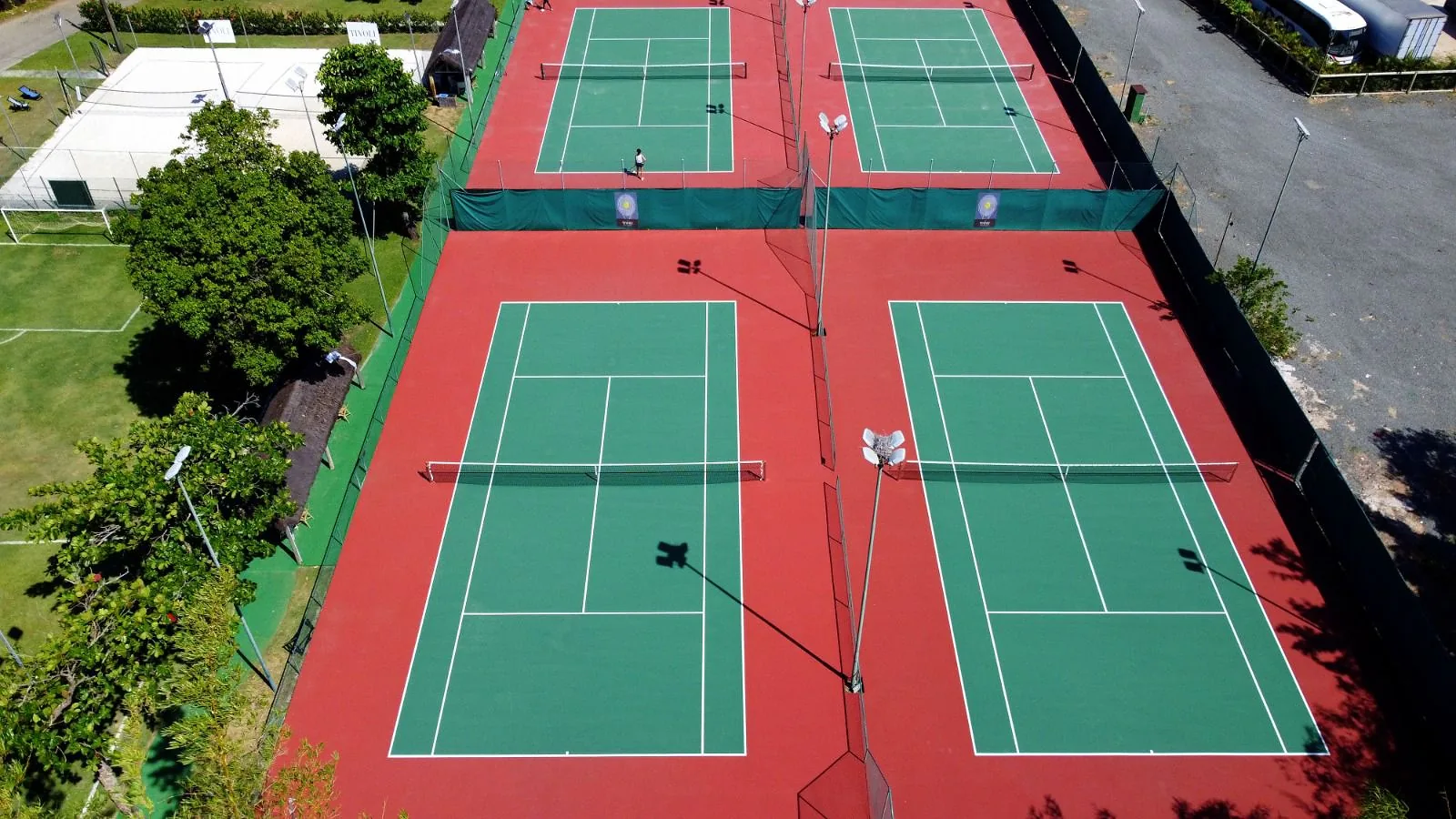
Guests see the court from the room balcony, the pool and the path to the beach. A faded court with grey lines and torn windscreens reads as neglect even when it still plays well. We treat appearance as part of the scope: color chosen with the property, and with brand standards where they apply; lines crisp and square at 2 in wide; windscreens tight and clean; surrounds free of leaves, sand and stains.
On a resurfacing, the playing area and the surround take contrasting colors so the court reads cleanly from above and in photos. Between resurfacings, a maintenance plan covers cleaning, mildew treatment along shaded fence lines and line touch-ups, so the court still looks cared for in the off years.
- Court and line colors agreed in writing, with samples on site
- Windscreens replaced or re-tied when faded, torn or slack
- Net height, center strap and posts checked at each visit
- Surrounds and fence lines cleared of debris and staining
One plan for every court type on the property
Resort guests ask for more than tennis. On a tennis court, pickleball comes from painting lines on the existing surface: either shared lines in a separate color so both games use the court, or a dedicated pickleball line layout. Many resorts also have padel or beach tennis courts. Padel is synthetic turf with sand infill inside glass and mesh walls; beach tennis is played on sand. Arenas is confirming its padel and beach tennis offer; ask us and we will tell you what we can take on today.
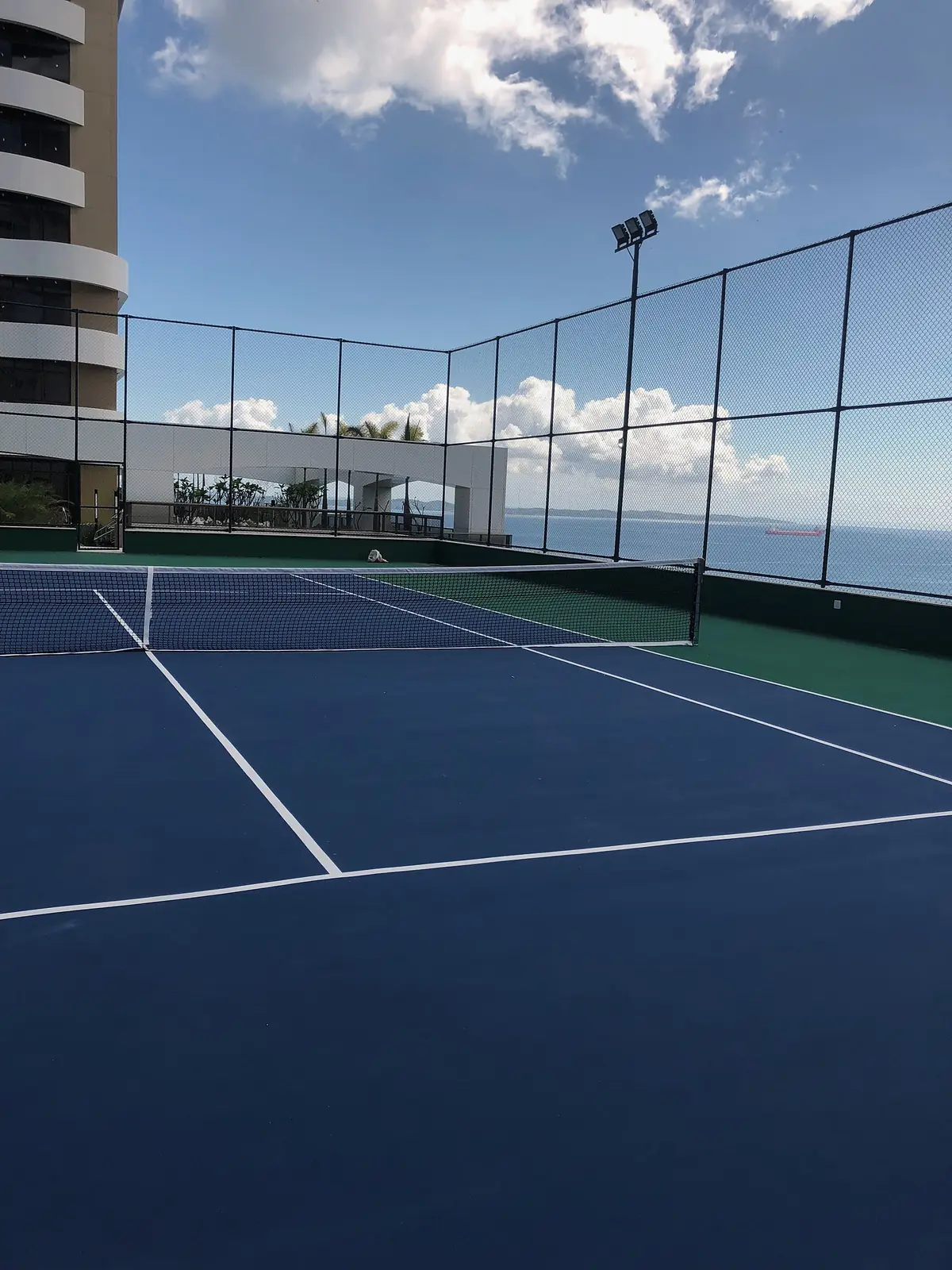
Each hard court wears differently, so each gets its own routine inside one maintenance plan for the property. In Brazil we have worked on courts for resorts including Iberostar, Reserva Sauípe, Tivoli, Vila Galé and Grand Palladium, where tennis and multi-sport courts have to be ready every morning. We plan Florida resort work with the same habits.
Maintenance tied to the capital plan, and help after storms
Most hotels fund large work through a multi-year capital plan reviewed with ownership. A court is easier to fund when it appears there as components, each with a remaining life and a cost: the acrylic surface, resurfaced every four to eight years and often sooner in full Florida sun; crack and drainage repair; nets and posts; windscreens and fence fabric. Our condition report uses those lines, so engineering can carry each one into the plan and time a resurfacing with other work that already disrupts that part of the property.
Storms are part of owning a court in Florida. Windscreens act like sails in high wind and can pull a fence over, so many properties take them down before a named storm. Afterwards the court usually needs debris and silt cleared, a check for new low spots and washouts at the edges, and nets and windscreens rehung. A maintenance plan can include a post-storm visit, so the court is inspected soon after the storm and the engineer receives a written repair scope to approve.
- Windscreens down before a named storm, rehung after
- Debris, sand and silt cleared from the court and drains
- Fence fabric, ties and gates checked for damage
- Flood check for new birdbaths or edge washouts
From assessment to a reopened amenity
Walk the property
We walk every court with engineering and the activities or tennis team, then measure, photograph and note each defect.
Condition report and scope
Each court gets a condition note, an itemized scope and a phasing option, ready to enter in the capital plan.
Phase plan
Order of courts, closure dates, staging and crew access agreed against occupancy and the events calendar.
Work, handover, plan
Courts reopen one phase at a time, with photos at handover and a maintenance schedule for the years ahead.
Questions
Can guests keep playing while you work?
Yes, on properties with more than one court. We phase the work so at least one court stays open, fenced off from the work zone. A single-court property loses the court for the full closure window, so we place it in the lowest-occupancy weeks.
How long is a court closed for resurfacing?
The written scope gives the closure window for your courts; one to two weeks of site work per court is a typical range, depending on repairs and weather. Each acrylic coat must dry before the next, so Florida afternoon storms add days. The phase plan gives a date for each court.
Do you maintain padel and beach tennis courts?
Arenas is confirming its padel and beach tennis offer. Ask us and we will tell you what we can take on today. Our confirmed Florida offer is restoration and maintenance of existing tennis, pickleball and multi-sport hard courts.
Have you worked for hotels in the United States?
Not yet. Our resort work is in Brazil, for properties including Iberostar, Reserva Sauípe, Tivoli, Vila Galé and Grand Palladium. The US company is new, and we say so plainly.
Are you licensed in Florida?
Our Florida contractor license is pending. Ask us for the current status before you sign.
Related
 01
Iberostar resort
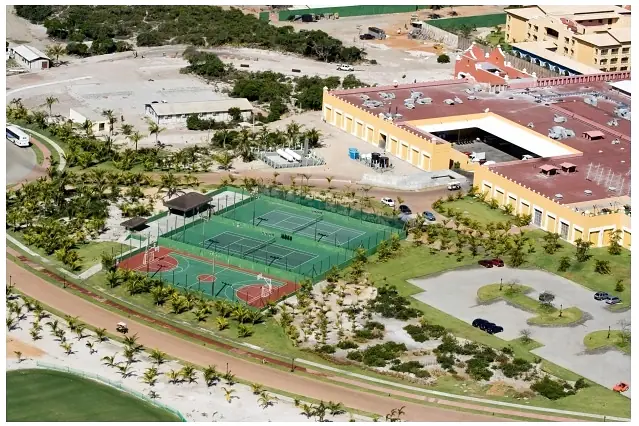
Tennis and multi-sport courts laid out between the resort buildings.
Learn more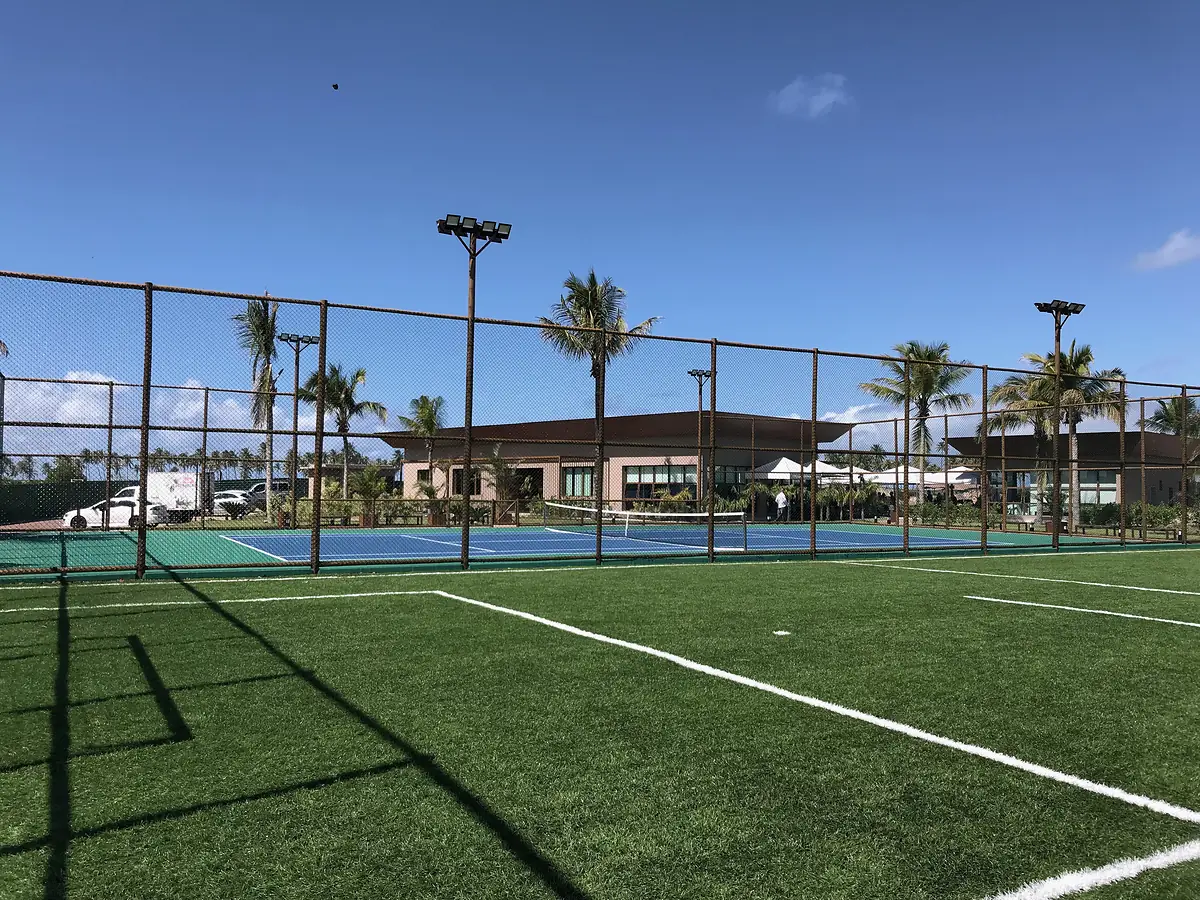 02
Reserva Sauípe resort
Hard tennis court, grass soccer field and perimeter fencing in one resort complex in Bahia.
Learn more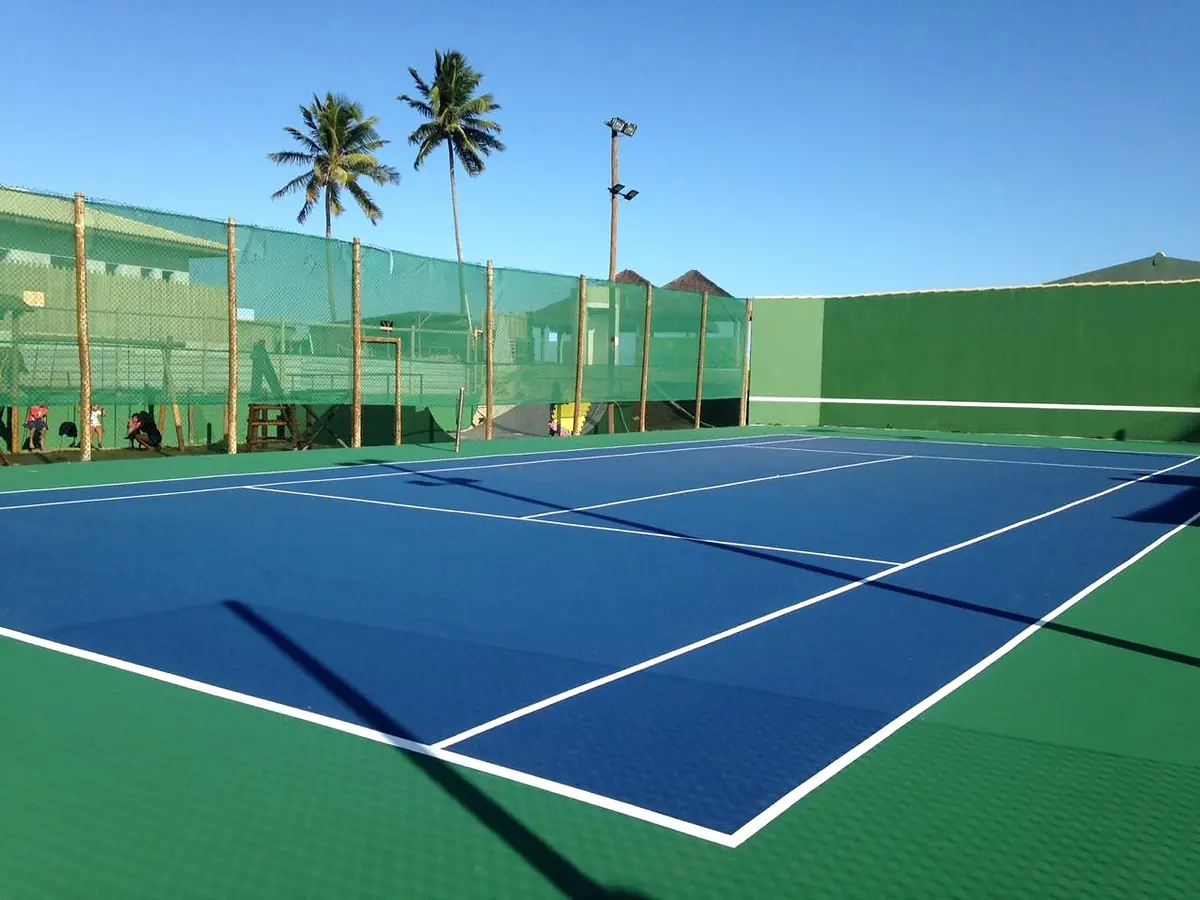 03
Maintenance plans
Scheduled inspection, cleaning and small repairs that keep a court playing between resurfacings.
Learn more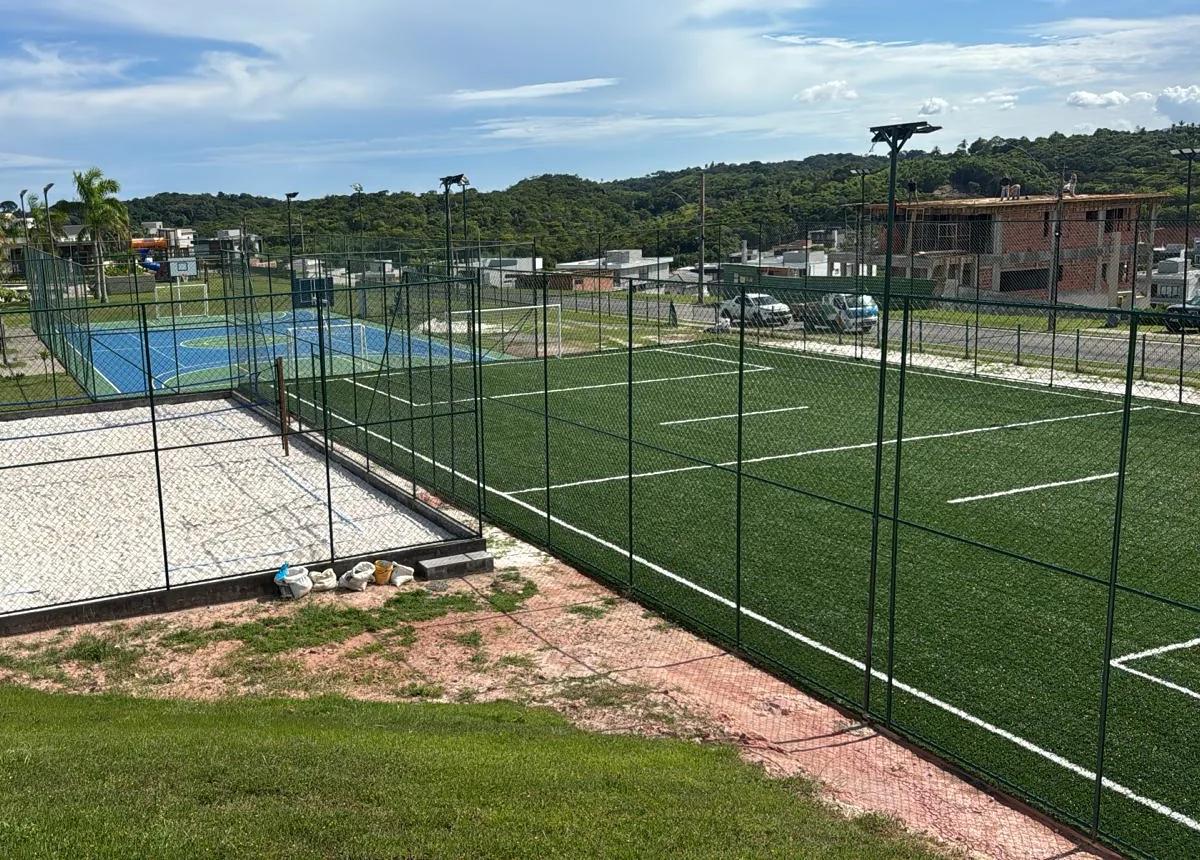 04
Padel
A care guide: how padel turf, sand infill, glass and steel wear, and what routine maintenance involves.
Learn more
Your court, back in play.
Tell us about the court and what is wrong with it. We assess it on site, free of charge, and send a written scope and estimate.