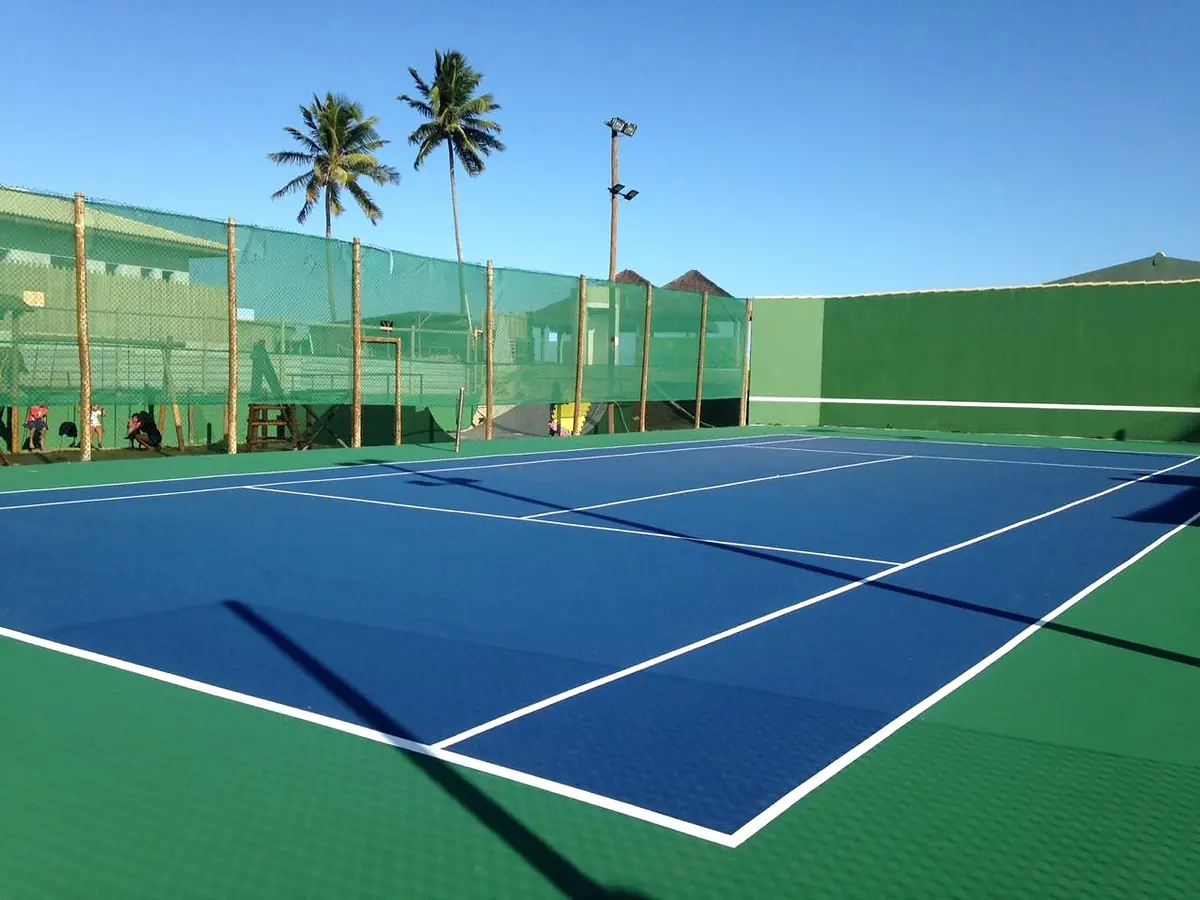
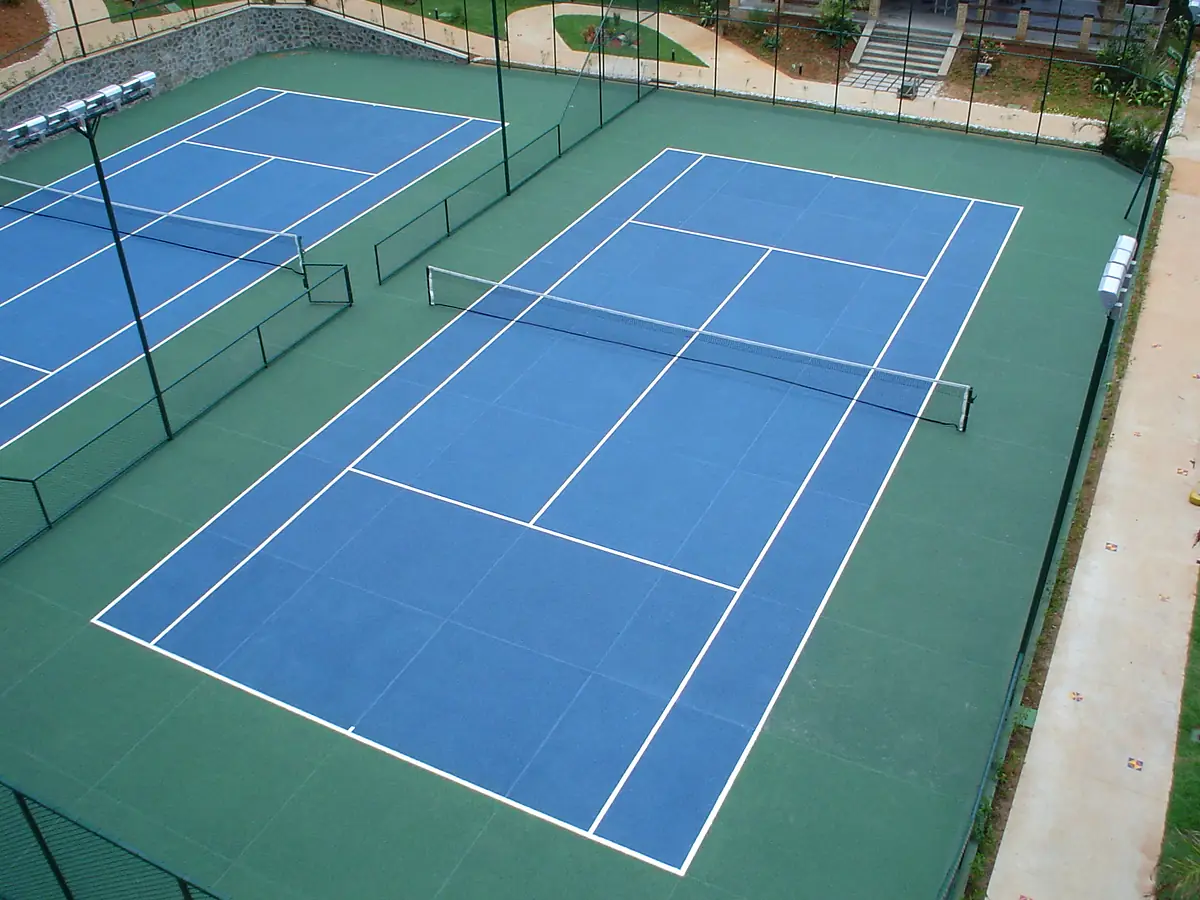
The typical cycle
Industry guidance commonly cites four to eight years between acrylic resurfacings for courts in normal use. That figure assumes the court drains well, is cleaned regularly and has cracks sealed as they appear.
Heavy daily play, full sun, poor drainage or skipped maintenance pull the cycle toward the short end. A lightly used court with shade and good drainage can reach the long end.
Why the cycle is shorter in Florida
Florida combines the conditions that age acrylic coatings fastest. Ultraviolet light degrades the binder that holds color and texture. Daily heat cycles make asphalt bases move, which opens cracks. Afternoon storms leave water in low spots, and humidity keeps those spots damp long enough for mildew and algae to grow.
None of this means a Florida court must be resurfaced on a fixed date. It means inspections should be more frequent, and small repairs should not wait for the next full resurfacing.
Signs that a court is due
Walk the court after a dry week and again after rain. These signs indicate the coating is near the end of its service life:
- Faded, chalky color that rubs off on hands or shoes.
- Smooth, polished areas where texture has worn, especially at the baselines.
- Bare spots showing the dark base or older layers.
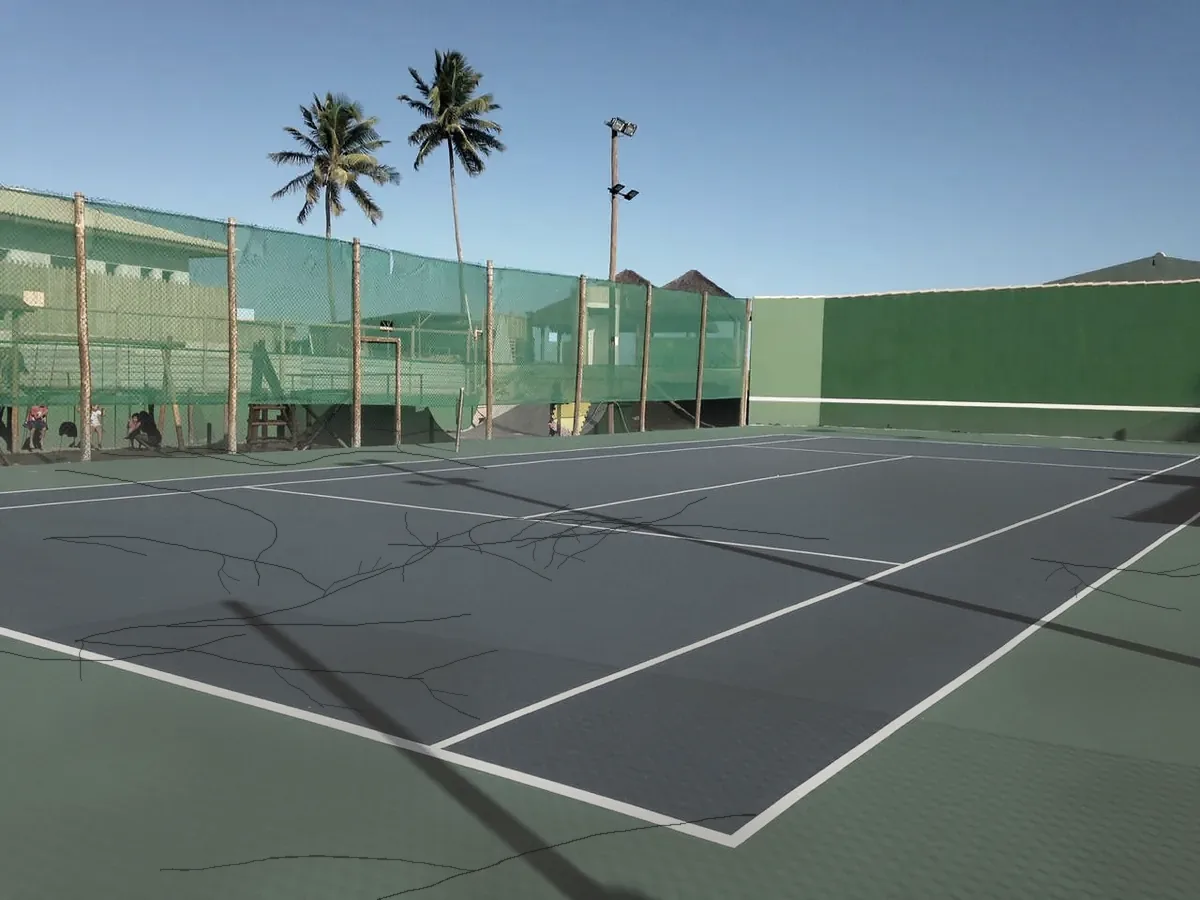
- Cracks wider than a hairline, or cracks that have reopened after filling.
- Water that stays in low areas long after rain, with stains or algae around it.
- Peeling or blistering coating.
Typical intervals
- Acrylic resurfacing
- Every 4 to 8 years, shorter with heavy use and full sun
- Cleaning
- Once or twice a year, more in humid shaded areas
- Crack sealing
- As cracks appear, checked at least yearly
- Documented inspection
- Once a year
- Line refresh
- With resurfacing, or sooner on heavily used courts
Typical industry intervals. Your court's condition sets the real schedule.
What to do between resurfacings
Most of a court's life is decided between resurfacings. A simple routine extends the cycle and keeps the court safe:
- Clear leaves and debris often; organic matter stains and holds moisture.
- Wash the court once or twice a year to remove dirt and mildew.
- Seal new cracks as they appear, before water reaches the base.
- Keep drains, swales and the area around the court clear so water leaves the surface.
- Check nets, posts and fencing for rust and loose hardware.
- Restrict non-tennis use: bikes, skateboards and heavy furniture damage the coating.
Inspection schedule we recommend
For community and club courts in Florida, a visual inspection each season and a documented inspection once a year give a board enough information to plan. The annual inspection should record cracks, ponding areas, coating wear and equipment condition, with photos, so the next budget is based on measurement rather than guesswork.
A written maintenance plan turns that schedule into a calendar of work, so resurfacing is planned years ahead and not triggered by complaints.
How use and base type change the cycle
A court booked from morning to night wears differently from one used a few times a week. Wear concentrates where players start and stop: behind the baselines, along the service lines and at the net. When those zones lose texture while the rest of the court looks fine, resurfacing is approaching even if the color still holds.
The base matters too. Asphalt courts move more with heat and tend to crack sooner, so crack sealing between cycles is part of normal life for an asphalt court. Post-tension concrete courts crack far less, which often lets the coating reach the longer end of the range, but repairs on them follow different methods and should be done by a crew that knows the system.
A Florida checklist after storm season
Late fall, once the heaviest storms have passed, is a good time to walk the court with a short checklist. Problems found then can be fixed in the drier months, before the court sees peak winter play.
- Mark every area still holding water a few hours after rain.
- Look for new cracks, and for old cracks that have reopened or widened.
- Check for mildew and algae along shaded edges, fences and windscreens.
- Inspect the court edges and surround for washouts, soil loss or roots lifting the slab.
- Clear sand, leaves and debris from drains and the fence line.
- Photograph each finding so the next resurfacing budget is based on records.
Resurfacing versus reconstruction
Resurfacing renews the coating. It does not fix a failing base. If a court has deep structural cracks, widespread settlement or many coats over a deteriorating slab, another resurfacing will be short-lived. An assessment should tell you which situation you are in before you budget.
Reconstruction options range from an overlay system over the existing slab to removing and rebuilding the base. Each has a different cost and service life, so ask for the options in writing, side by side, before a board votes.
Ranges are typical industry figures for planning, not a quote. Your court's scope and price come from the on-site assessment.