
Surface · Clay
Clay court
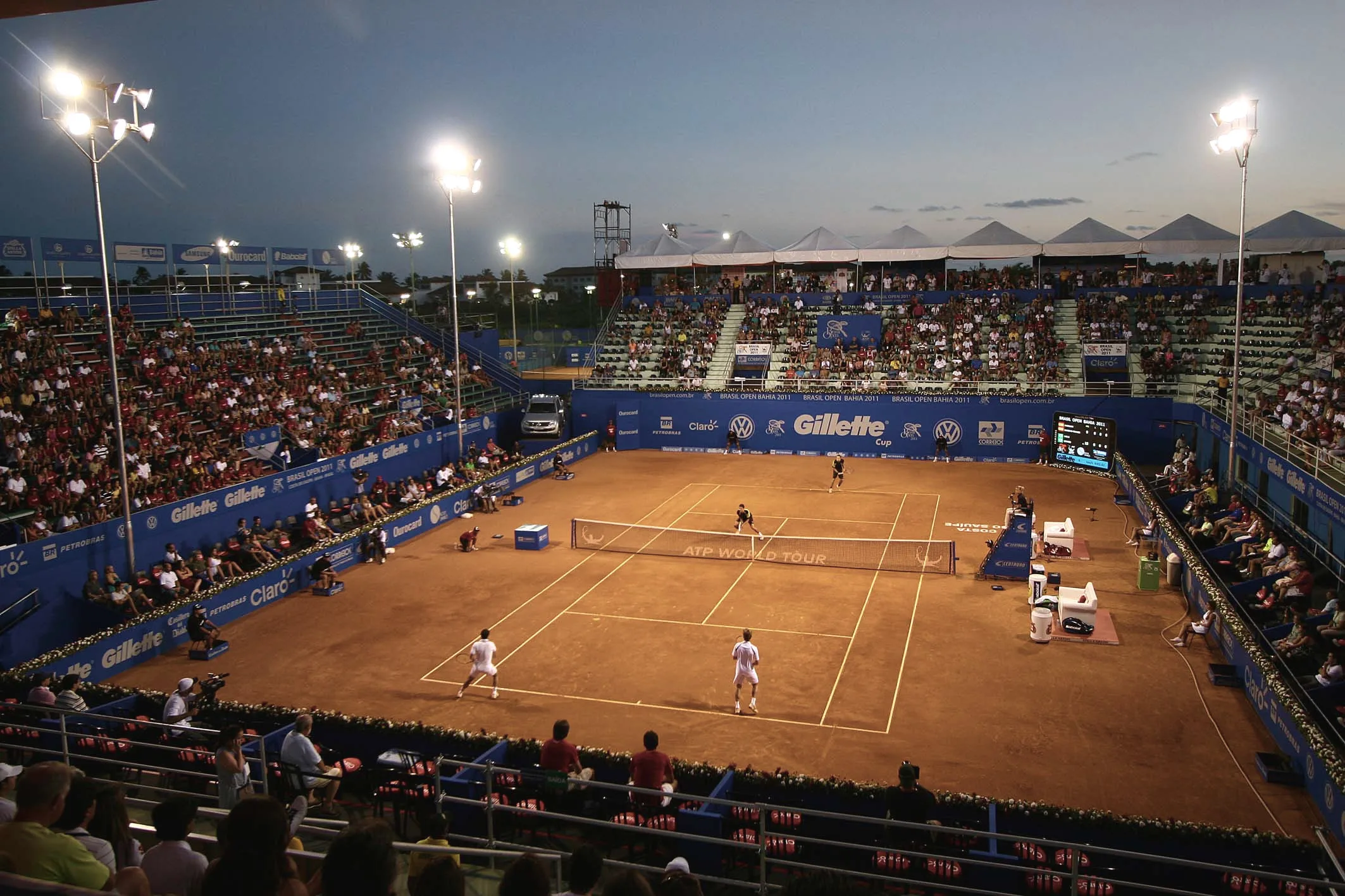
The soft court. Easier on ankles, knees and hips, and the surface that asks most of your attention. We built the clay center court of the ATP Brasil Open to ITF specification.
- Surface
- Compacted clay
- Standard
- ITF
- Reference
- ATP Brasil Open center court
- Care
- Daily: watering, rolling and brushing
Who it suits
Anyone with someone tending the court. Clubs, resorts and tennis academies with a grounds crew. Clay needs care from the day it is handed over, and that is the operating cost a client has to accept before choosing it. We say so before we quote.
In Florida, clay means fast-dry, the Har-Tru-type green clay common at US clubs. In Brazil, where we built the ATP Brasil Open court, it is red clay. Both are loose granular surfaces over a compacted base, and both ask for daily care.
Why it is easier on the body
In tennis, injury comes less from impact and more from the hard stop and the fast start. Clay lets the foot slide under braking and traction, taking the load off ankle, knee and hip. Points last longer, and the ball sits up after the bounce.
That slower, higher bounce is why many coaches like clay for juniors and developing players: it rewards patience and footwork over raw power.
Playing speed
Dry clay plays faster. Speed is adjustable through the maintenance routine: more water slows the court, a well-rolled surface quickens it. The compacted surface should stay as soft as it can while holding the lines firm.
What wears, and how we restore it
Clay courts age from the top. The base under a well-built court lasts for many years, while the surface layer is renewed every season.
Clay loses material to wind, rain and play. Lines lift, low spots form at the baselines, and the surface hardens if it is not watered. Restoring a clay court means leveling, adding new clay as top-dressing, rolling and resetting the lines, then handing the daily routine back to the staff.
How we renovate a clay court
Check drainage
Check the base and drains so water leaves the court and does not wash the clay.
Scarify and level
Loosen compacted material and level low spots at the baselines and service boxes.
Clay layer
New clay spread as top-dressing, watered and rolled in passes to a firm, even plane.
Lines
Lines reset and fixed into the surface so they hold under sliding.
Handover
We train the staff in daily watering, rolling and brushing.
Specifications
Clay court specification
- System
- Compacted clay over graded stone base
- Base
- Graded, compacted aggregate with drainage
- Pace
- Slow; adjustable through watering and rolling
- Care
- Daily watering, rolling and brushing; periodic top-dressing
- Sports
- Tennis
- Reference
- ATP Brasil Open, ATP Tour, built to ITF specification
Gallery
Questions
Is clay a good choice for an HOA?
Only if someone will water, roll and brush it every day. Without that, clay hardens, loses its lines and becomes uneven. For unattended courts, a hard court is the safer choice.
What is the difference between green clay and red clay?
In the US, clay courts are mostly fast-dry green clay. Red clay is common in Europe and South America, and it is what we built for the ATP Brasil Open. Both are granular surfaces that slide underfoot.
Can a clay court be restored?
Yes. Leveling, new clay as top-dressing, rolling and new lines bring a worn clay court back, as long as the base drains.
Does clay drain after rain?
A well-built clay court drains through its base. Play resumes once the surface firms up, which depends on how much rain fell.
What does the daily routine involve?
Before play, water the court to the right moisture. After play, brush the surface and sweep the lines. Roll it on a regular schedule so it stays firm. Your staff does this; we train them at handover.
Related
 01
Maintenance plans
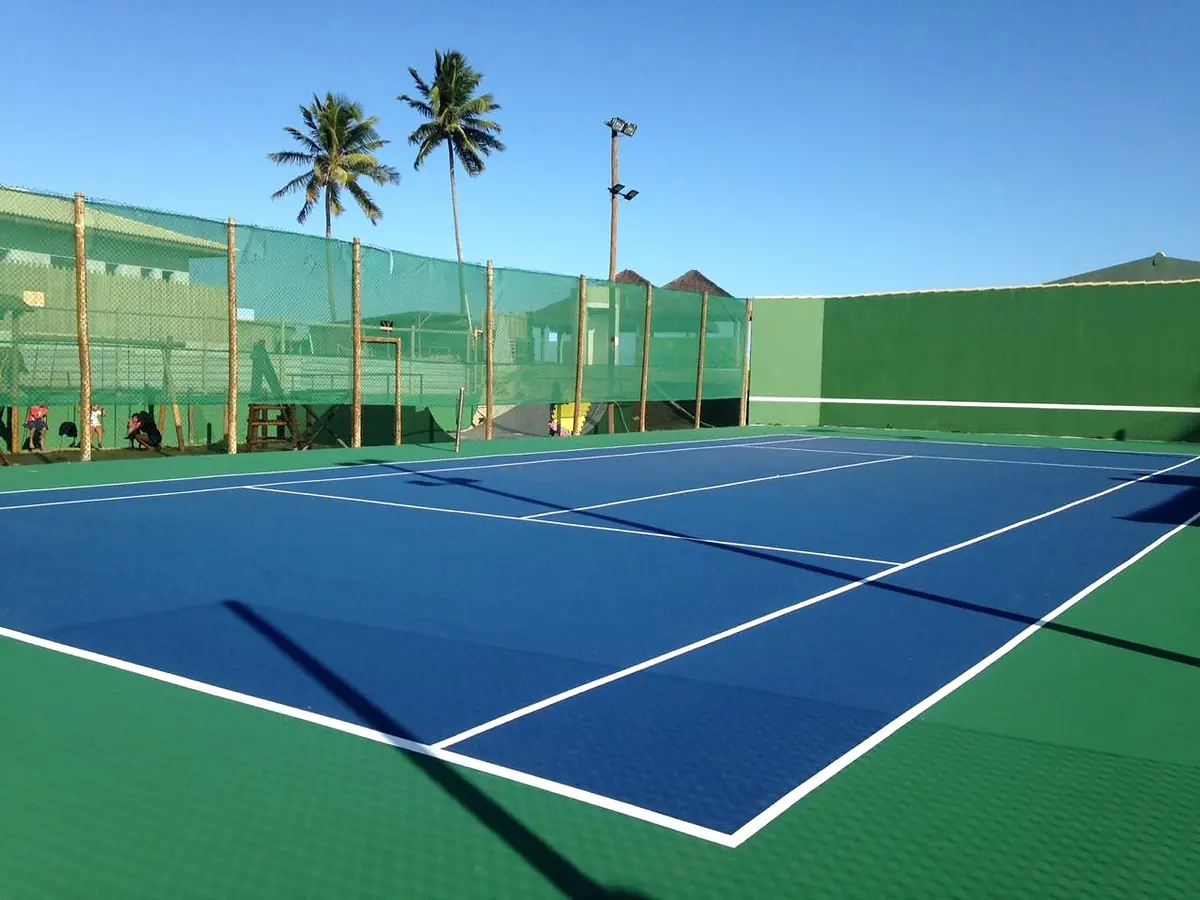
Scheduled inspection, cleaning and small repairs that keep a court playing between resurfacings.
Learn more 02
Court construction
New courts from grading to lines, built to ITF dimensions. Brazil track record since 2003.
Coming soon to Florida- 03
ATP Brasil Open center court
The clay center court of an ATP Tour event at Costa do Sauípe, built to ITF specification.
Learn more 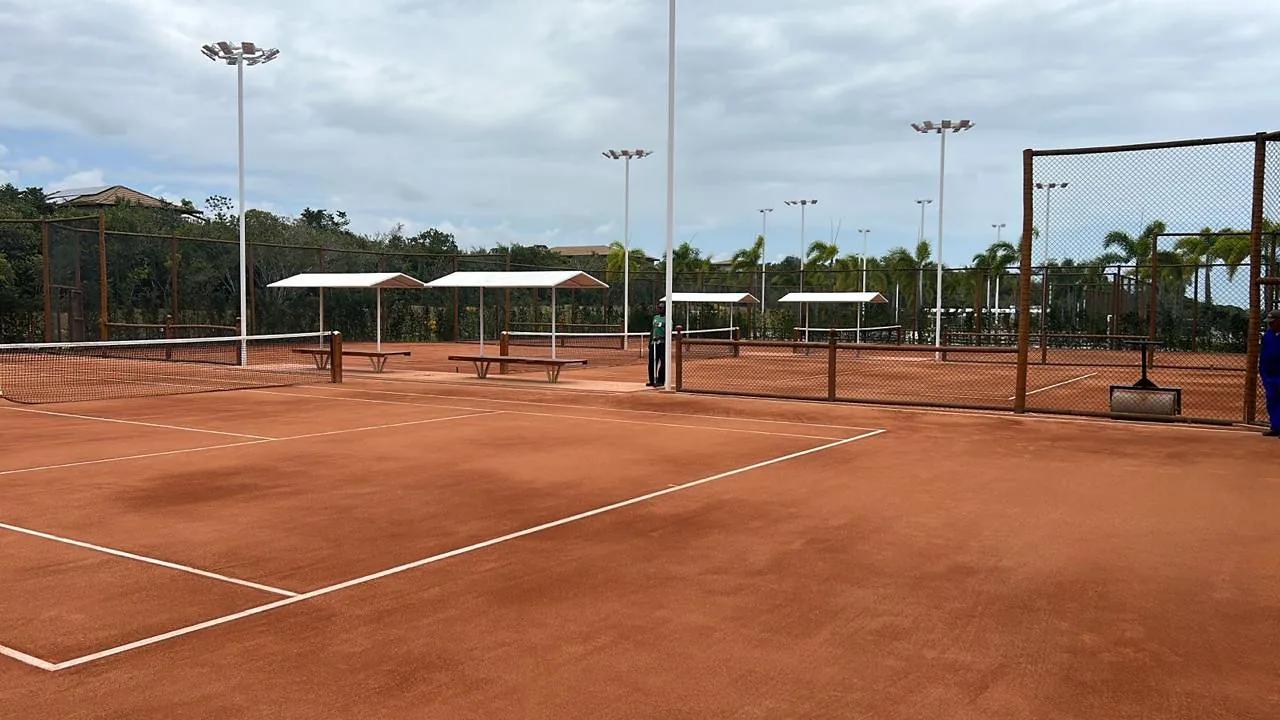 04
Clay vs hard court
Play, maintenance, heat and long-term cost compared, so you choose the surface you can keep.
Learn more
Your court, back in play.
Tell us about the court and what is wrong with it. We assess it on site, free of charge, and send a written scope and estimate.