
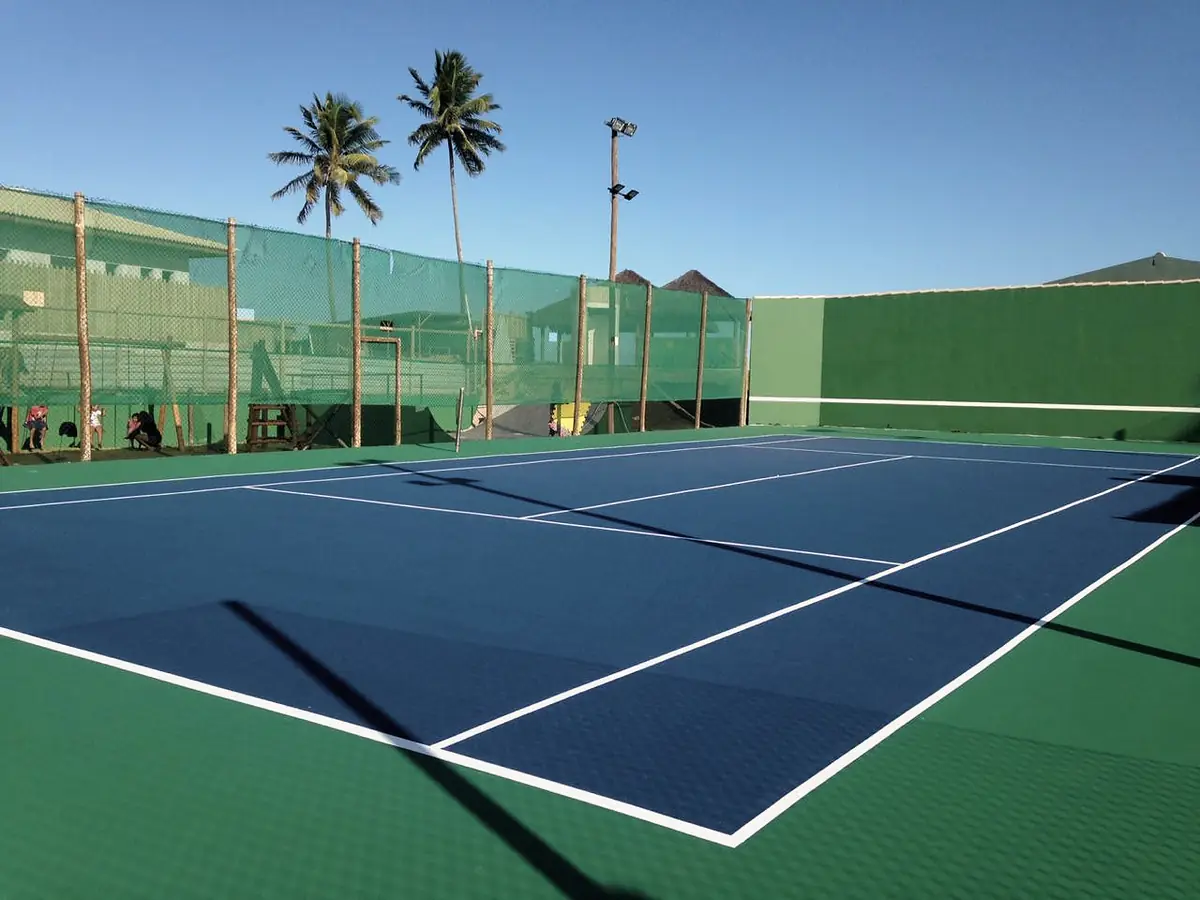
Service · Hard court
Tennis court resurfacing in Florida
A resurfacing restores the playing layer of a hard court: the cracks and low spots are repaired, new acrylic resurfacer and color coats go down, and the lines are painted again. Done on time, it adds years to the asphalt or concrete underneath.
- Surface
- Acrylic over asphalt or concrete
- Typical cycle
- Every 4 to 8 years, by use and climate
- Court size
- 78 × 36 ft inside the lines, about 120 × 60 ft overall
- First step
- Free on-site assessment and written scope
What a resurfacing is
A hard court is a stack of layers: compacted subgrade, an aggregate base, asphalt or concrete, then a thin acrylic system on top. The acrylic is what players touch. It carries the color, the texture and the lines, and it seals the pavement from water and sun.
Resurfacing replaces that top system. It is not a repaint. Paint alone over a dirty, cracked or ponding court peels within a season. A proper resurfacing cleans the pavement, repairs it, levels it with resurfacer and only then applies the color coats.
Signs your court needs it
In Florida the acrylic wears faster than in milder climates. UV fades the color, heat cycles open cracks, and summer storms find every low spot. Look for these signs:
- Color faded to a chalky film that rubs off on your hand
- Bare or polished patches at the baselines and service lines, where play concentrates
- Hairline or open cracks across the playing area
- Water still standing in the same spots well after rain
- Lines worn, blurred or no longer square
- Mildew or algae stains in shaded corners
Our method
We start by measuring. We flood or survey the court to map low spots, record every crack by width and length, and check the edges and the base for movement. That survey becomes the written scope, so you can see what is repaired and what is coated.
The work then follows the order in the steps below. Each coat has to cure before the next one goes on, so we plan around the forecast. Florida afternoon rain is part of the schedule, not a surprise.
Why Arenas
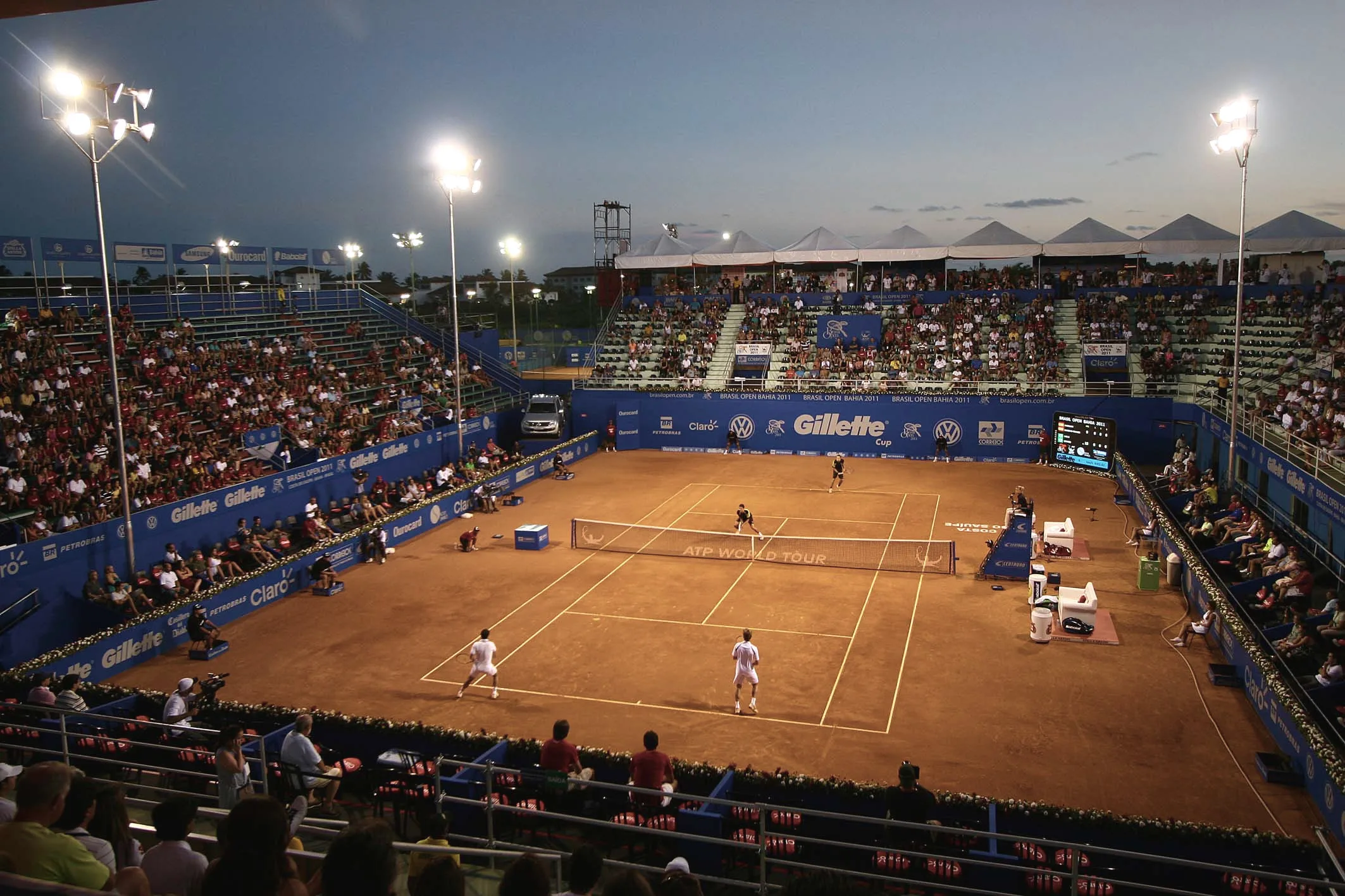
We have built and restored courts in Brazil since 2003, to ITF and ATP norms, including the clay center court of the ATP Brasil Open. Our crews are directly employed and trained, and the same team that measures your court does the work.
The written scope names each layer and the number of coats, so a board can compare our bid line by line against others.
The resurfacing, step by step
A typical sequence for an acrylic court on asphalt or concrete. The written scope adjusts it to your court.
Assess and map
Measure the court, map low spots and cracks, check the edges, fence line and drainage.
Clean
Pressure-wash the whole surface and treat mildew and algae so the new coats bond to sound pavement.
Repair cracks
Clean out and fill cracks with acrylic crack filler. Wider or recurring cracks get a bridging repair system.
Patch low spots
Fill areas that hold water with acrylic patch mix, feathered to the surrounding grade.
Resurfacer
One or two coats of sand-filled acrylic resurfacer to close the pores and true the surface.
Color coats
Two or three textured acrylic color coats on the court and the surround. The sand in the mix sets the pace.
Lines
Mask and paint lines 2 in wide, baselines up to 4 in, to ITF and USTA dimensions.
Specifications
System and materials
- Base
- Existing asphalt or concrete, repaired
- Crack repair
- Acrylic crack filler; bridging system for recurring cracks
- Leveling
- Acrylic patch mix in low spots
- Resurfacer
- 1 to 2 coats, sand-filled acrylic
- Color
- 2 to 3 coats, textured acrylic
- Lines
- 2 in wide, baselines up to 4 in
- Cushioned option
- Cushion layers under the color, where specified
- Sports
- Tennis, pickleball, basketball, multi-sport
Coat counts are typical. The written scope sets the system for your court.
Gallery
Questions
How often should a tennis court be resurfaced in Florida?
Most acrylic courts need it every 4 to 8 years. Heavy use, full sun and poor drainage push it toward the short end. Washing every two to three months and fixing cracks early push it toward the long end.
How long does a resurfacing take?
For one court, usually one to two weeks of site work, depending on the repairs and the weather. Each coat must cure dry before the next, so rain days add to the schedule.
Can you add pickleball lines during the resurfacing?
Yes. It is the best moment to do it, because the lines go on fresh color. We lay out the courts in your chosen colors and can add nets and posts.
What does a resurfacing cost?
Typical US industry ranges for an acrylic resurfacing of one tennis court run roughly $5,000 to $12,000. Crack and low-spot repair can move that figure a lot. Your price comes from the on-site assessment.
Will resurfacing fix cracks for good?
Resurfacing seals and fills cracks, but cracks caused by base movement can return. We tell you which cracks are cosmetic and which are structural before you approve the scope.
Ranges are typical industry figures for planning, not a quote. Your court’s scope and price come from the on-site assessment.
Related
 01
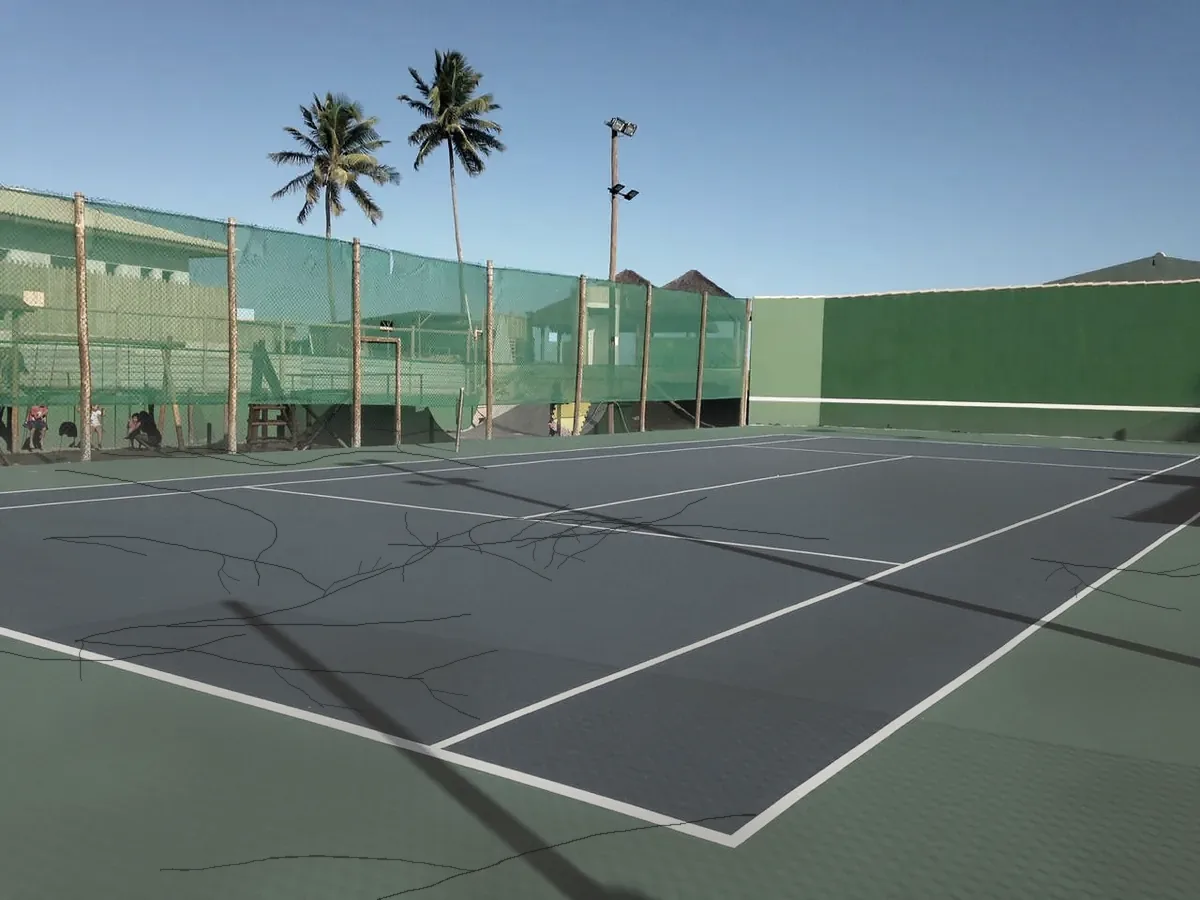
Crack and ponding repair
Fill and bridge cracks, level low spots that hold water, then recoat the repaired areas.
Learn more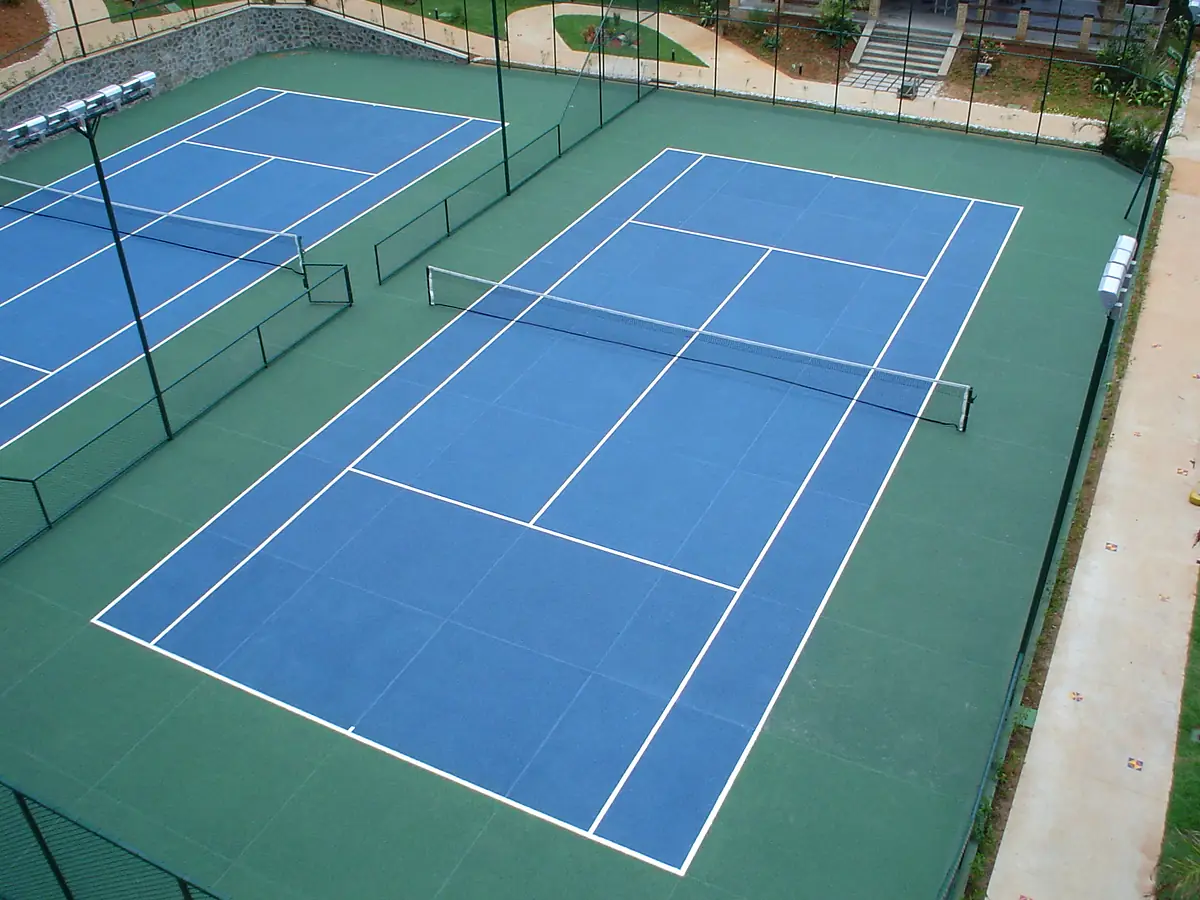 02
Hard court
Acrylic over asphalt or concrete. The lowest-maintenance court for tennis and pickleball.
Learn more- 03
Praia dos Lagos tennis court
A blue and green acrylic hard tennis court with a practice wall, near the coast.
Learn more - 04
Tennis court resurfacing cost
Typical US ranges, the factors behind the price, and how to compare bids for your court.
Learn more
Your court, back in play.
Tell us about the court and what is wrong with it. We assess it on site, free of charge, and send a written scope and estimate.