
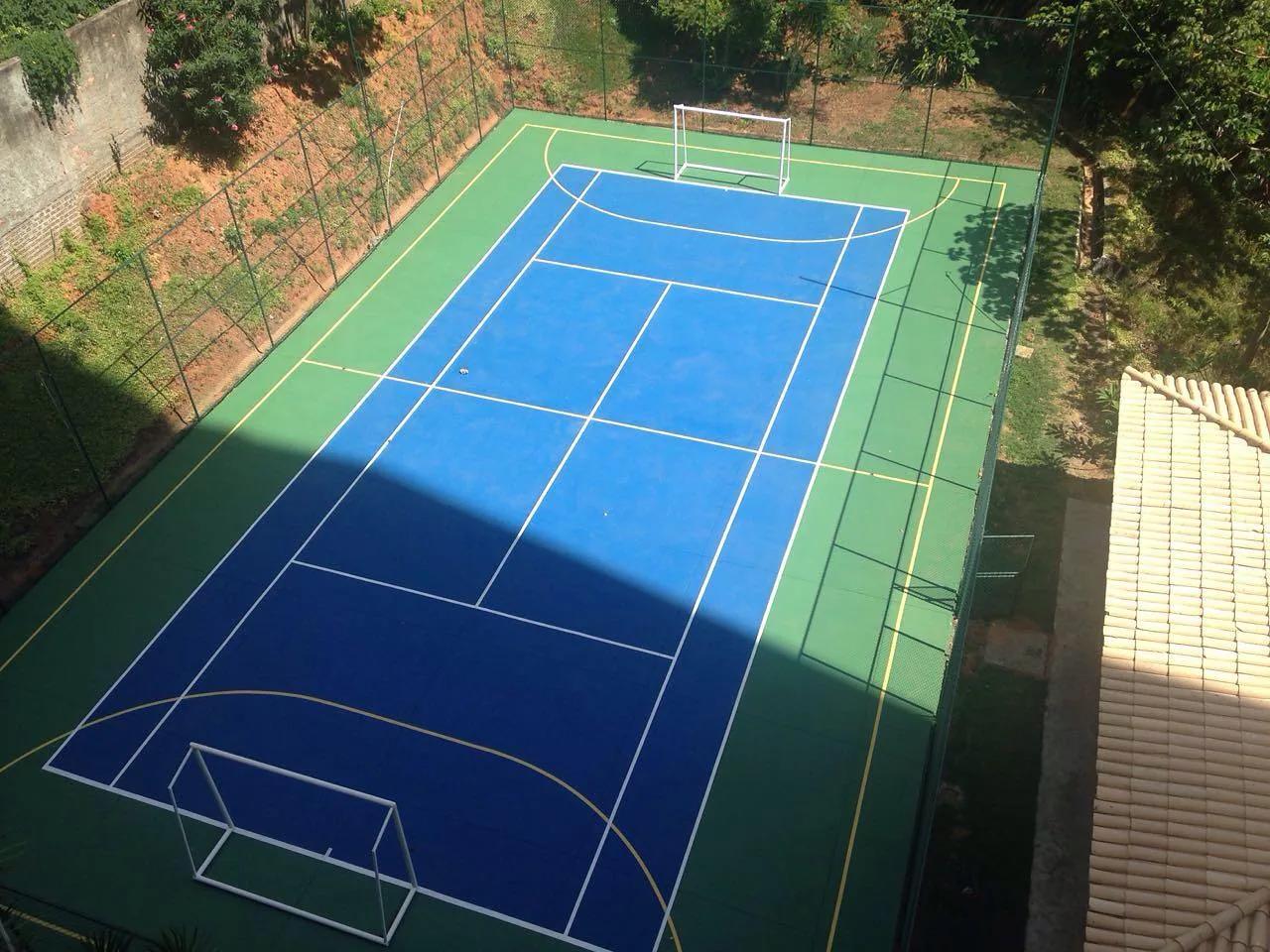
Sports · Pickleball
Pickleball court resurfacing and repair
This page is about pickleball courts that already exist and need to stay in shape. If you want to convert a tennis court, see our conversion service and guide. Here we cover how pickleball wears an acrylic court, how we restore it, and how we keep the lines exact.
- Court
- 20 × 44 ft, lines included
- Non-volley zone
- 7 ft on each side of the net
- Net
- 36 in at the sidelines, 34 in at center
- Recommended play area
- About 30 × 60 ft per court
How pickleball wears a court
Pickleball puts four players in a 20 × 44 ft box and keeps them close to the net. The heaviest traffic sits in a band a few feet deep on each side of the non-volley line, the kitchen line, where players shuffle sideways during dinking rallies. That band loses texture first. The acrylic polishes smooth, the color thins, and the surface gets slippery when it is damp from dew or a passing storm.
The baseline area wears next, from serves and returns. The rest of the court can look almost new while the kitchen band is worn through to the resurfacer. That pattern matters for planning: a court can need attention well before its color looks faded from a distance.
Signs a pickleball court needs work
Walk the court on a dry morning, then again after rain. These are the problems we see most on Florida pickleball courts:
- Smooth, shiny patches along the kitchen lines where shoes no longer grip
- Kitchen and baseline paint worn at the edges, so foot faults are hard to call
- Hairline cracks crossing the court, or cracks along the old tennis layout
- Water standing inside the court an hour after rain
- Net posts that lean, or nets that no longer hold 34 in at the center
- Tape marks or ghost lines from earlier layouts that confuse players
Why small defects matter more on a small court
A 20 × 44 ft court is about one third of the area inside the lines of a tennis court. A birdbath that would sit in a tennis court's run-off can land squarely inside a pickleball court and keep it closed after every storm. The same crack that a tennis player ignores runs through the kitchen, where play is slow and the ball bounces low, so players notice every deflection.
That is why we flood test pickleball courts with the same 1/16 in threshold used on tennis, and why we repair cracks inside the lines first, before any recoat.
Re-striping to the exact dimensions
Pickleball lines are 2 in wide and count as part of the court, so the 20 × 44 ft is measured to the outside edges of the lines. The non-volley line is part of the kitchen: a foot on the line is a fault. When lines are repainted over old ones by eye, they drift a little each time, and the kitchen shrinks or grows. We lay out every court again from measured references, check the diagonals so the court is square, and paint with textured acrylic line paint so the lines do not get slick.
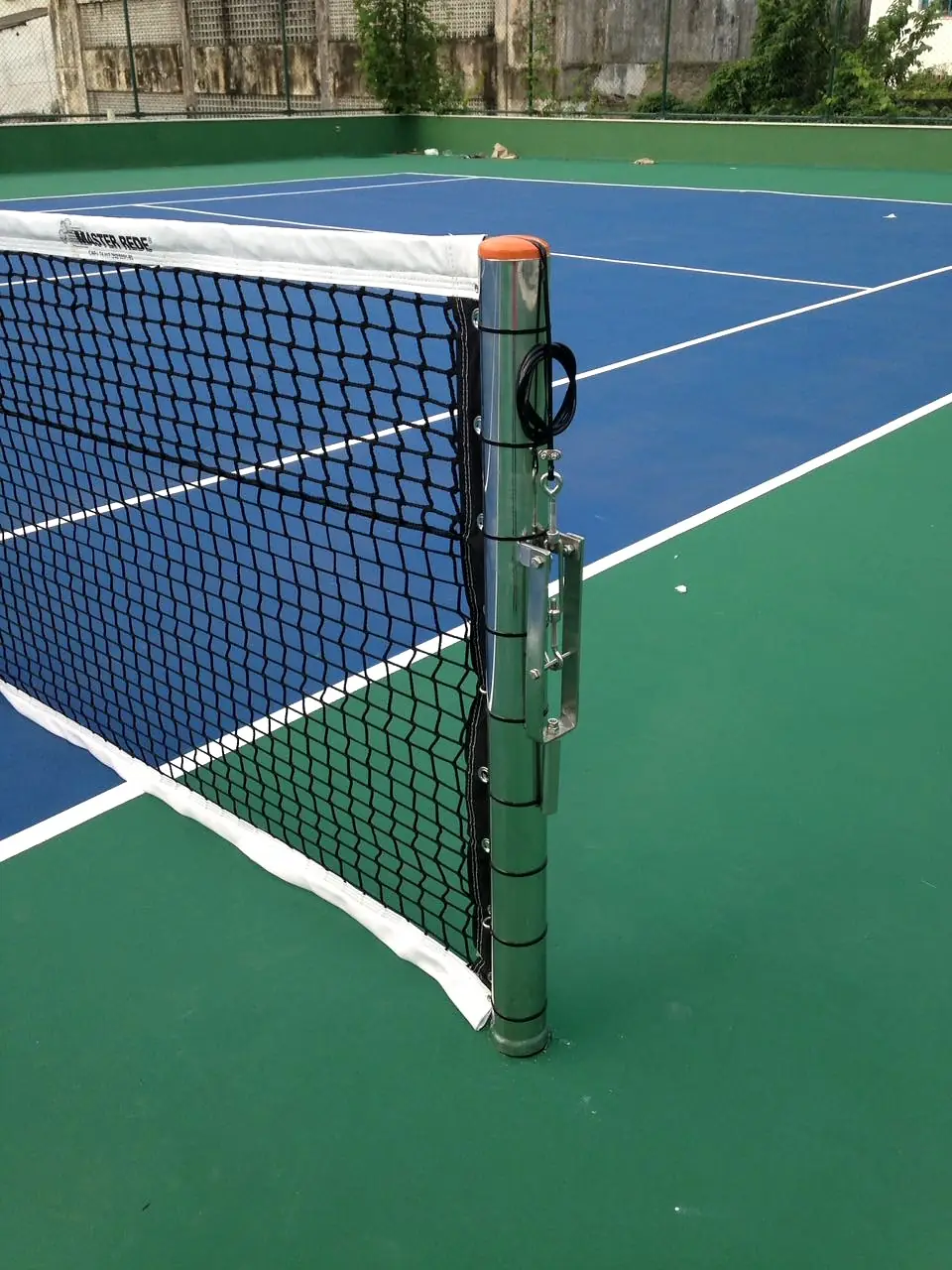
Net posts are commonly set about 12 in outside the sidelines. We check every net at 36 in at the sidelines and 34 in at the center, and adjust the center strap where the net is sagging.
Blended lines on tennis courts
Many Florida courts carry pickleball lines over a tennis layout. At resurfacing time we repaint both sets in fresh color: white for tennis and a quieter contrasting color for pickleball is common, so tennis players can still read their own lines. Where old pickleball lines were taped or painted in the wrong place, we cover them with the color coats so no ghost lines remain.
If the board wants to change the layout, add courts or remove tennis, that is a conversion, covered on the conversion service page and guide linked below.
How we restore a pickleball court
Assess
Flood test, crack map, texture check in the kitchen band, line accuracy and net heights.
Clean
Pressure-wash and treat mildew so new coats bond to sound acrylic.
Repair
Fill or bridge cracks and level low spots inside each court first.
Recoat
Resurfacer where texture is gone, then textured color coats on courts and surround.
Re-stripe
Lay out from measured references, square the diagonals, mask and paint 2 in lines.
Nets
Set 36 in at the sidelines and 34 in at center; replace worn nets, straps or posts.
Specifications
Pickleball court dimensions
- Court
- 20 × 44 ft (6.10 × 13.41 m), lines included
- Non-volley zone
- 7 ft on each side of the net, line included
- Service courts
- 10 × 15 ft each
- Lines
- 2 in wide, textured acrylic line paint
- Net height
- 36 in at the sidelines, 34 in at center
- Recommended play area
- About 30 × 60 ft per court
- Posts
- Commonly about 12 in outside the sidelines
USA Pickleball dimensions. Larger play areas are preferred where the fence allows.
Questions
How long are the courts closed?
Re-striping alone usually takes a few days including cure time. A full resurfacing with repairs commonly takes one to two weeks per group of courts, plus weather days in the Florida summer.
Can some courts stay open during the work?
Yes, where the layout allows. We phase the work by court or by fenced bay and keep material and traffic away from the courts in play.
How often do pickleball courts need resurfacing?
On the same 4 to 8 year cycle as other acrylic courts, but heavy daily play often puts them at the short end, because the kitchen band wears faster than the rest of the court.
What happens if we only repaint the lines?
New lines on worn or cracked color last a short time, and they hide wear from the board. If the kitchen band is polished smooth, slips are the real cost.
Do you convert tennis courts to pickleball?
Yes. That work, layouts and court counts included, is covered on our pickleball conversion page and in the conversion guide.
Related
 01
Pickleball conversion
Lay out two to four pickleball courts on a tennis court, with lines, nets and posts.
Learn more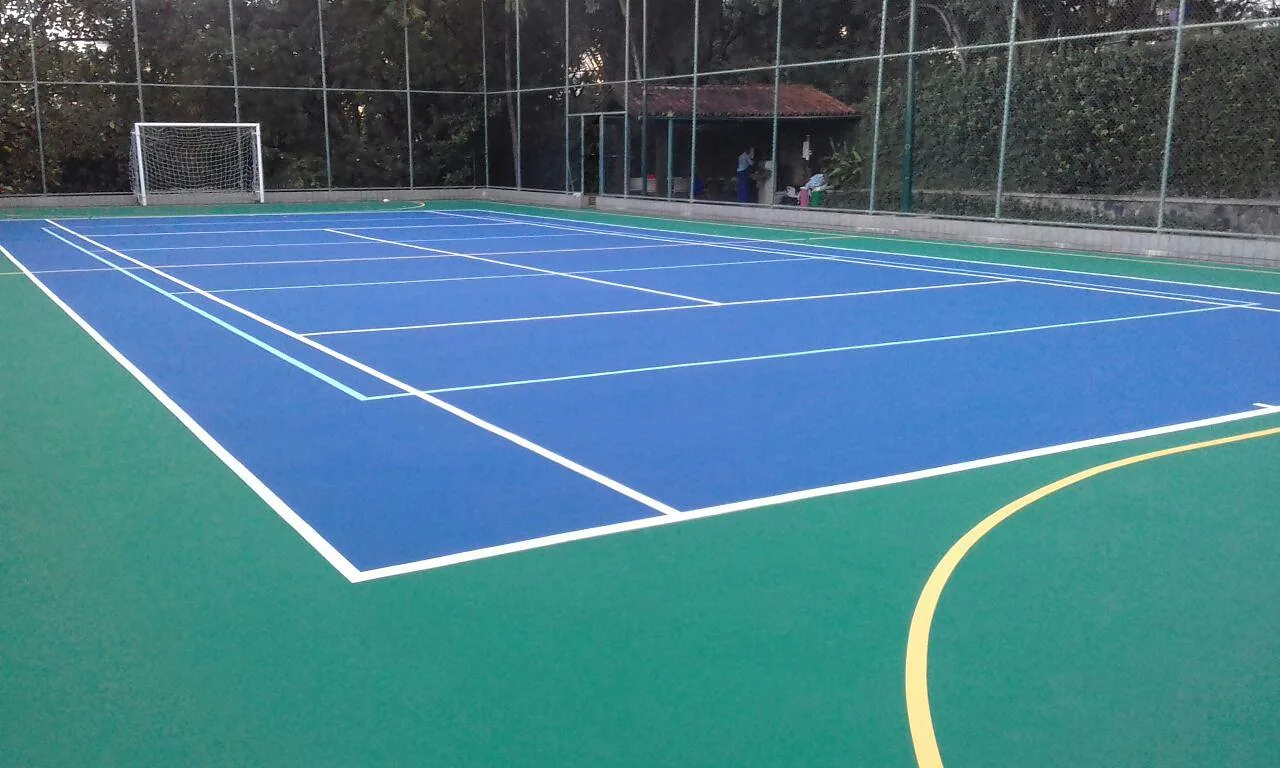 02
Tennis to pickleball conversion
Layouts, dimensions, nets, lines and typical costs for adding pickleball to a tennis court.
Learn more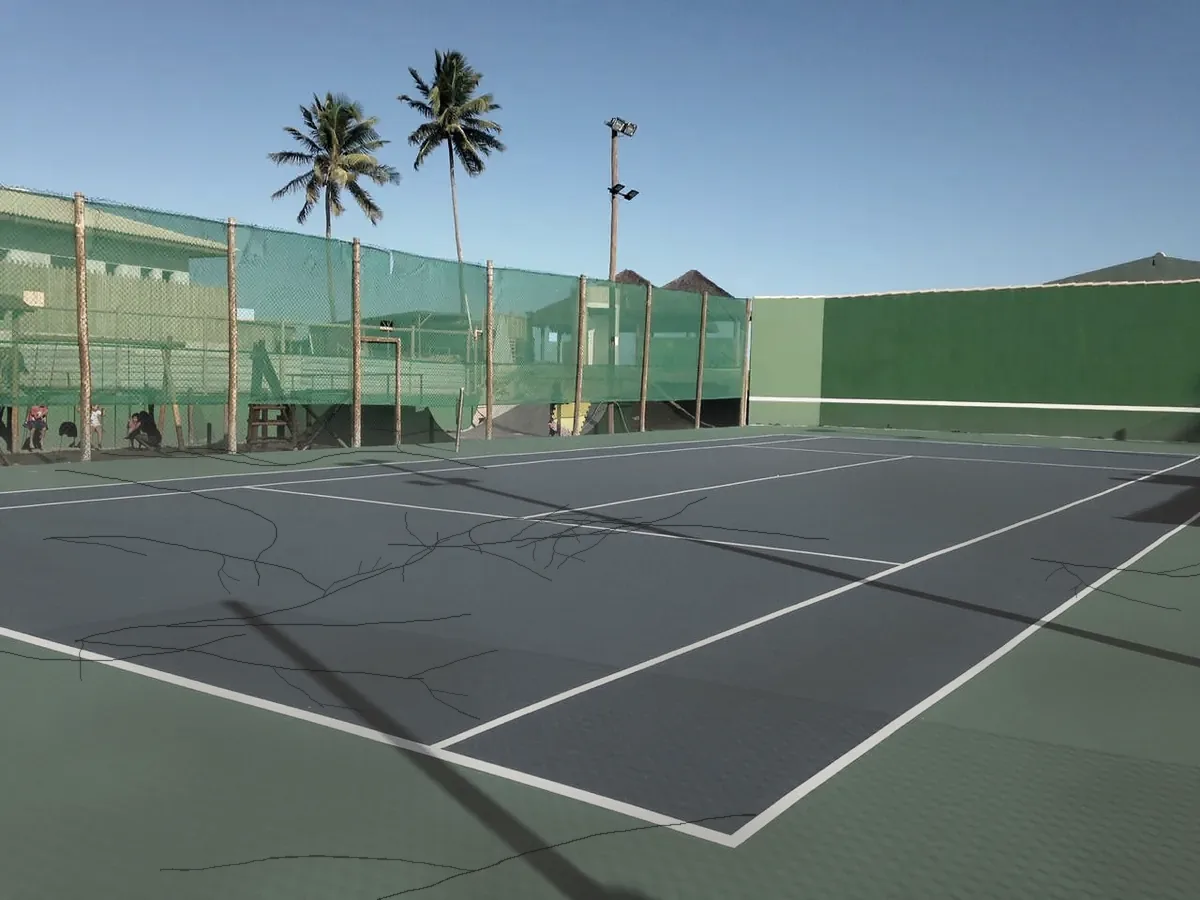 03
Crack and ponding repair
Fill and bridge cracks, level low spots that hold water, then recoat the repaired areas.
Learn more 04
Maintenance plans
Scheduled inspection, cleaning and small repairs that keep a court playing between resurfacings.
Learn more
Your court, back in play.
Tell us about the court and what is wrong with it. We assess it on site, free of charge, and send a written scope and estimate.