
Who we serve
Courts for property management companies
A management company that runs dozens of communities sees the same court problems again and again, each under a different board, budget and calendar. We work at portfolio level: one scope format so bids compare across communities, inspection rounds that rate every court the same way, and one contact who schedules work across all your sites.
One scope format across every community
When each community receives bids in a different format, the manager spends hours translating them before a board can compare anything. We use the same scope layout for every court in the portfolio: the same task lines, the same units and the same order, from pressure cleaning and crack repair to ponding correction, coats and line marking. A board at one community sees a scope that reads exactly like the one approved at another, and a competing bid can be set beside it line by line.
The format also makes your own records useful. After a few jobs, the manager can see what crack repair per linear foot or ponding correction per square foot actually cost across communities, and can spot a bid that is out of line before it reaches a board.
- Same task lines and units for every court
- Optional items and exclusions in the same place on every scope
- Quantities measured on site, not estimated from aerial photos
- Scopes sent as PDF, ready to attach to a board packet
Portfolio inspection rounds
A planned round, routed by geography, lets us inspect every court in the portfolio in one planned pass instead of reacting to one complaint at a time. Each court gets a condition report: photos, a crack map with lengths and widths, ponding areas found by flood test, coating wear at the baselines and service lines, and the state of nets, posts, windscreens, gates and fence fabric.
Every court is rated on the same simple scale, so the manager can sort the whole portfolio into three lists: courts that need work this year, courts to watch, and courts in good condition. That is the view a regional director needs to plan budgets across many associations, and it gives each community manager a dated record to show the board.
Florida courts change fastest in the wet season. A short follow-up check after storm season, limited to courts rated as needing watch, catches new birdbaths and reopened cracks before the winter play season.
Input for each community’s reserve study
Each association has its own reserve study, often prepared by a different reserve specialist. Our condition report gives each one the same inputs per component: what it is, its quantity, its current condition, an estimate of remaining useful life and the typical scope of its replacement. The components follow the court: the acrylic surface, crack and drainage repair, nets and posts, windscreens and fence fabric.
We do not prepare reserve studies. We supply measured condition data that makes them more accurate, and we update it at each inspection round, so the next study starts from current numbers rather than the age of the court alone.
One contact, one calendar, notices residents can read
One coordinator handles the portfolio: requests, assessments, scopes and the work calendar for every site. Approved jobs in the same area are grouped to share mobilization, which can lower the cost per court, and each community still receives its own closure window and reopening date.
Before each job we send a resident notice the manager can forward or post as it is: what is being done, closure dates, access changes and the reopening date. Notices, scopes and day-to-day contact are available in English, Spanish or Portuguese, so board members, residents and on-site staff can deal with us in the language they use.
- One coordinator for every community in the portfolio
- Approved jobs grouped by area to share mobilization
- Resident notices in English, Spanish or Portuguese
- Updates sent to the manager and copied to the board when asked
How a portfolio program starts
Court list
You send the list of communities with courts, with addresses, site contacts and any known problems.
Inspection round
We inspect each court on a planned route and rate it on one scale, with photos and measurements.
Portfolio report
One summary that ranks every court, plus a condition report and scope for each community.
Board by board
Each board approves its own scope; we schedule approved work across sites and keep the manager updated.
Questions
Does each association contract separately?
Usually yes, because each board controls its own budget and approves its own work. The scope format, the reporting and the point of contact stay the same across the portfolio.
How often should the portfolio be inspected?
Once a year as a documented round, plus a short check after storm season for courts with known drainage or crack problems. Courts rated poor can move to a shorter cycle.
Can you work with our reserve specialists?
Yes. We send condition data per component in a form the specialist can use. We do not prepare the reserve study itself.
Do you build new courts for communities?
Our Florida offer is restoration and maintenance of existing courts: resurfacing, crack and ponding repair, pickleball lines, nets, posts and windscreens, and maintenance plans.
Are you licensed in Florida?
Our Florida contractor license is pending. Ask us for the current status before you sign.
Related
 01
Communities and HOAs
Written scopes a board can compare, work scheduled around residents, and maintenance plans that fit a reserve study.
Learn more 02
Maintenance plans
Scheduled inspection, cleaning and small repairs that keep a court playing between resurfacings.
Learn more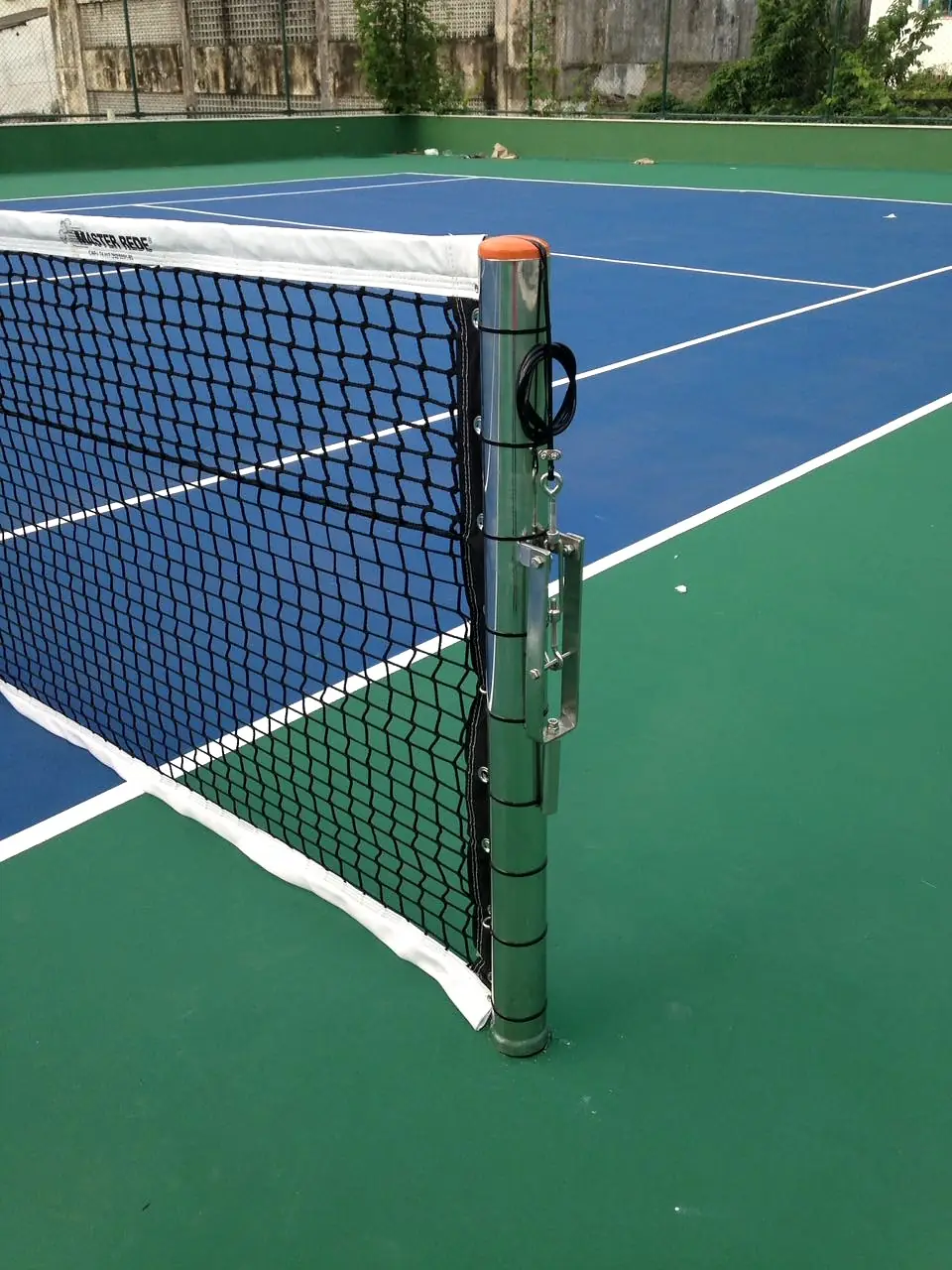 03
Court maintenance checklist
Daily to yearly tasks, who does each one, what to record and the red flags that need a contractor.
Learn more- 04
Tennis court resurfacing cost
Typical US ranges, the factors behind the price, and how to compare bids for your court.
Learn more
Your court, back in play.
Tell us about the court and what is wrong with it. We assess it on site, free of charge, and send a written scope and estimate.