
Sports · Basketball
Basketball court resurfacing and refinishing
Outdoor basketball courts are acrylic over asphalt or concrete; indoor courts are usually maple hardwood. Both need periodic work to stay safe and readable. We resurface and restripe outdoor courts, replace backboards, hoops and nets on existing posts, and refinish indoor hardwood floors.
- Outdoor surface
- Textured acrylic over asphalt or concrete
- Indoor surface
- Hardwood, usually maple, with a polyurethane finish
- Rim height
- 10 ft above the playing surface
- Brazil reference
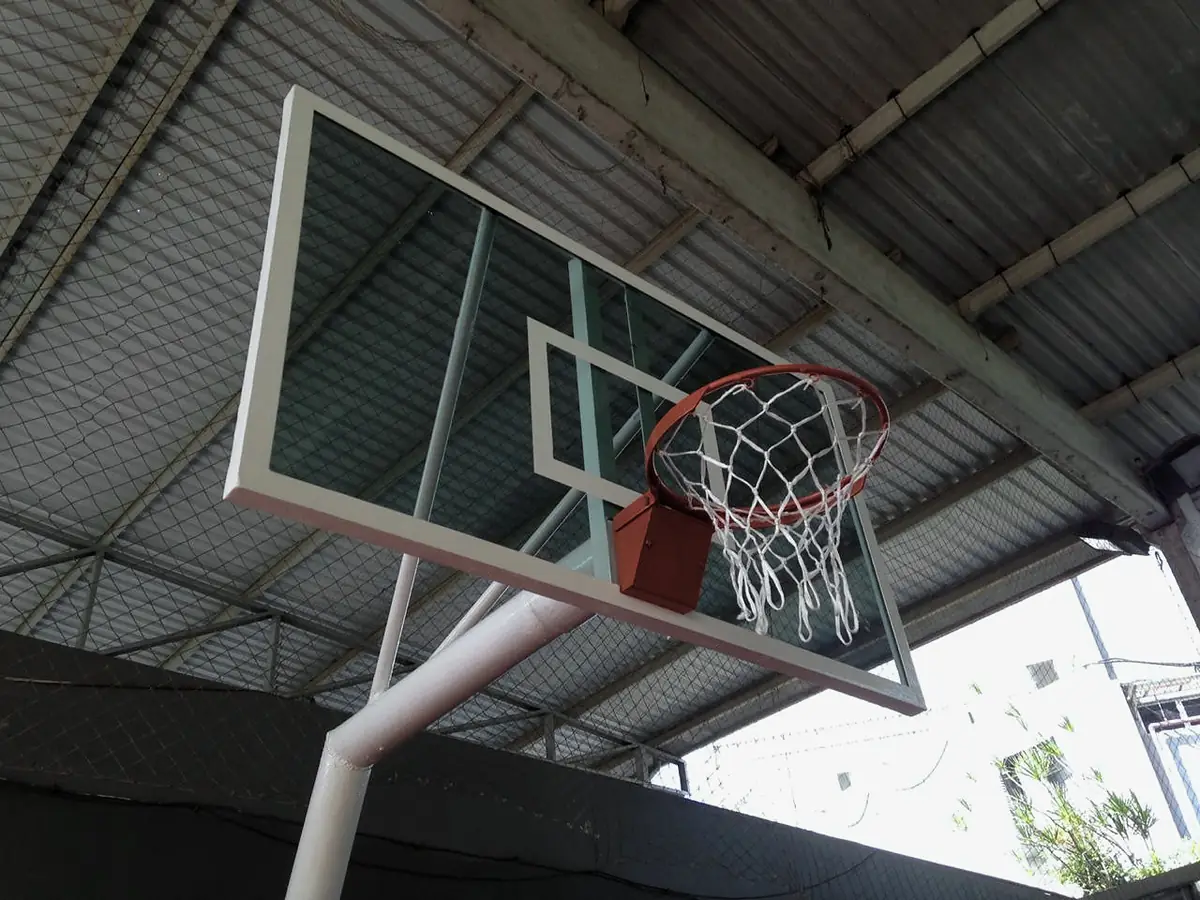
- Glass backboard installed at UNIJORGE university
Outdoor acrylic courts
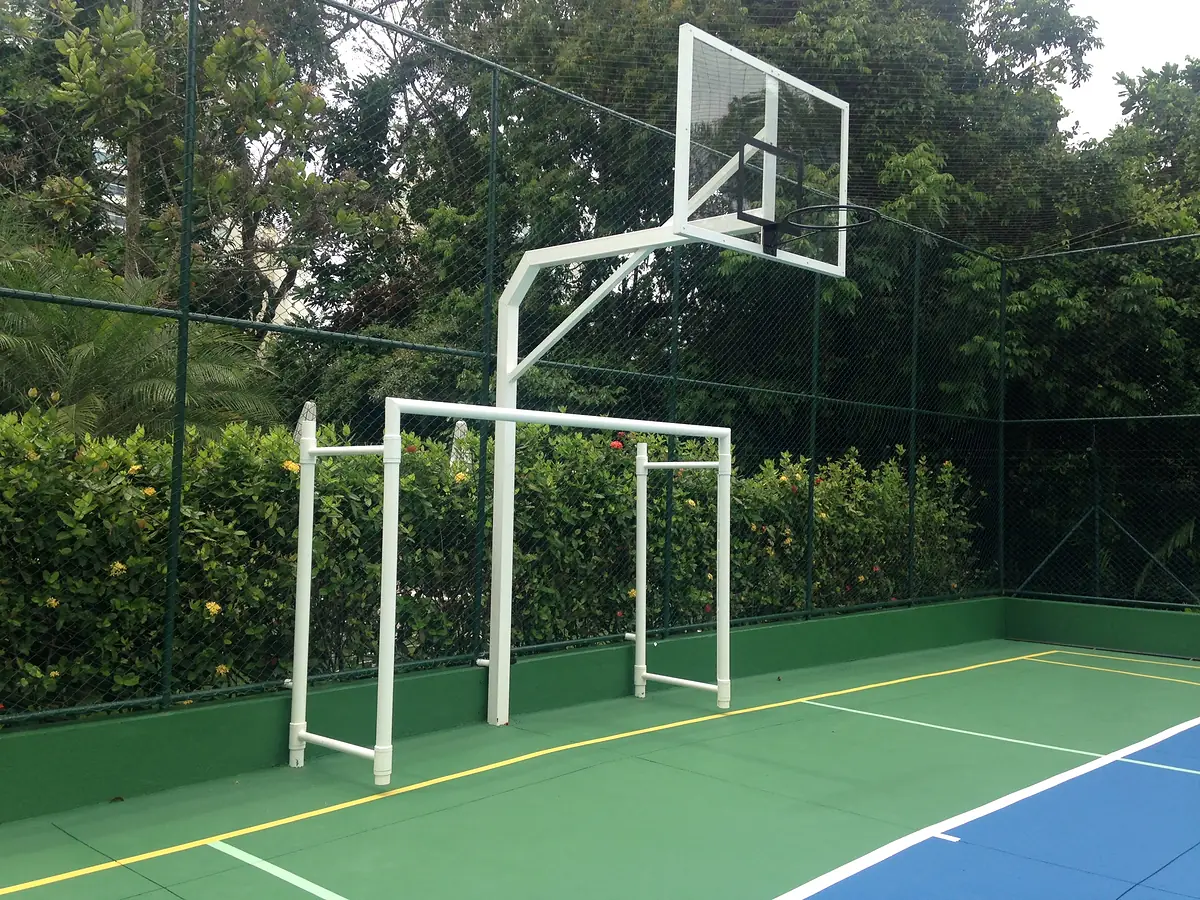
An outdoor basketball court wears hardest in the key and under the rims, where players land, pivot and push off. The acrylic texture polishes there first. Balls bounce thousands of times on the same spots, and any hollow, crack or low spot under the rim becomes a trip hazard. In Florida, UV fades the color and summer storms leave water in the corners of the court, often along the fence line.
The repair follows the same sequence as any acrylic court: clean, fill or bridge the cracks, level the low spots, apply resurfacer where the texture is gone, then textured color coats. Many community courts use a contrasting color for the key, which helps players read the lane. The scope names each color and the area it covers, so the board knows what it approves.
Lines and the three-point arc
Basketball lines are 2 in wide. Before we paint, we agree which standard the court follows, because the three-point distance and the width of the key differ by level. On a community court the choice is usually high school or a mix that suits the players who use it.
- High school (NFHS): three-point arc 19 ft 9 in from the center of the basket; key 12 ft wide.
- College (NCAA): 22 ft 1.75 in at the top of the arc; key 12 ft wide.
- NBA: 23 ft 9 in at the top, 22 ft in the corners; key 16 ft wide.
- All levels: free throw line 15 ft from the face of the backboard; rim 10 ft high.
- Full court: 94 × 50 ft for college and NBA, commonly 84 × 50 ft in high school gyms.
Backboards, rims and nets
Backboards, rims and nets take more abuse than the surface. Rims bend and lose their springs, nets rot in the sun, and polycarbonate or acrylic boards cloud and crack with UV. We replace them on existing posts after checking that the post is plumb, the footing is sound and the mounting hardware is not corroded. In Florida, rust at the base of the post and inside the arm is common and decides whether the post can carry a new board.
A regulation board is 72 × 42 in, with the rim 10 ft above the court and the face of the board 4 ft inside the baseline. In Brazil, at UNIJORGE university, our work was the installation of a glass backboard and rim.
Indoor hardwood: screen and recoat or full refinish
A hardwood gym floor is protected by layers of finish, usually polyurethane. When the finish is scratched and dull but still intact, a screen and recoat is enough: the top layer is abraded, cleaned and given fresh coats of finish. Many schools and clubs do it once a year. When the finish has worn through to bare wood, or the lines and the graphics are worn away, the floor needs a full sand and refinish: sanded to clean wood, lines and logos painted again, then several coats of finish.
Florida humidity is the risk for wood. A floor in a building where the air conditioning is turned off for the summer can cup, gap or buckle. We check moisture levels and the condition of the boards before any refinish is scoped.
How we restore a basketball court
Outdoor acrylic sequence. Indoor hardwood follows the screen-and-recoat or sand-and-refinish path described above.
Assess
Flood test, crack map, texture in the key, line standard, posts, boards and rims.
Clean and repair
Pressure-wash, fill or bridge cracks, level low spots under the rims first.
Recoat
Resurfacer where texture is gone, then textured color coats, with a contrasting key if chosen.
Lines
Lay out the agreed standard from the basket centers, mask and paint 2 in lines.
Equipment
Replace backboards, rims and nets on sound posts; set rim height to 10 ft.
Specifications
Basketball court references
- Full court
- 94 × 50 ft (college, NBA); commonly 84 × 50 ft (high school)
- Rim height
- 10 ft
- Backboard
- 72 × 42 in, face 4 ft inside the baseline
- Free throw line
- 15 ft from the face of the backboard
- Three-point arc
- 19 ft 9 in (high school), 22 ft 1.75 in (college), 23 ft 9 in (NBA)
- Key width
- 12 ft (high school, college), 16 ft (NBA)
- Lines
- 2 in wide
Typical references. The written scope confirms the standard and layout for each court.
Questions
How long is an outdoor court closed?
A resurfacing with lines usually takes one to two weeks of site work, depending on repairs and weather. Backboard and rim replacement on sound posts commonly takes a day.
How long before a refinished gym floor can be used?
It depends on the finish. After a screen and recoat, light use is commonly possible within a few days; a full sand and refinish needs longer cure before games. The scope gives the dates.
Can the school or club stay open during the work?
Yes. Outdoor courts are fenced off during the work. Gym floors are usually done during breaks, because the finish needs ventilation and no traffic while it cures.
What happens if a gym floor is not recoated on time?
Once the finish wears through, dirt and moisture reach the wood. A floor that needed a screen and recoat then needs a full sand and refinish, which removes wood and costs several times more.
Do you install new basketball posts?
Our Florida offer is restoration and maintenance of existing courts. We replace backboards, rims and nets on existing posts that are sound.
Related
 01
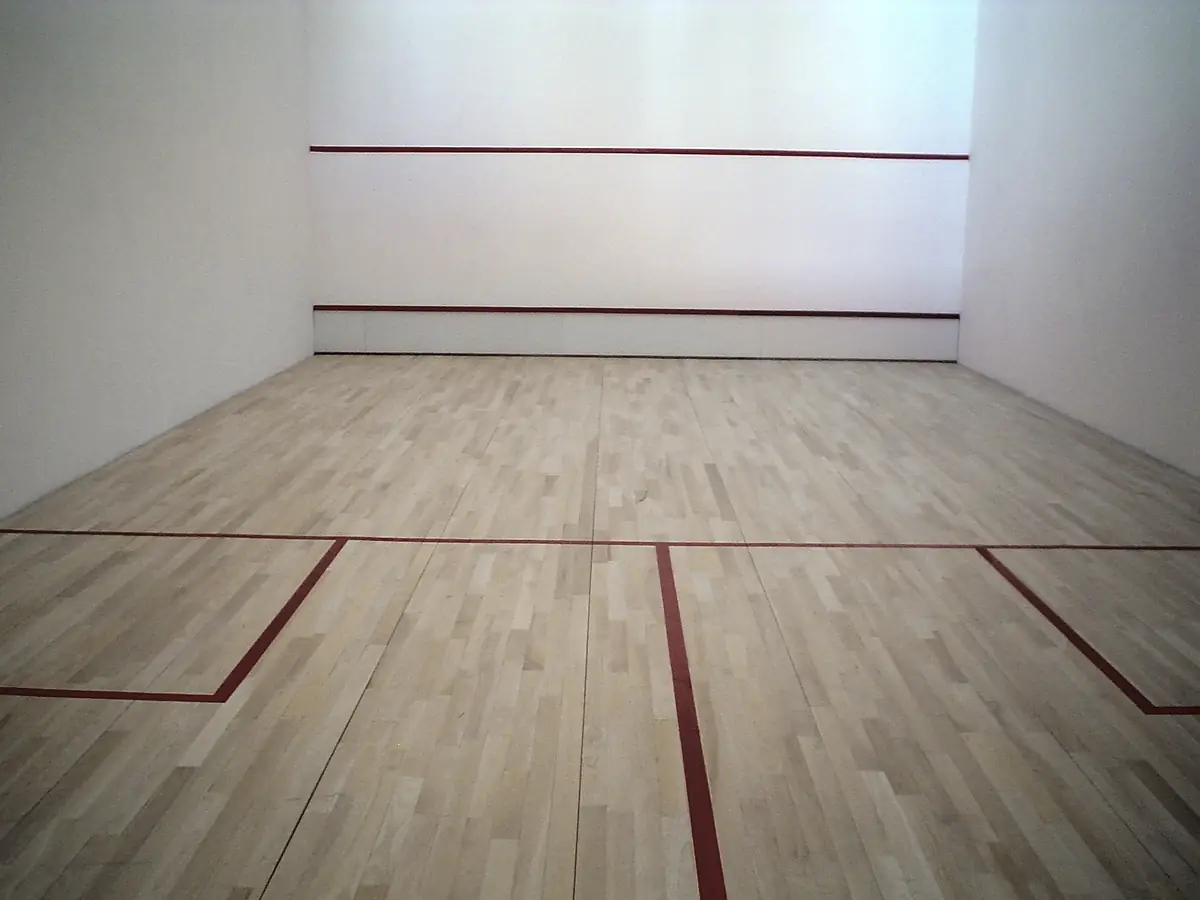
Hardwood floor
Sanding, refinishing and line marking for squash courts, gyms and indoor courts.
Learn more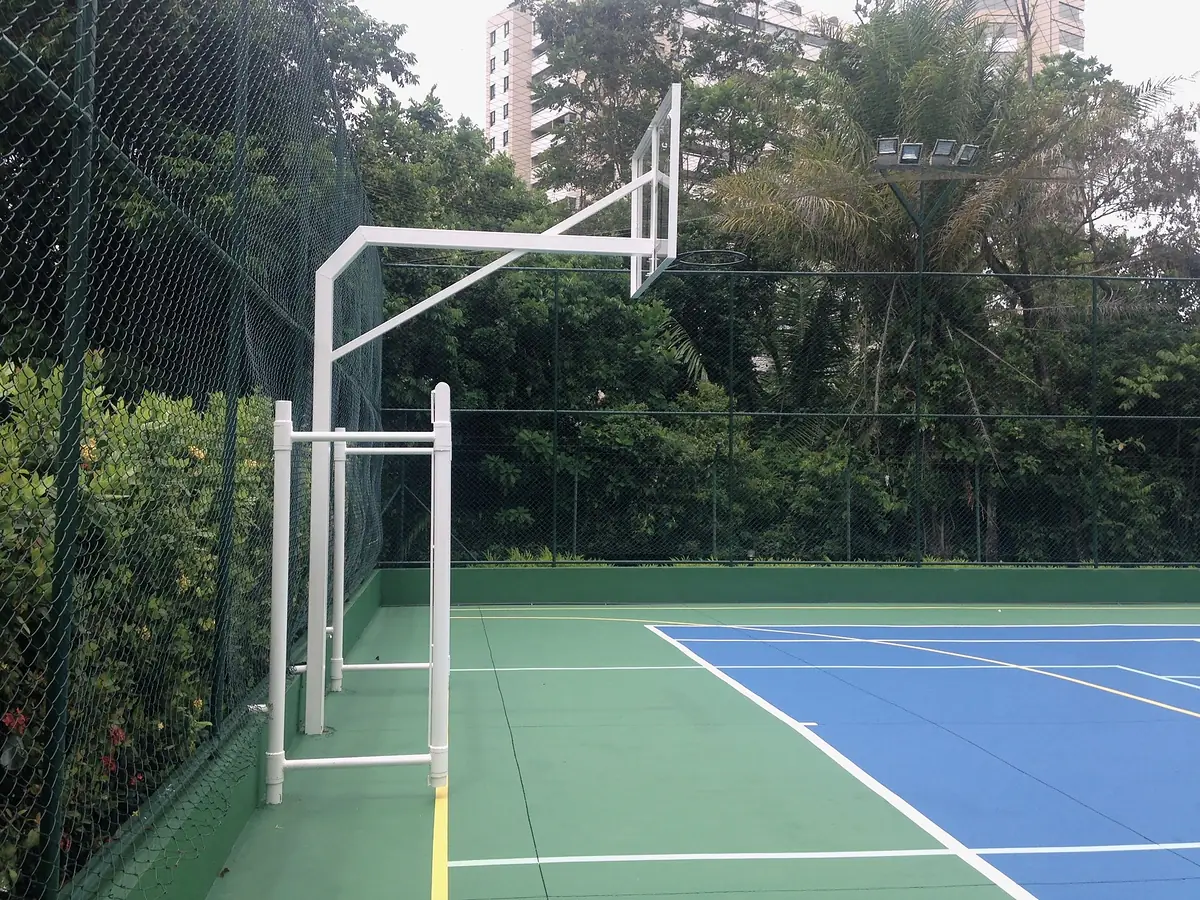 02
Fencing and court equipment
Fences, nets, posts, windscreens, backboards and goals, supplied, installed and repaired.
Coming soon to Florida- 03
UNIJORGE university
Glass basketball backboard installed on the university’s covered court in Salvador.
Learn more 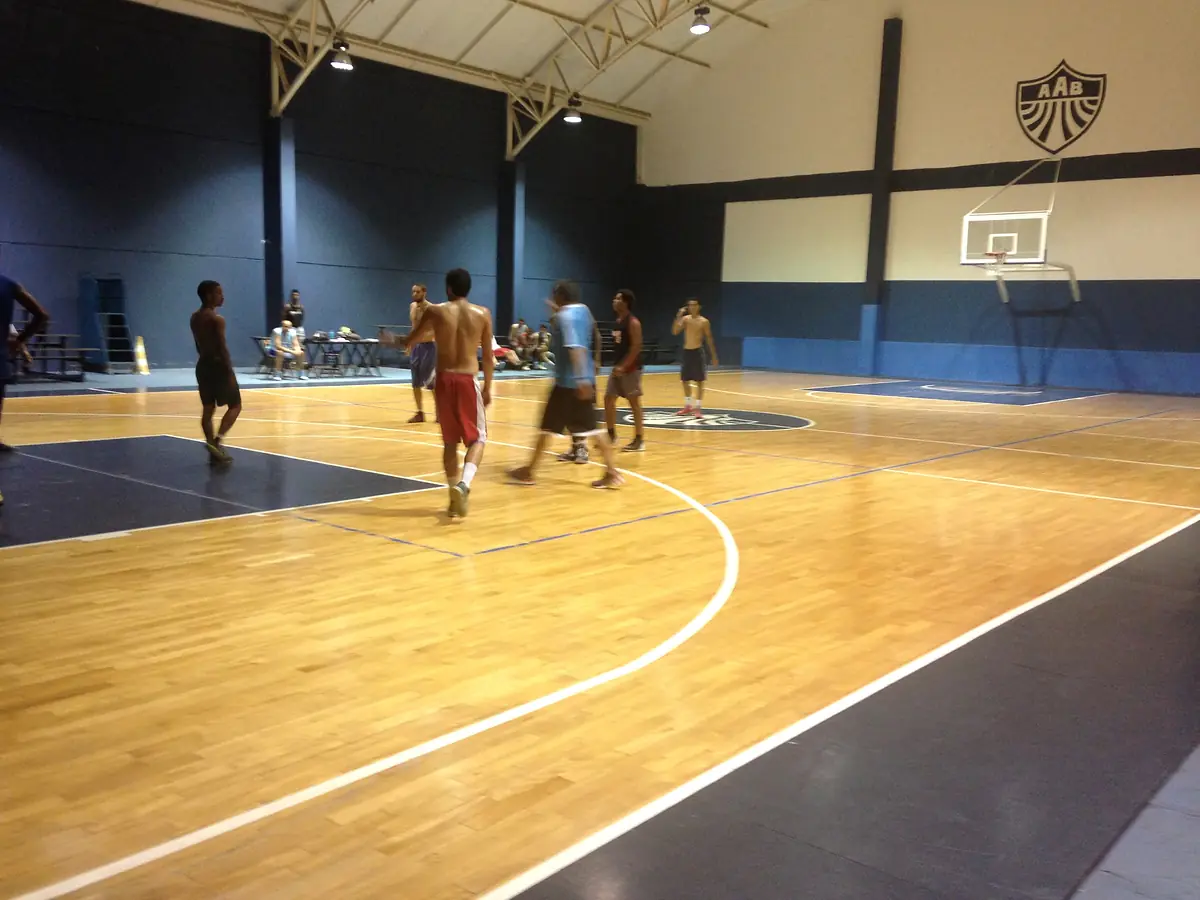 04
Schools and universities
Courts, gym hardwood floors and equipment, done during breaks with clear safety zones.
Learn more
Your court, back in play.
Tell us about the court and what is wrong with it. We assess it on site, free of charge, and send a written scope and estimate.