
Service · Pickleball
Pickleball court conversion
A tennis court is the fastest route to pickleball. The hard surface is already built. We lay out the courts, paint the lines, set nets and posts, and resurface first if the court needs it.
- Pickleball court
- 44 × 20 ft inside the lines
- Per tennis court
- Two, or up to four when the existing fenced area allows
- Net height
- 34 in at center, 36 in at the sidelines
- Options
- Blended lines, dedicated courts, portable or fixed nets
What a conversion is
A pickleball court is 44 × 20 ft, with a 7 ft non-volley zone on each side of the net. A tennis court is 78 × 36 ft inside the lines, on a playing area of about 120 × 60 ft. That footprint usually takes two pickleball courts, or up to four when the existing fenced area allows.
There are two ways to do it. Blended lines keep the tennis court and add pickleball lines in a contrasting color, so both games share the surface with portable nets. A dedicated conversion removes tennis and gives each pickleball court its own fixed posts, nets and, often, divider netting.
Signs it fits your community
Conversions make sense when the court is in demand for a game it was not built for. Common situations:
- The tennis court sits empty while residents ask for pickleball
- Players bring their own portable nets and tape lines
- The court is due for resurfacing anyway
- The board wants more players per court hour
Our method
We begin with the court you have. We measure the fenced area, check the slope and the condition of the surface, and look at where gates, benches and lights sit. Then we draw layout options with the number of courts each allows, so the board decides with a drawing in front of it.
If the surface is worn or cracked, we repair and resurface before any line goes down. New lines on old color do not last. Lines are masked and painted 2 in wide in a color that reads clearly against the court. Fixed posts are set in sleeves so nets can come down when needed.
We also raise the practical questions early: noise toward homes, paddle traffic at the gates, windscreens, and whether tennis players still need a court.
Why Arenas
We have laid out and built multi-sport courts in Brazil since 2003, where one surface often carries several games. Arenas even designed a retractable goal so a multi-sport court clears for tennis without marking the surface. Sharing a court well is work we know.
The conversion, step by step
Measure and assess
Fenced area, slope, surface condition, gates, lights and neighbors.
Layout options
Drawings for blended or dedicated courts, with the count each allows.
Repair and resurface
Crack and low-spot repair and new acrylic color where the court needs it.
Lines
Mask and paint 2 in lines in a contrasting color, to official dimensions.
Nets and posts
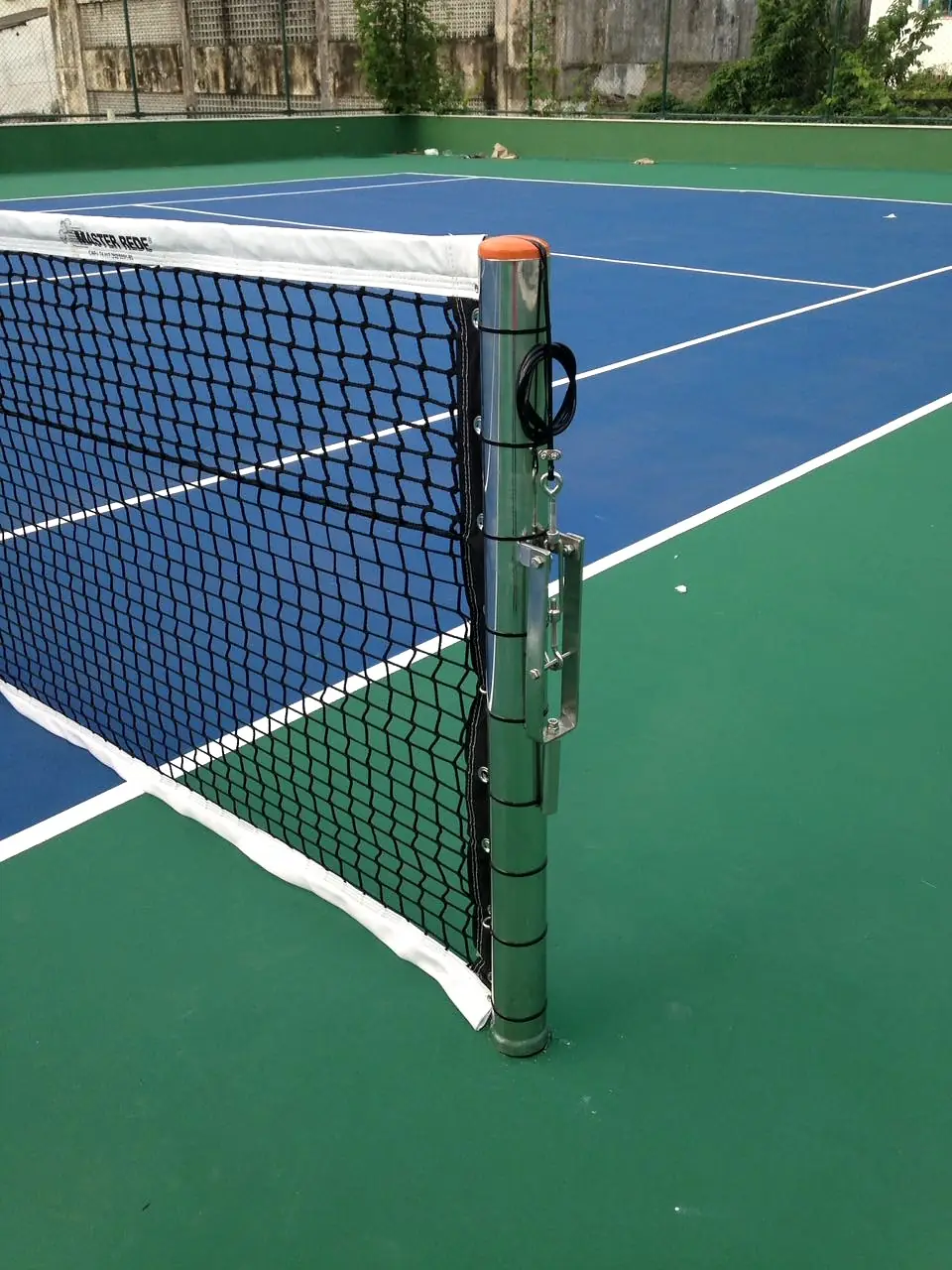
Portable nets, or fixed posts in sleeves, set to 34 in at center and 36 in at the sidelines.
Dividers and finish
Divider netting and windscreens where the layout calls for them.
Specifications
Conversion specification
- Court
- 44 × 20 ft, 7 ft non-volley zone each side
- Space per court
- About 30 × 60 ft including run-off
- Lines
- 2 in wide, acrylic line paint
- Net
- 36 in at the sidelines, 34 in at center
- Posts
- Portable, or fixed in sleeves
- Surface
- Textured acrylic over asphalt or concrete
- Extras
- Divider netting, windscreens
Gallery
Questions
How many pickleball courts fit on one tennis court?
Two, or up to four when the existing fenced area allows. The full fenced area, not just the tennis lines, decides the count.
Can we keep tennis and add pickleball?
Yes, with blended lines. Pickleball lines go on in a different color and players use portable nets. Tennis players see more lines, which most get used to quickly.
What does a conversion cost?
Typical US industry ranges for lines only on an existing court run roughly $1,500 to $6,000. Nets, fixed posts, windscreens and resurfacing add to that. Your price comes from the on-site assessment.
Do we need to resurface first?
Only if the surface is worn, cracked or holds water. If it is, resurfacing first is worth it, because the new lines then bond to fresh color and last as long as the surface.
What about noise for nearby homes?
Pickleball is louder than tennis. We look at distance to homes during the assessment, and the board can consider court placement and windscreens on the fence.
Ranges are typical industry figures for planning, not a quote. Your court’s scope and price come from the on-site assessment.
Related
 01
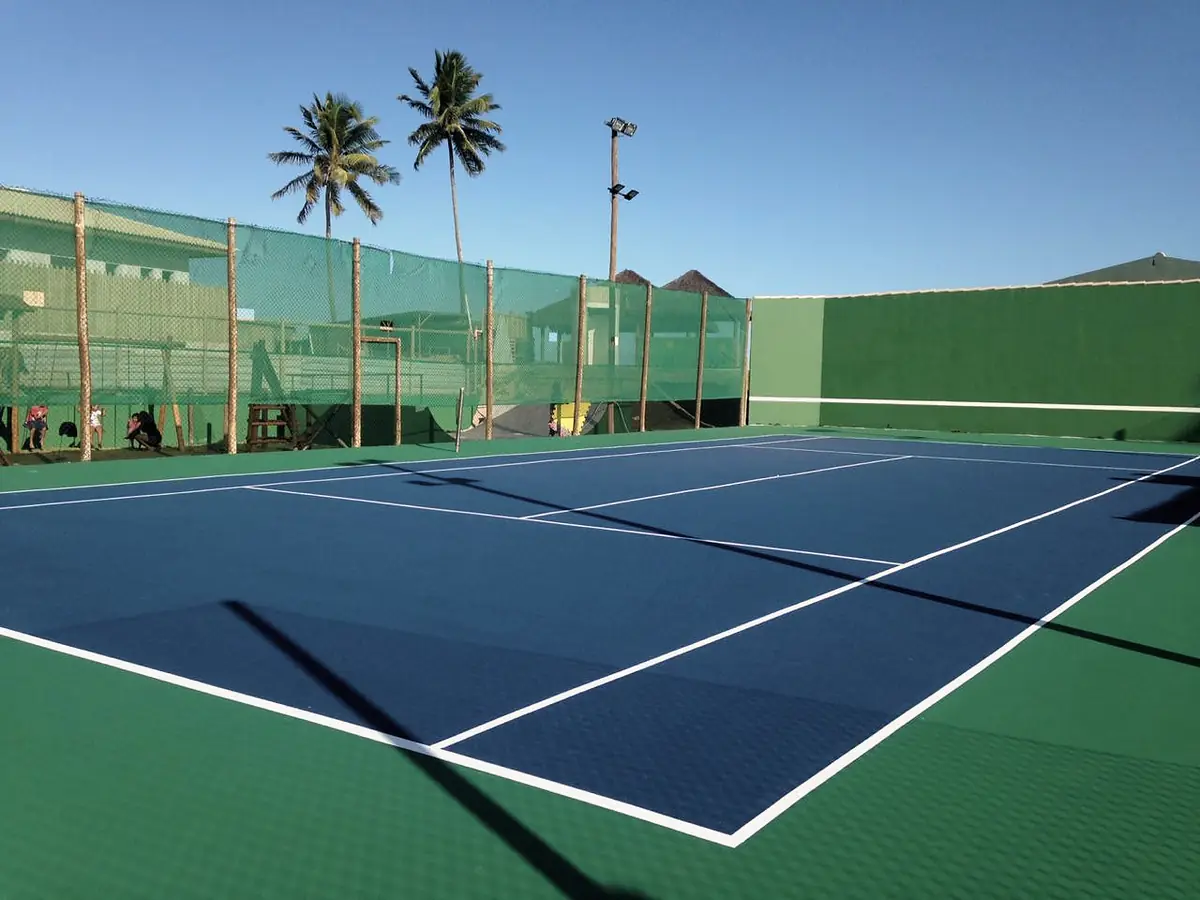
Court resurfacing
Clean, repair, recoat and reline a worn hard court so it plays true and drains again.
Learn more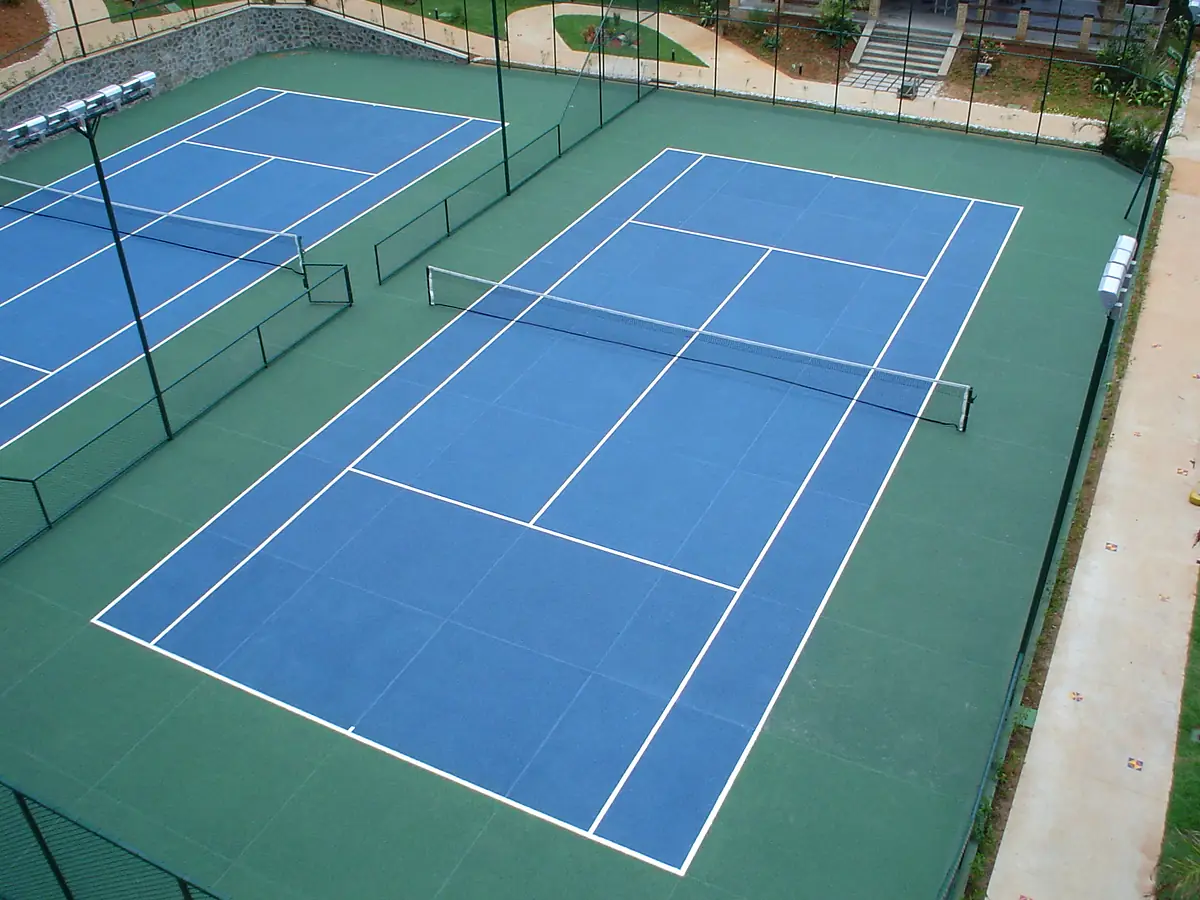 02
Hard court
Acrylic over asphalt or concrete. The lowest-maintenance court for tennis and pickleball.
Learn more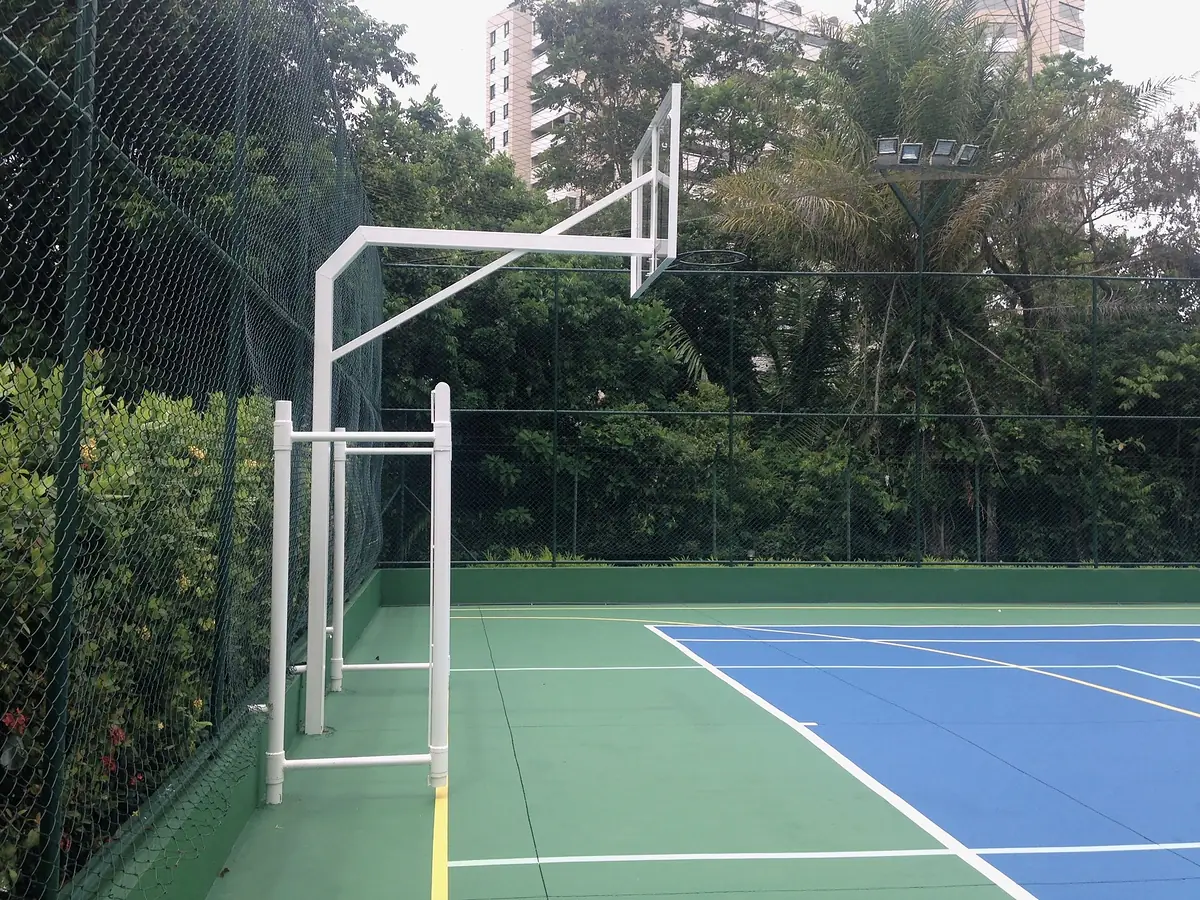 03
Arenas retractable goal
Our own design: the goal folds flat against the fence so the court clears for tennis.
Learn more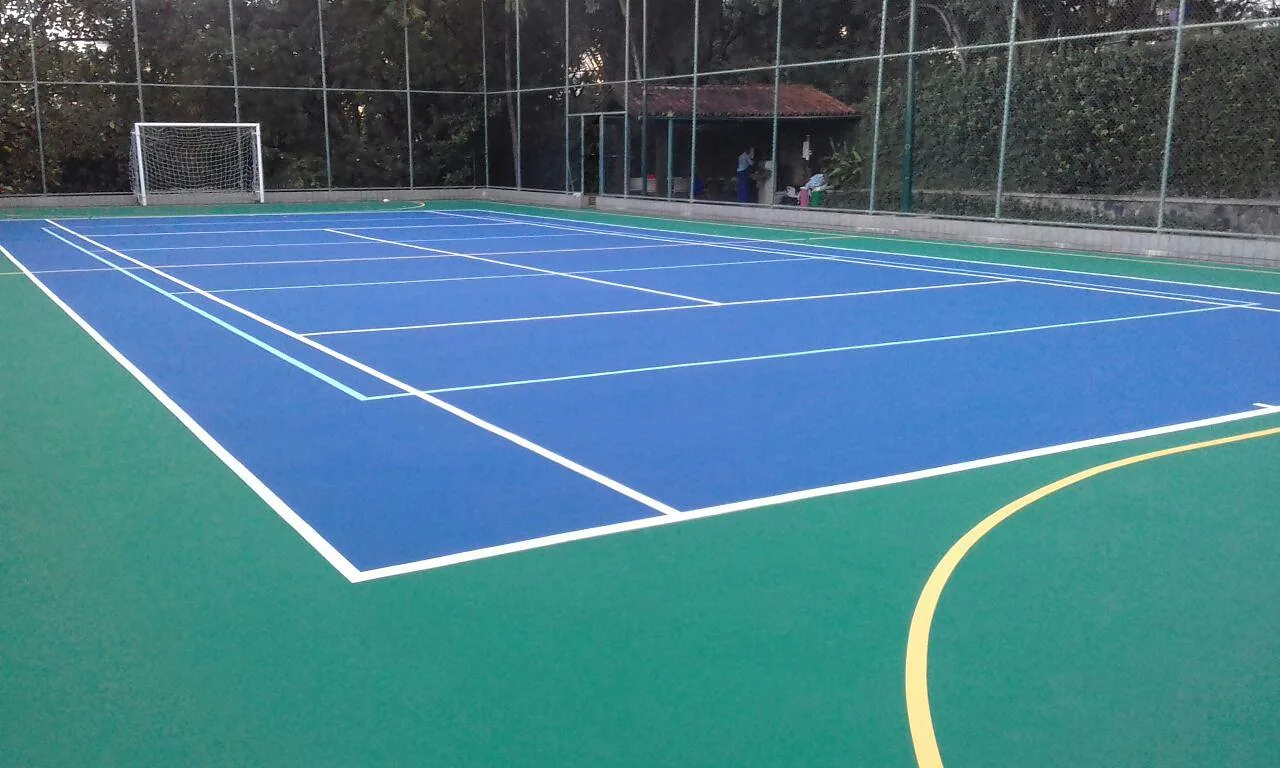 04
Tennis to pickleball conversion
Layouts, dimensions, nets, lines and typical costs for adding pickleball to a tennis court.
Learn more
Your court, back in play.
Tell us about the court and what is wrong with it. We assess it on site, free of charge, and send a written scope and estimate.