
Service · Hard court
Tennis court crack repair and ponding correction
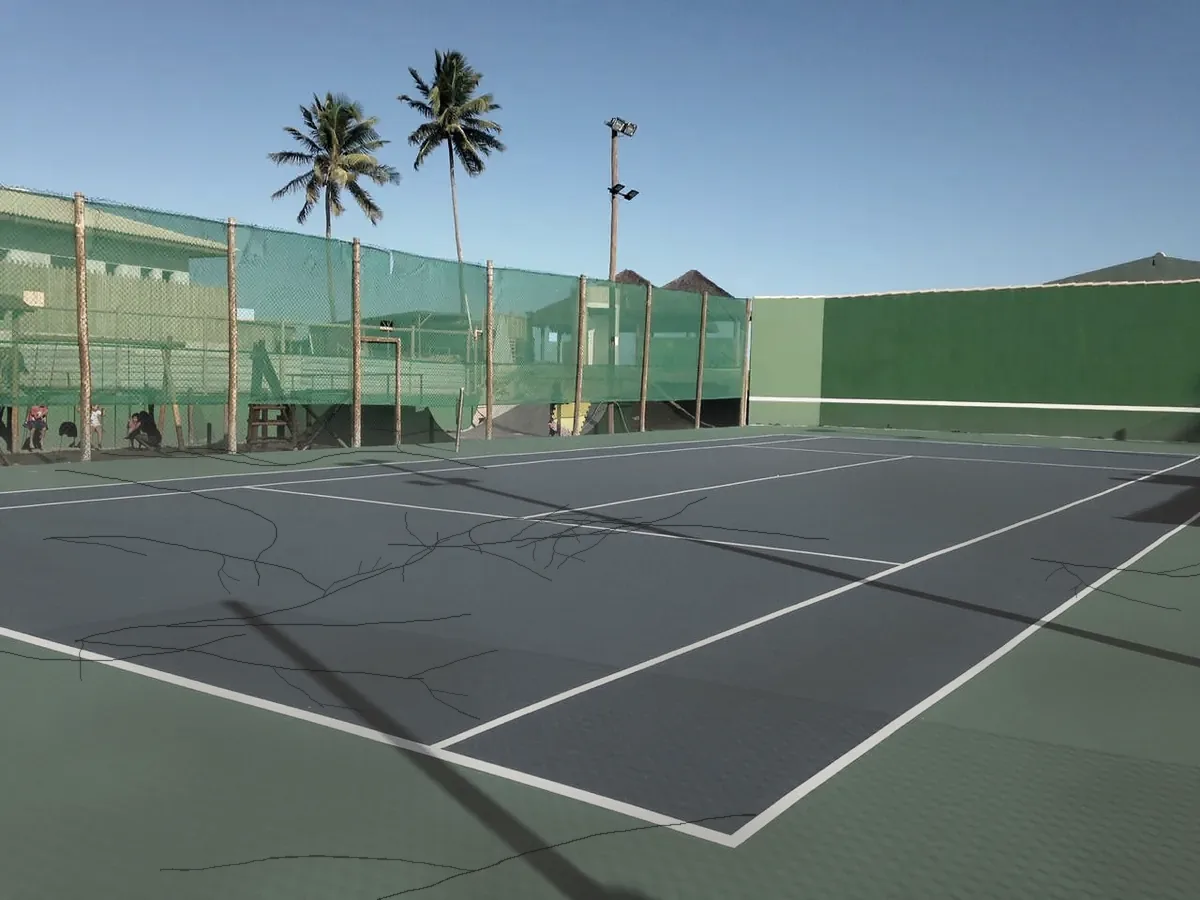
Cracks and standing water are the two problems that end a hard court early. Water gets into the cracks, softens the base and makes them wider. We repair both, in the right order, before the color goes back on.
- Applies to
- Acrylic courts on asphalt or concrete
- Common test
- Water deeper than 1/16 in an hour after rain
- Repairs
- Crack fill, bridging systems, low-spot patching
- First step
- Free on-site assessment and crack map
What we repair
Cracks come in kinds, and each one has its own cause. Hairline surface cracks come from the acrylic and asphalt aging in the sun. Longer straight cracks often follow the joints between paving passes or the edges of concrete slabs. Wide or stepped cracks usually mean the base underneath has moved.
Ponding, also called birdbaths, is water that stays in low spots after rain. It stains the color, grows algae, makes the court slippery and keeps players off it for hours. Over time it breaks down the acrylic in the same spots.
Signs you need it
A common industry test: flood the court or wait for rain, then check after an hour. Water deeper than about 1/16 in, the thickness of a nickel, marks a low spot worth patching. Other signs:
- Cracks you can fit a coin into, or that catch a ball
- Cracks that came back after a previous repaint
- Raised or stepped edges along a crack
- Dark stains or algae rings where water dries
- Puddles that keep the court closed after storms
Our method
We map every crack by length and width and every low spot by depth, then mark which are cosmetic and which point to base movement. That map goes into the written scope with the repair chosen for each one.
Fine cracks are cleaned out and filled with acrylic crack filler in layers, so it does not shrink back. For cracks that move with the seasons, a bridging repair system lets the surface flex over the crack instead of splitting again. Low spots are filled with acrylic patch mix and feathered out so the ball rolls true across them.
Repairs are then sealed with resurfacer and color, either over the repaired areas or as part of a full resurfacing. We tell you plainly when a court has gone beyond repair and the base needs rebuilding.
Why Arenas
We have built courts from the subgrade up since 2003, in Brazil, to ITF and ATP norms. Knowing how the layers are built is what lets us tell a surface crack from a base problem. You get a straight answer on which repairs will last.
The repair, step by step
Flood and map
Flood the court or survey after rain. Mark every low spot and measure every crack.
Clean
Pressure-wash and treat mildew so the repair material bonds to sound pavement.
Open and clean cracks
Remove loose material and debris from each crack, and blow it out dry.
Fill or bridge
Fill in layers with acrylic crack filler, or install a bridging system on moving cracks.
Patch low spots
Fill birdbaths with acrylic patch mix and recheck with water once it cures.
Recoat
Resurfacer and color coats over the repairs, then lines where they were crossed.
Specifications
Repair materials
- Fine cracks
- Acrylic crack filler, applied in layers
- Moving cracks
- Bridging crack repair system over the crack
- Low spots
- Acrylic patch mix, feathered to grade
- Acceptance test
- Flood check after the patch cures
- Finish
- Resurfacer and textured acrylic color
- Base failure
- Reported in the scope; may need reconstruction
Gallery
Questions
Can tennis court cracks be repaired permanently?
Surface cracks, yes, when they are filled properly and sealed. Cracks caused by a moving base can return. A bridging system slows that a great deal, and only rebuilding the base removes the cause.
Why does water stay on my court after rain?
The pavement has settled in spots or was not built to an even slope. A hard court should drain on a slight cross slope, about 1%. Low spots break that plane and hold water.
Do the repairs show after the work?
Patched areas are covered with resurfacer and color. If only the repaired areas are recoated, there can be a slight color difference until the whole court is resurfaced.
Should I repair cracks now or wait for a full resurfacing?
Repair early. A small crack lets water into the base, and every storm makes it wider. Early repair costs less and protects the pavement until the next resurfacing.
Related
 01
Court resurfacing
Clean, repair, recoat and reline a worn hard court so it plays true and drains again.
Learn more 02
Maintenance plans
Scheduled inspection, cleaning and small repairs that keep a court playing between resurfacings.
Learn more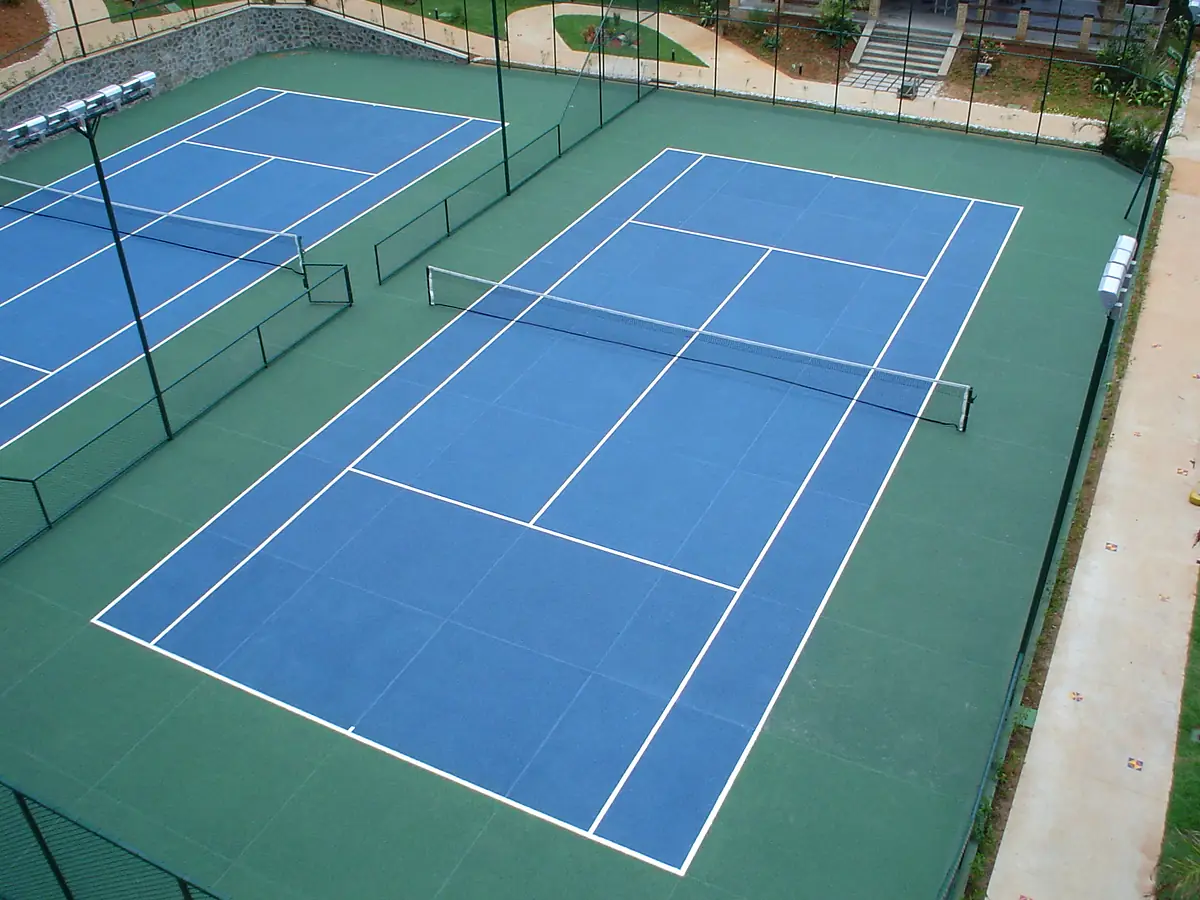 03
Hard court
Acrylic over asphalt or concrete. The lowest-maintenance court for tennis and pickleball.
Learn more- 04
How often to resurface
Typical resurfacing cycles, the warning signs, and what shortens the cycle in Florida.
Learn more
Your court, back in play.
Tell us about the court and what is wrong with it. We assess it on site, free of charge, and send a written scope and estimate.