
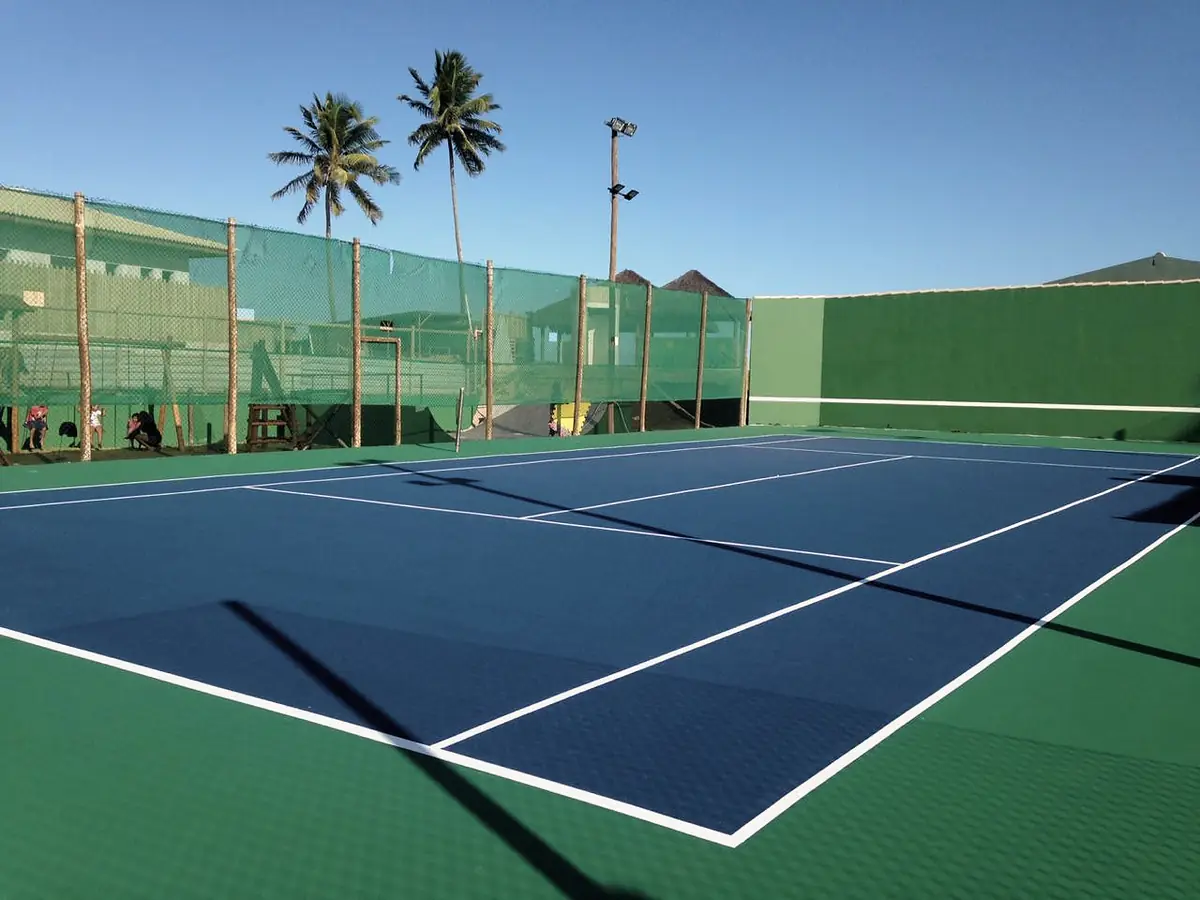
Surface · Hard court
Hard court on asphalt or concrete
The lowest-maintenance surface, and the most common court in Florida. A textured acrylic system over asphalt or post-tension concrete, for tennis, pickleball and multi-sport.
- System
- Acrylic resurfacer and textured color coats
- Base
- Asphalt or post-tension concrete
- Care
- Wash every 2 to 3 months
- Resurface
- Every 4 to 8 years, by use and climate
Who it suits
Anyone who will not supervise daily play. HOAs, condominiums, resorts, schools and clubs where the court stays open all day and nobody waters, rolls or sweeps it before a match. It plays the same in the morning and after an afternoon storm, once the water drains off.
How it is built
Under the color sits a compacted aggregate base and a pavement of either hot-mix asphalt or a post-tension concrete slab. Asphalt costs less and needs crack care over its life. Post-tension concrete, a slab held in compression by steel tendons tensioned after the pour, costs more and resists cracking well.
On the pavement go one or two coats of sand-filled acrylic resurfacer, then two or three textured acrylic color coats. The amount of sand in the color sets the pace of the ball. Cushioned systems, with rubber layers under the color, are available where players want a softer feel underfoot.
In Brazil we also build TennisFast, a porous all-weather concrete laid in slabs from graded stone, compacted and floated. Rain drains through it instead of ponding, so the court is back in play soon after a storm.
What wears, and how we restore it
Sun and rain fade the color coats, the base moves and cracks, and low spots hold water. Play polishes the texture at the baselines. We clean the court, repair the cracks and the ponding, then apply acrylic resurfacer, textured color coats and new lines.
Pickleball on a hard court
A hard court takes pickleball lines, nets and posts. One tennis court fits two pickleball courts, or up to four when the existing fenced area allows. Lines can be blended with tennis or the court can be fully converted.
How we renew the playing system
Existing pavement
The asphalt or post-tension slab already in place, cleaned, repaired and checked for about 1% cross slope.
Resurfacer
Sand-filled acrylic, one or two coats, to fill the pores and true the plane.
Cushion, if specified
Rubber-filled acrylic layers under the color for a softer feel.
Color
Two or three textured acrylic coats on the court and the surround.
Lines
2 in lines, baselines up to 4 in, for tennis, pickleball or both.
Specifications
Hard court specification
- System
- Acrylic resurfacer and textured color; cushioned option
- Base
- Asphalt or post-tension concrete; TennisFast porous concrete (Brazil)
- Pace
- Medium to fast, set by the texture of the color coats
- Care
- Wash every 2 to 3 months; resurface every 4 to 8 years
- Sports
- Tennis, pickleball, basketball, multi-sport
- Standard
- ITF dimensions, 78 × 36 ft inside the lines
Gallery
Questions
How long does a hard court surface last?
The acrylic system usually needs resurfacing every 4 to 8 years, depending on use, sun and drainage. The pavement underneath lasts much longer when cracks are repaired early.
Is a hard court hard on the body?
It is firmer than clay, because the foot does not slide. Cushioned acrylic systems add rubber layers under the color to soften the feel.
Asphalt or post-tension concrete?
Asphalt costs less up front and needs crack repair over time. Post-tension concrete costs more and resists cracking well. The site and budget decide.
What is TennisFast?
A porous all-weather concrete court we build in Brazil. Water drains through the surface, so it does not pond after rain.
What colors can a hard court be?
Acrylic color comes in a wide range. Blue inside the lines with a green surround is common because the yellow ball reads well against it. Pickleball lines are often painted in a contrasting color.
Related
- 01
Court resurfacing
Clean, repair, recoat and reline a worn hard court so it plays true and drains again.
Learn more 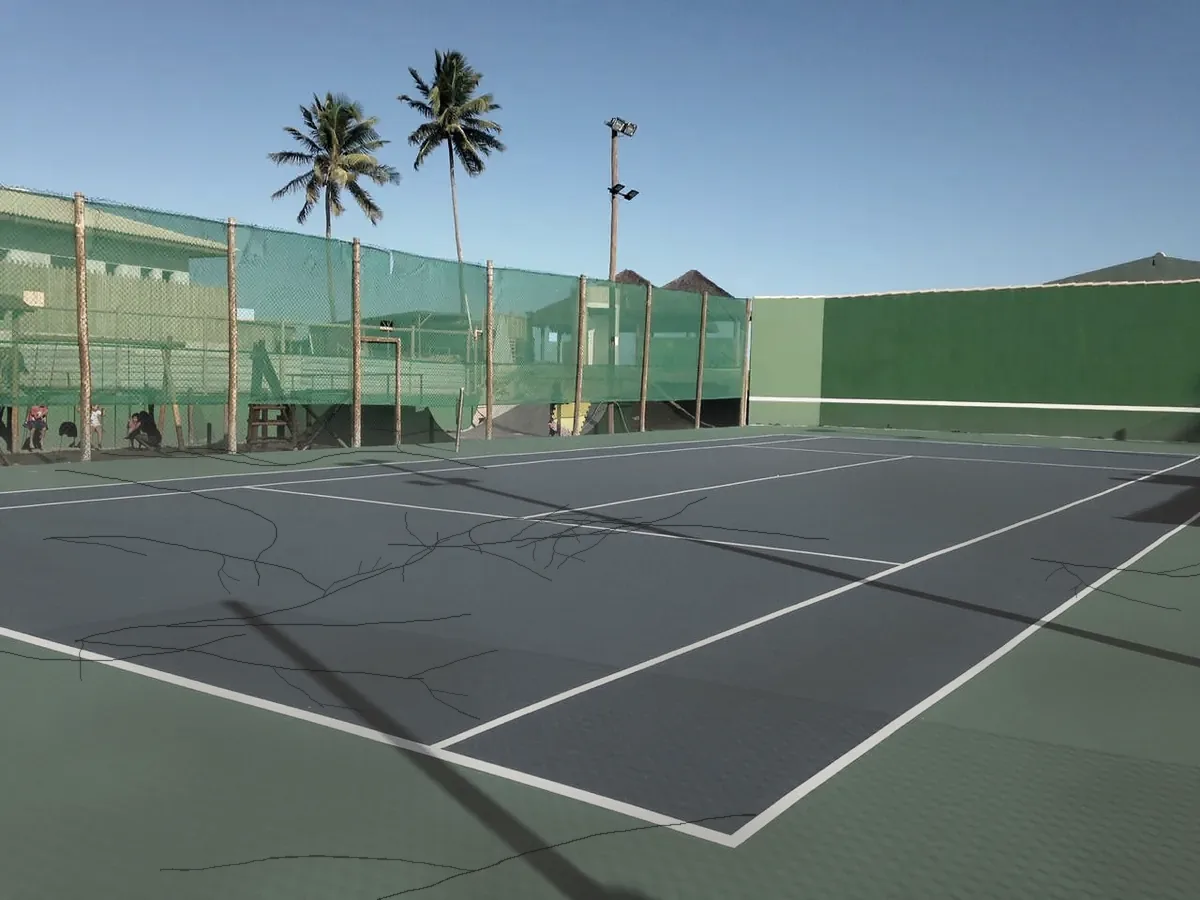 02
Crack and ponding repair
Fill and bridge cracks, level low spots that hold water, then recoat the repaired areas.
Learn more- 03
Praia dos Lagos tennis court
A blue and green acrylic hard tennis court with a practice wall, near the coast.
Learn more 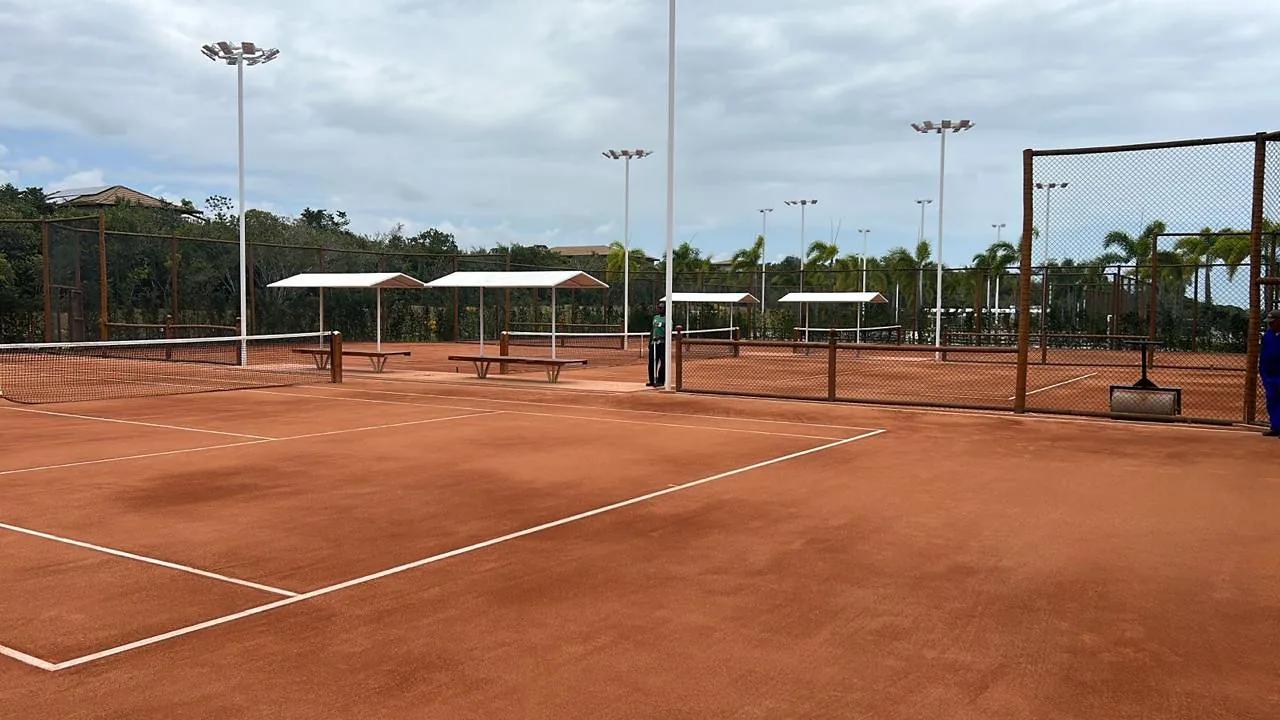 04
Clay vs hard court
Play, maintenance, heat and long-term cost compared, so you choose the surface you can keep.
Learn more
Your court, back in play.
Tell us about the court and what is wrong with it. We assess it on site, free of charge, and send a written scope and estimate.