What resurfacing includes
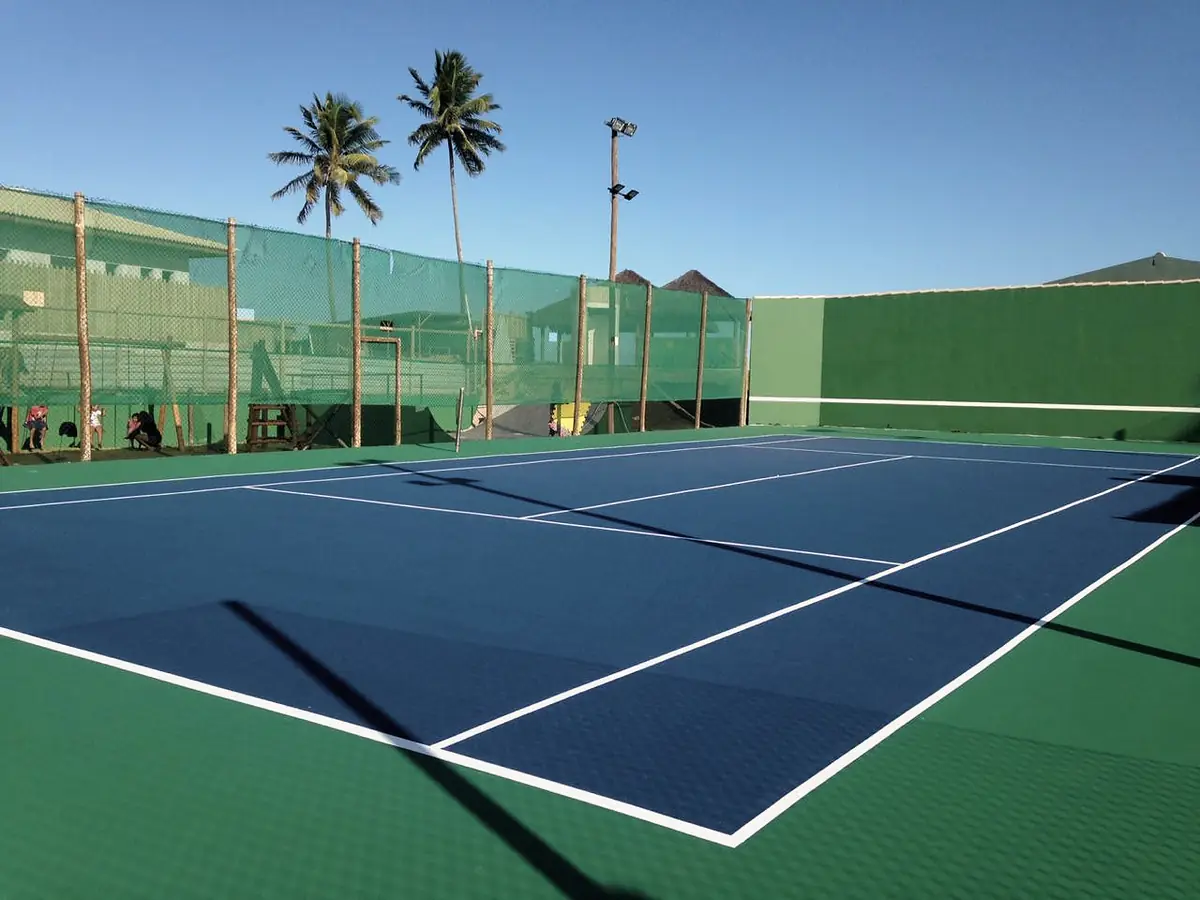
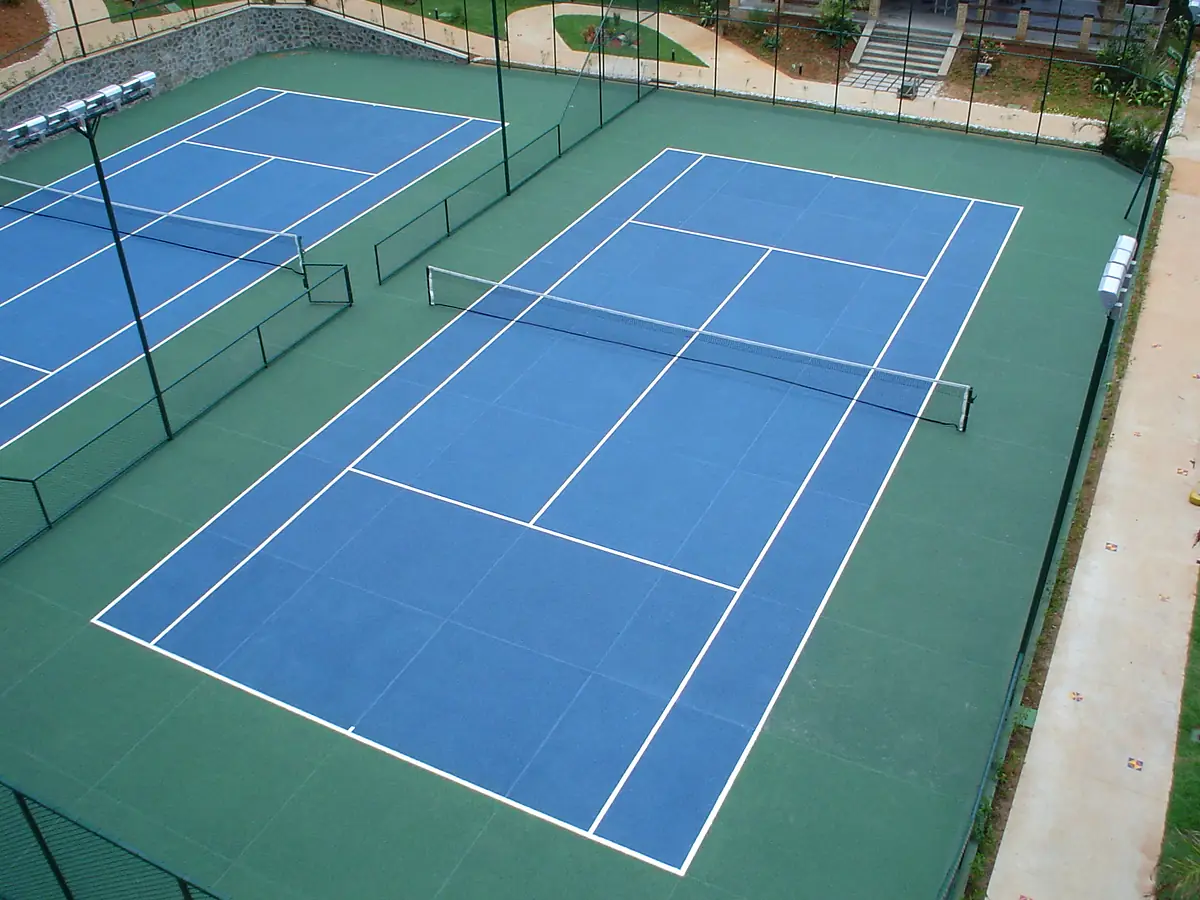
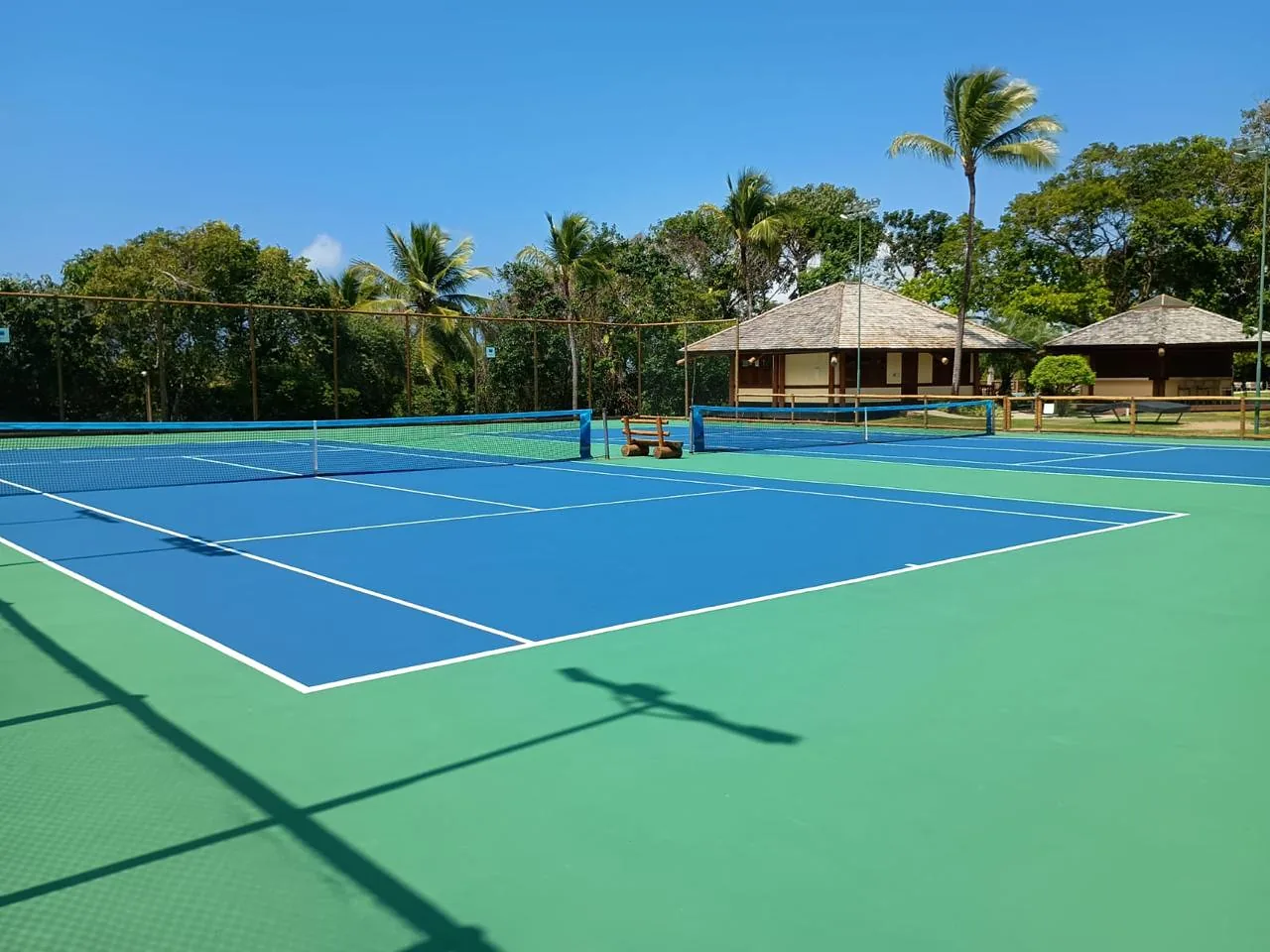
On a hard court, resurfacing means renewing the acrylic system that sits on top of the asphalt or concrete slab. The slab stays. A standard scope has five parts, and a bid that leaves one out is not comparable to one that includes it.
- Cleaning: pressure washing to remove dirt, mildew and loose coating.
- Repairs: crack filling, patching of low areas and correction of ponding.
- Resurfacer: one or two coats of acrylic resurfacer to fill texture and give an even base.
- Color coats: usually two coats of textured acrylic color on the playing area and surround.
- Lines: taped and painted lines to the dimensions of the sport, including any added pickleball lines.
Typical cost ranges
For one standard tennis court of about 120 × 60 ft (36.6 × 18.3 m) in fair condition, acrylic resurfacing commonly falls in the range of roughly $5,000 to $12,000 in the US. Courts in a battery of two or more usually cost less per court, because mobilization and setup are shared.
Crack repair varies widely. A few hairline cracks add little; wide, structural or recurring cracks can add more than the coating itself. A full new hard court, base included, is a different project, commonly in the range of $60,000 to $120,000 or more.
The factors that move the price
Two courts with the same footprint can receive very different estimates. These are the factors we measure during an assessment:
- Crack count, width and type: hairline, settlement or structural.
- Ponding: how many low areas hold water after rain and how deep.
- Coating condition: whether old layers are bonded, peeling or worn to the base.
- Base type: asphalt moves and cracks more; post-tension concrete cracks less but needs specific repair methods.
- Number of courts and access for equipment and material.
- Colors, line sets and extras such as pickleball lines, nets, posts and windscreens.
Typical US ranges for planning
- Acrylic resurfacing, one tennis court
- About $5,000 to $12,000
- Crack repair
- Varies widely with crack count, width and method
- Pickleball lines on an existing court
- About $1,500 to $6,000, more with nets, posts or fencing
- New hard court, base included
- About $60,000 to $120,000 or more
Typical US industry ranges, not Arenas prices.
Why Florida courts cost more to neglect
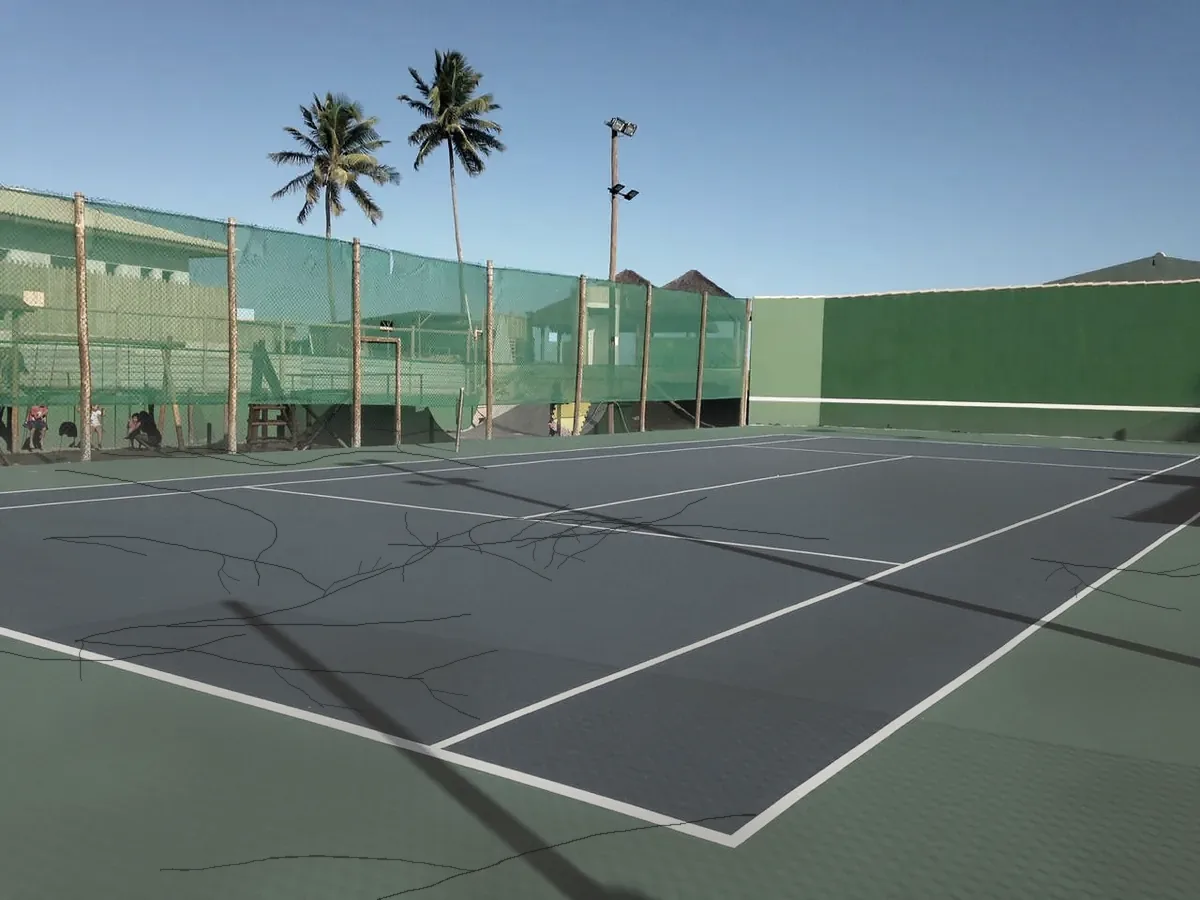
Strong ultraviolet light breaks down the acrylic binder, so color fades and the surface turns chalky and slick sooner. Heat makes asphalt expand and contract every day, which opens cracks. Afternoon storms leave standing water in low areas, and humidity feeds mildew and algae, which make courts slippery and stain the coating.
Each of these is cheap to address early and expensive late. A crack left open lets water into the base, the base softens, and a coating job becomes a patching and leveling job.
How to compare resurfacing bids
Ask each contractor for a written scope, not just a price. The scope should name the products, the number of coats, the crack repair method and the ponding threshold they will correct to.
- Number of resurfacer and color coats, by area.
- Crack repair method and what it is expected to achieve.
- How ponding is measured and corrected.
- Line dimensions and colors, including any pickleball lines.
- Schedule, curing time and when the court can reopen.
How ponding is measured
Ponding, also called birdbaths, is water that stays on the court after rain. A common field test is to flood the court, let it drain in sun for about an hour, and mark any area where the water is deep enough to cover a coin lying flat. Those areas are filled with a patch binder and leveled before the resurfacer goes down.
Ponding matters more than it looks. Standing water keeps the coating wet, feeds algae, leaves mineral stains and makes play unsafe until it evaporates. On a Florida court that sees an afternoon storm several days a week in summer, a few shallow birdbaths can keep a court closed for hours each day.
Budgeting across several years
Boards and managers who plan court work over five to eight years spend less than those who react to complaints. A practical budget has three lines: a small annual amount for cleaning, crack sealing and line touch-ups; a reserve that builds toward the next full resurfacing; and a contingency for repairs found during inspection.
An annual inspection with photos and measurements gives the reserve study real numbers. It also shows owners and members why money is being set aside, which makes approval easier when the work is due.
When resurfacing is no longer enough
If cracks run through the full depth of the slab, if the base has settled across large areas, or if the court has been coated many times over a failing base, a new coating will not hold for long. In that case the honest answer is reconstruction or an overlay system, and the assessment should say so in writing.
Ranges are typical industry figures for planning, not a quote. Your court's scope and price come from the on-site assessment.