Two different systems
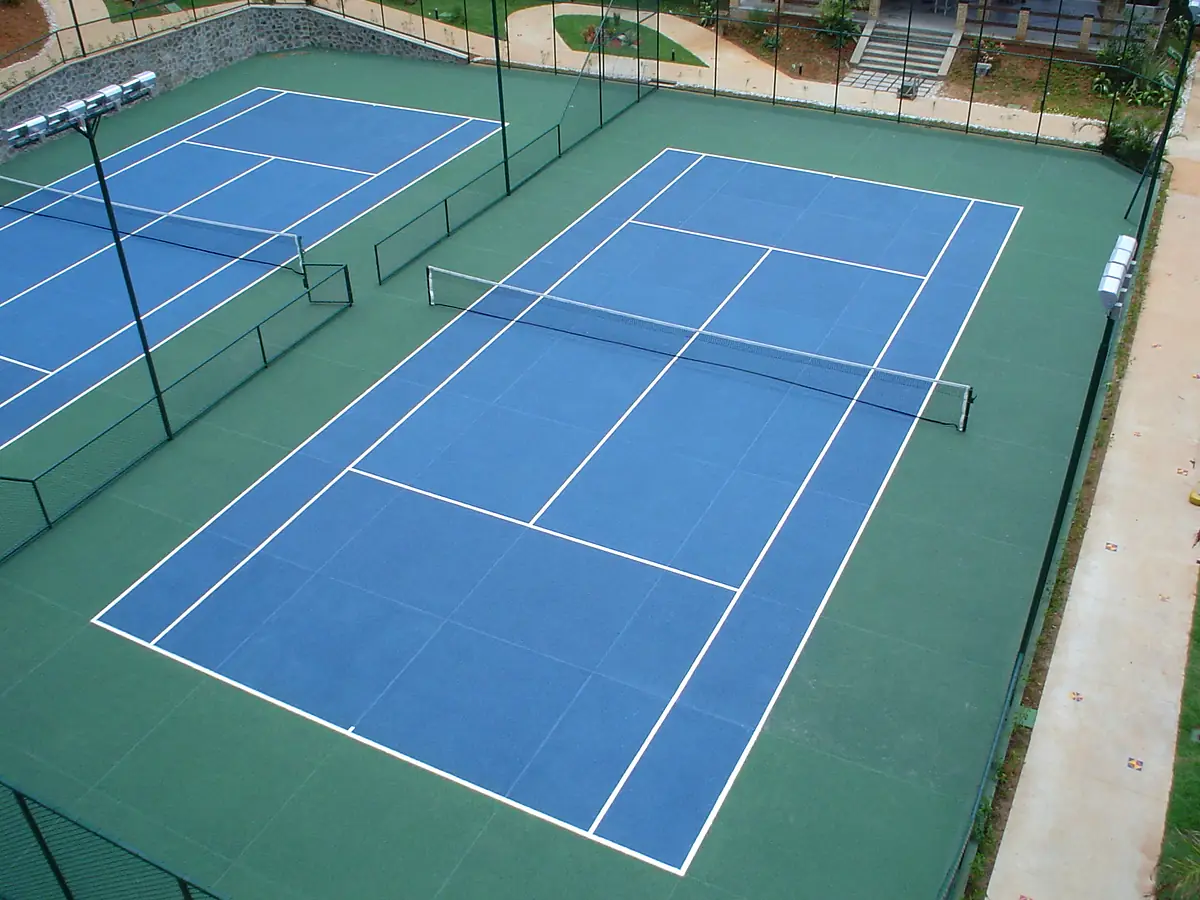
A hard court is an acrylic coating system over an asphalt or post-tension concrete slab. It is sealed, drains by slope and needs little daily care.
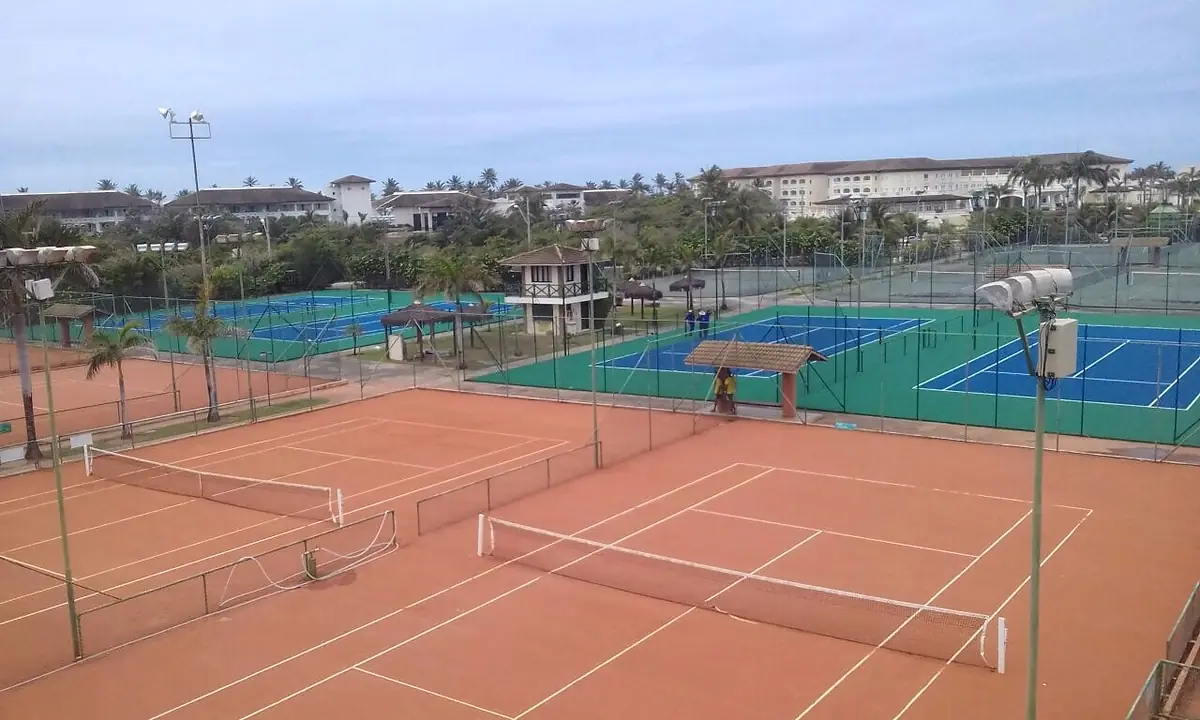
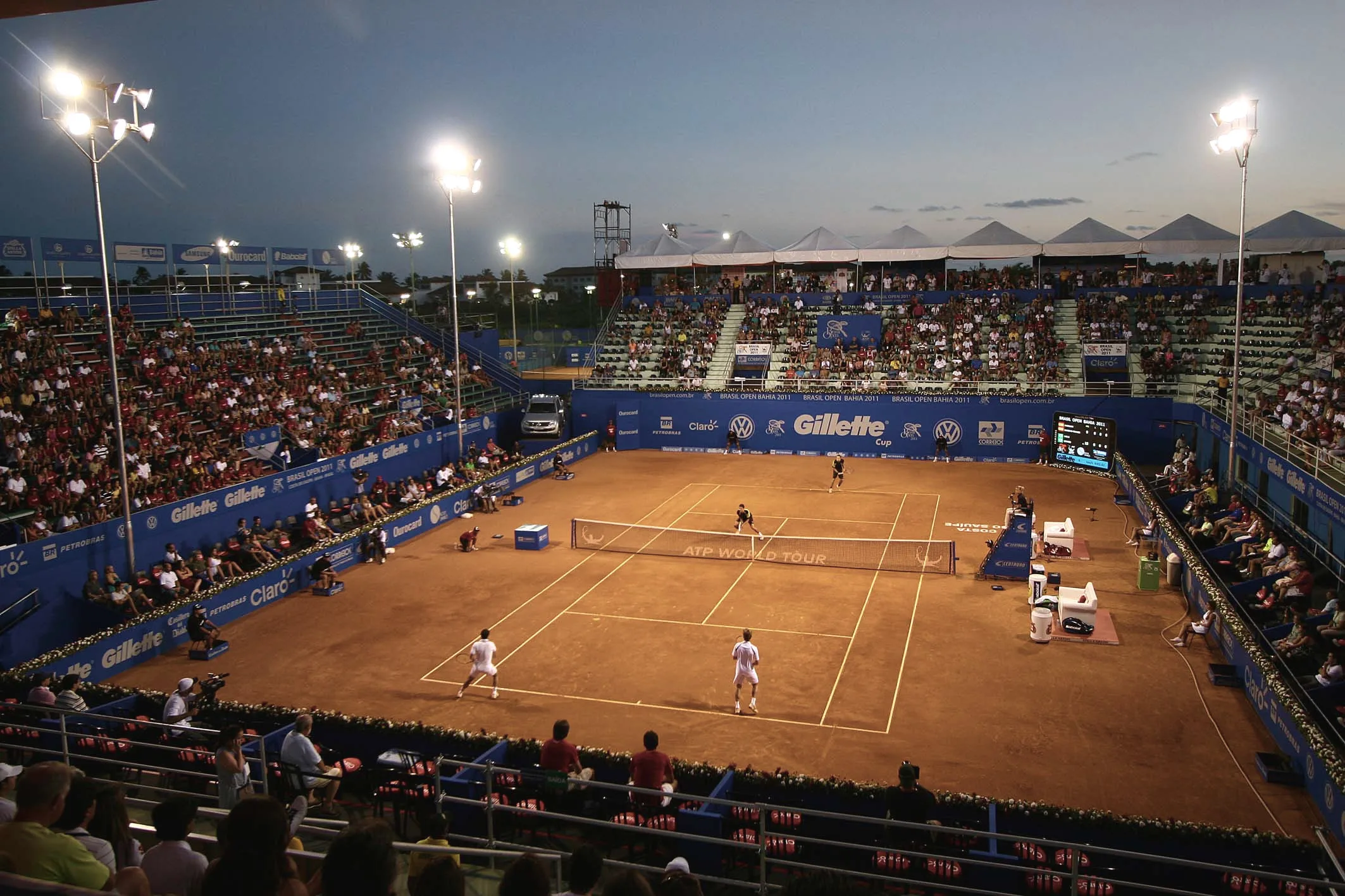
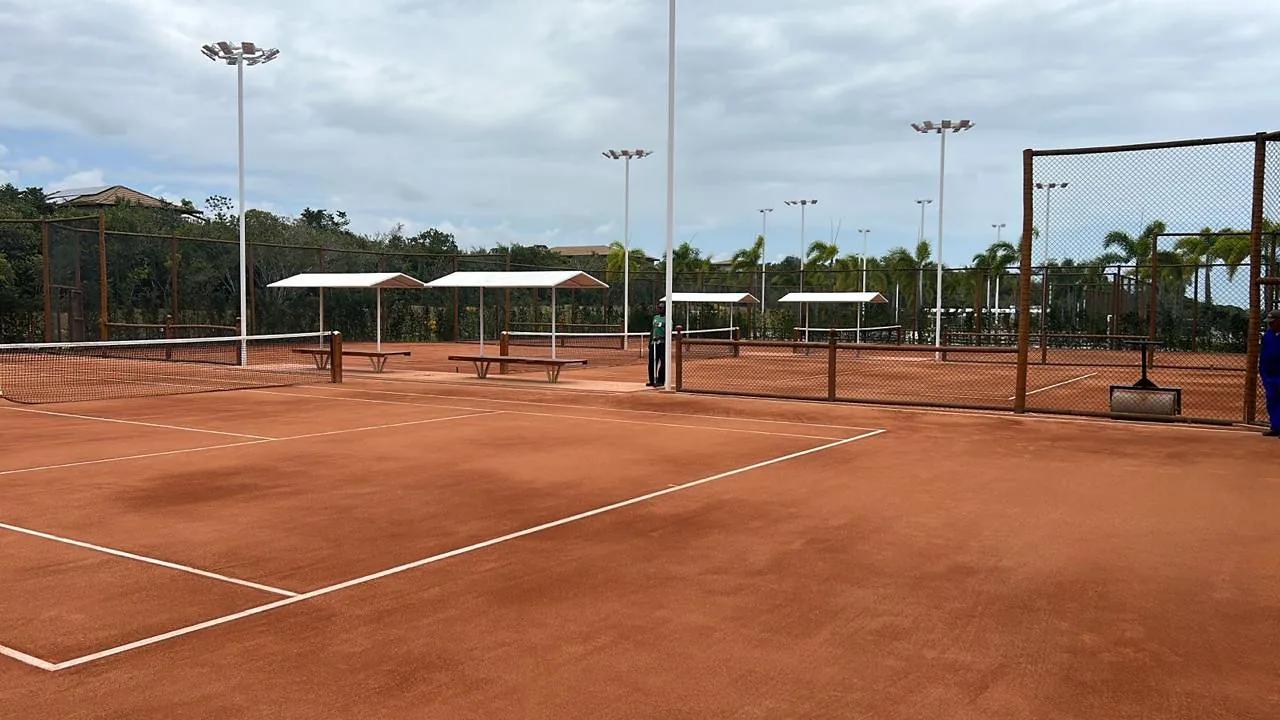
A clay court is a layer of loose granular material over a compacted base. In the US this usually means fast-dry, Har-Tru-type green clay; in Brazil, red clay. We built the red clay center court of the ATP Brasil Open at Costa do Sauípe to ITF specification. The principle is the same: a surface that holds moisture, lets players slide and needs constant upkeep.
How they play
Clay slows the ball and raises the bounce, which lengthens rallies. Players slide into shots, and the surface is easier on joints. Many older players and juniors in training prefer it.
Hard courts give a faster, more predictable bounce and firm footing. They suit mixed groups, lessons and multi-sport use, and they accept pickleball lines.
Maintenance compared
This is where the decision is usually made.
- Clay: daily brushing, line sweeping, watering and periodic rolling; annual top-dressing with new material; attention to irrigation and drainage.
- Hard court: cleaning, crack sealing and drain upkeep through the year; resurfacing every four to eight years depending on use and exposure.
- Clay needs a trained person on site most days. A hard court can be maintained with periodic visits.
Clay vs hard court at a glance
- Construction
- Clay: granular layer over compacted base. Hard: acrylic over asphalt or post-tension concrete.
- Ball speed
- Clay: slower, higher bounce. Hard: medium to fast, predictable.
- Daily care
- Clay: brushing, watering, rolling. Hard: minimal.
- Periodic work
- Clay: annual top-dressing. Hard: resurfacing every 4 to 8 years.
- Water
- Clay: needs regular watering. Hard: none for play.
- After rain
- Clay: can need time to firm up. Hard: playable once dry if drainage is right.
- Pickleball lines
- Clay: not practical. Hard: common.
Florida conditions
Heat and sun favor clay in one respect: the surface stays cooler than a dark acrylic court. But clay must stay damp to play well, so in Florida it needs reliable watering, and many clay courts use irrigation built into the base. Heavy storms can wash material and soften the surface until it drains.
Hard courts handle storms better if slope and drains are right, but UV and heat age the coating faster than in cooler states. Light colors reduce surface temperature.
Cost over the life of the court
Build costs vary by site, base and drainage, and either surface can cost more depending on those conditions. The larger difference is ongoing. Clay carries steady daily labor, water and annual material. Hard courts carry low annual costs and a larger resurfacing cost every few years. Compare both over ten years, not just the build price.
Include staff time in that comparison. A clay court that is not brushed, watered and rolled on schedule loses its playing quality within weeks, and recovering it costs more than keeping it.
Which one fits your property
Clay usually fits clubs and resorts with grounds staff, members who prefer it, and water available for irrigation. Hard courts usually fit HOAs, condominiums, schools and properties without daily staff, or where courts also serve pickleball and other sports.
Some clubs keep both: clay for members who want it, hard courts for lessons, pickleball and wet days.
Questions to settle before choosing
Before asking for bids, a board or club committee should agree on a few practical points. The answers usually point clearly to one surface.
- Who will maintain the court every day, and is that person trained for clay?
- Is there a reliable water supply for watering or irrigation?
- How many hours a day will the court be booked, and by whom?
- Will the court also host pickleball, lessons for beginners or other sports?
- How quickly must the court reopen after a storm?
- What can the operating budget carry each year, not just the build budget?
What our clay experience means for you
Building a tournament clay court teaches the details that decide how any court performs: base compaction, slope, drainage and the exact depth of each layer. On the ATP Brasil Open center court those details were checked against ITF specification. We bring the same attention to the base and drainage on the hard courts we repair and resurface in Florida.